
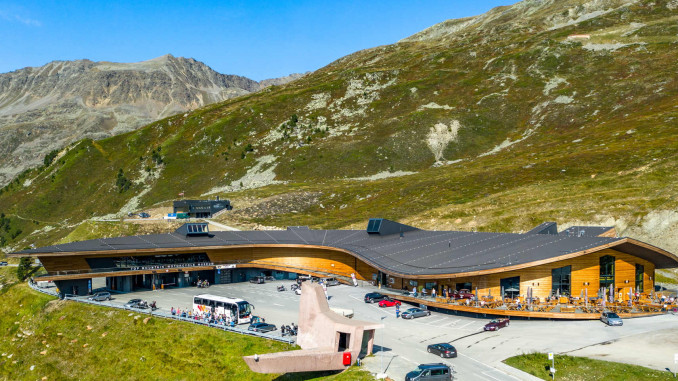
Rising like a phoenix from the ashes, Austria’s Top Mountain Motorcycle Museum has become a bucket-list destination for riders, where Alpine roads, rare machines and sheer passion meet high in the clouds.
If there was ever a phoenix from the ashes story in motorcycling, this is it, and while motorcycle miracles are rare — they do happen. And of all places, this one unfolded in an Austrian ski resort. In 2021, the Top Mountain Motorcycle Museum, perched at 2175m (just 53m lower than Mt Kosciuszko), burned to the ground. Some 330 incredibly rare and historically significant bikes were reduced to ashes — and motorcycle enthusiasts around the world wept.
Fortunately, it must have been well insured, because there was a massive effort to recover from the loss. Astonishingly, just 10 months later it had been rebuilt, restocked with 550 new two-wheeled treasures, and reopened. One of the world’s greatest motorcycle museums was back.
THE BACK STORY
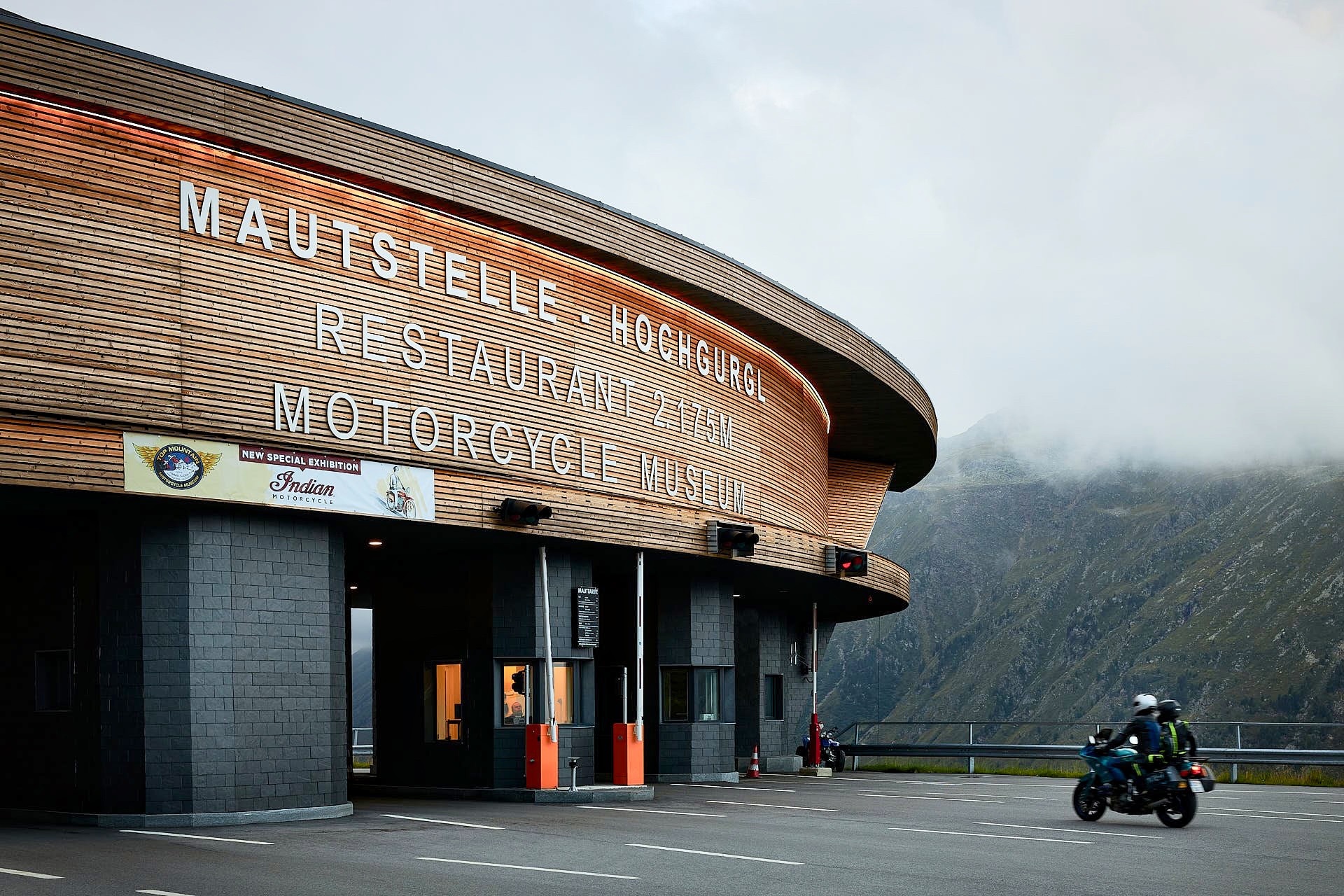
Most Australian readers won’t be familiar with this two-wheeled oddity perched high on a European mountain. It sits on the Austrian side of the Timmelsjoch Pass, which crosses the Alps into Italy, reaching an elevation of 2747m.
Both the road over the pass and the museum are privately owned, and as such, a fee applies to both. That’s fair enough — being buried under snow for much of the year, the road must be difficult and expensive to maintain. The amount of capital tied up in the museum also needs to earn a return, so a small entry fee seems reasonable.
The museum forms part of a broader complex that includes a ski lift base station, a 700-seat cafe and the toll gate for the road to Italy. It’s an impressive piece of architecture — and one that cost a forest of trees their lives.
Museum entry is roughly $15 AUD, and most riders will check it out either before or after tackling the pass. Add some tasty food and spectacular views, and it’s easy to see why bikers find the place impossible to resist.
WHAT’S THERE?
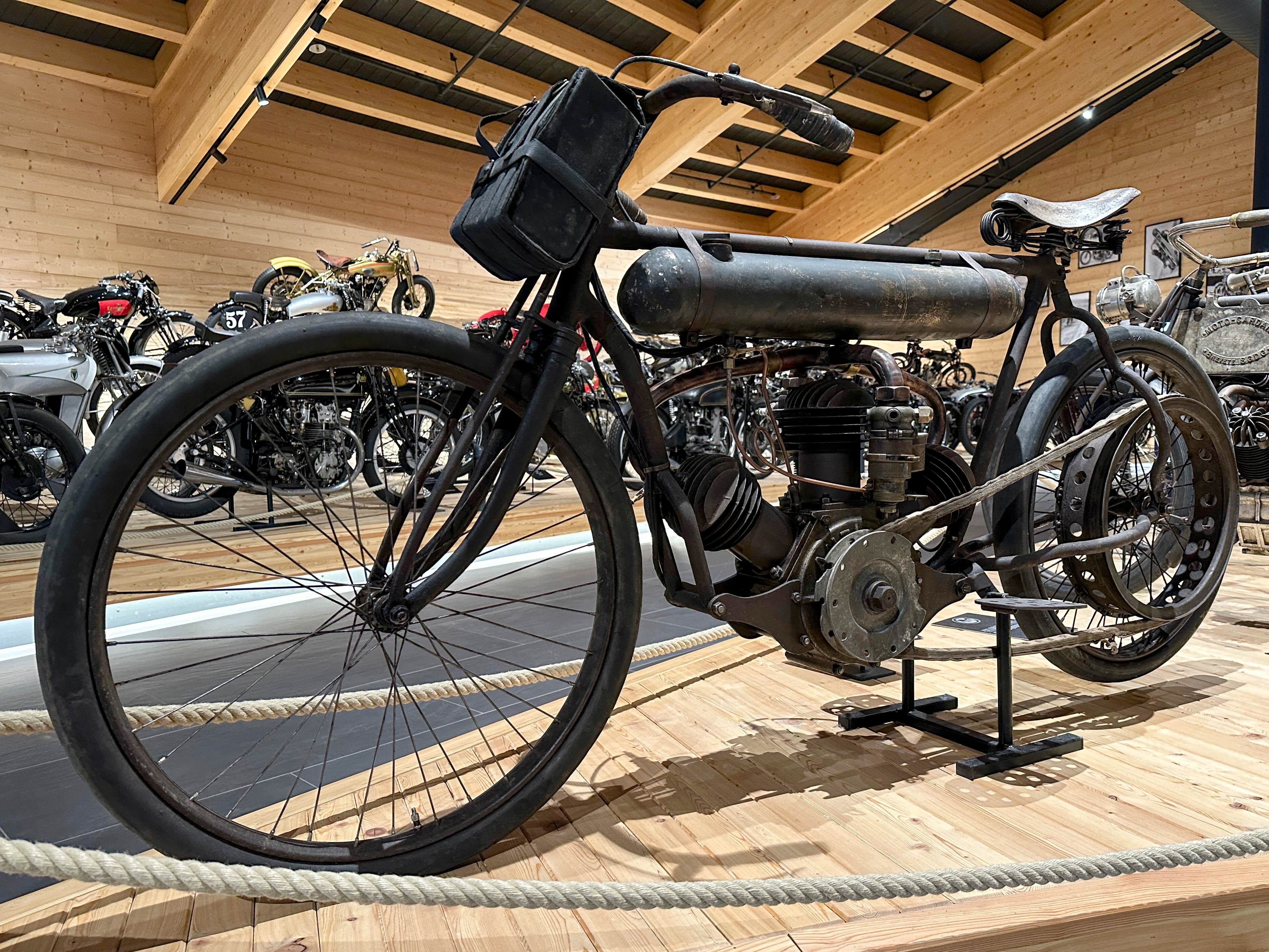
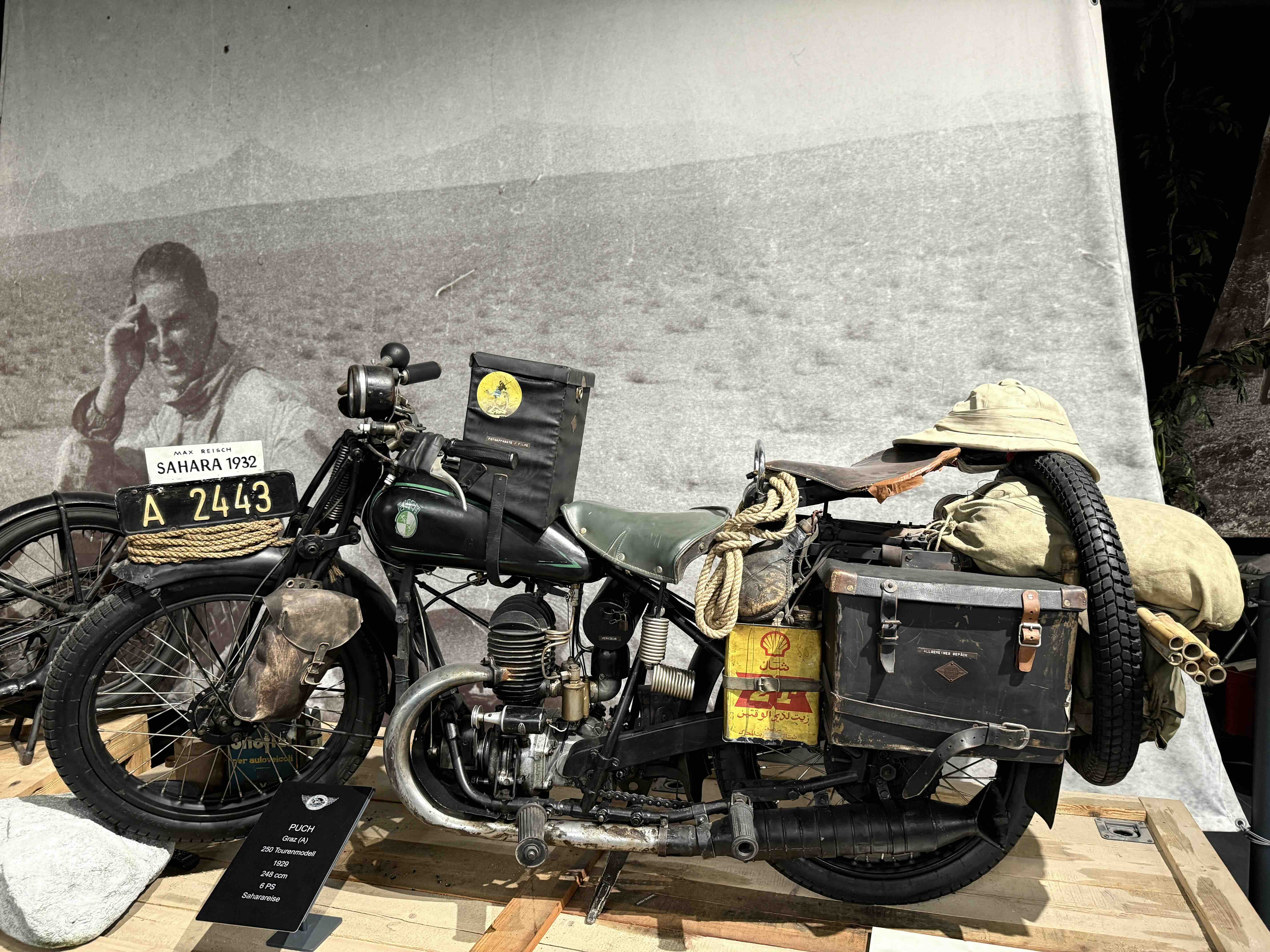
The museum features a Y-shaped main hall and a smaller mezzanine level. The mezzanine showcases a collection best described as adventure riding in the early-20th century — and it really was adventure riding back then. Intrepid two-wheeled explorers carried their camping gear and food (much as we do now) but also fuel, oil and plenty of spares. The two fully kitted-out machines are displayed with period-correct adventure paraphernalia, perfectly illustrating just how far we’ve come.
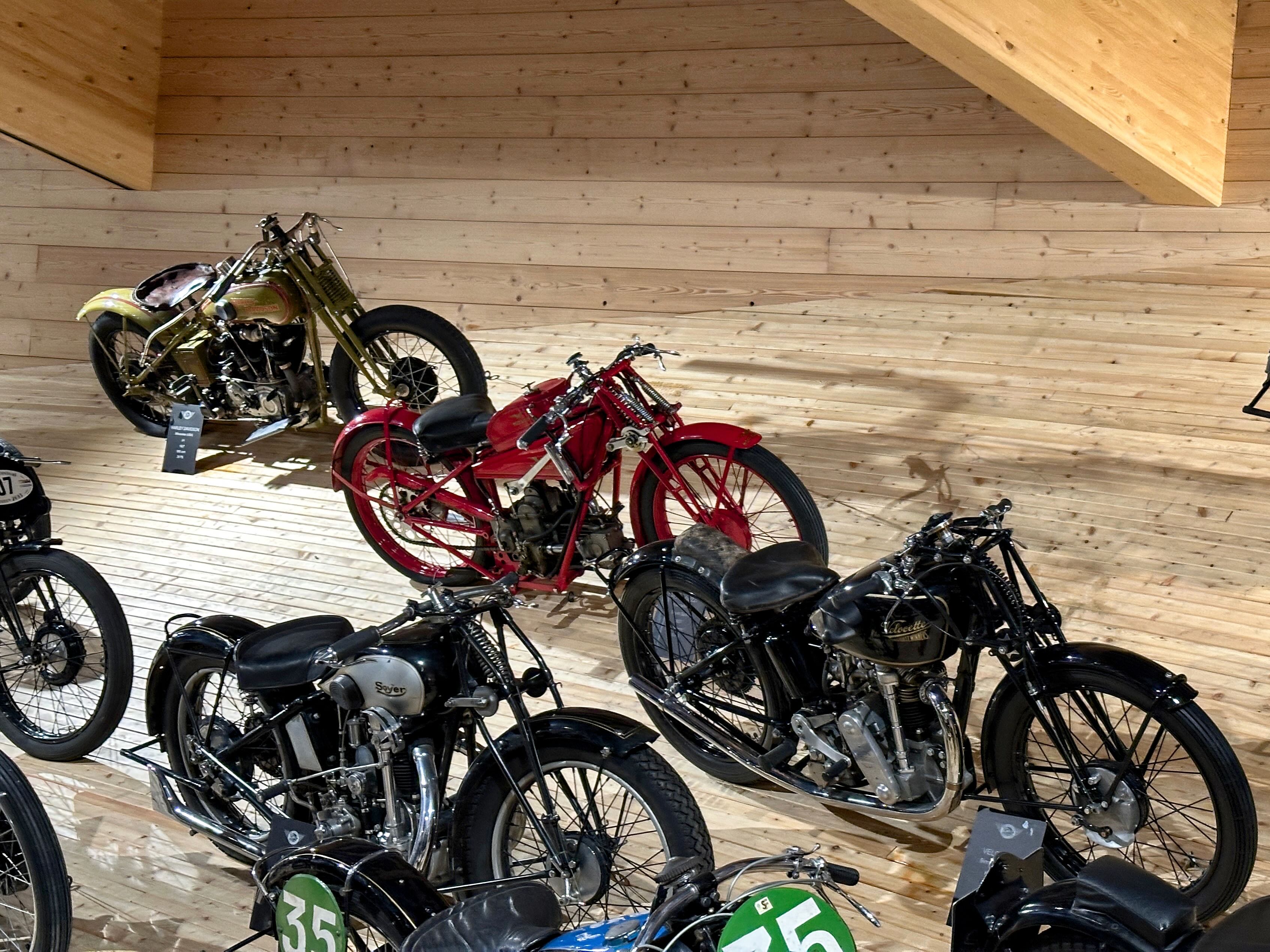
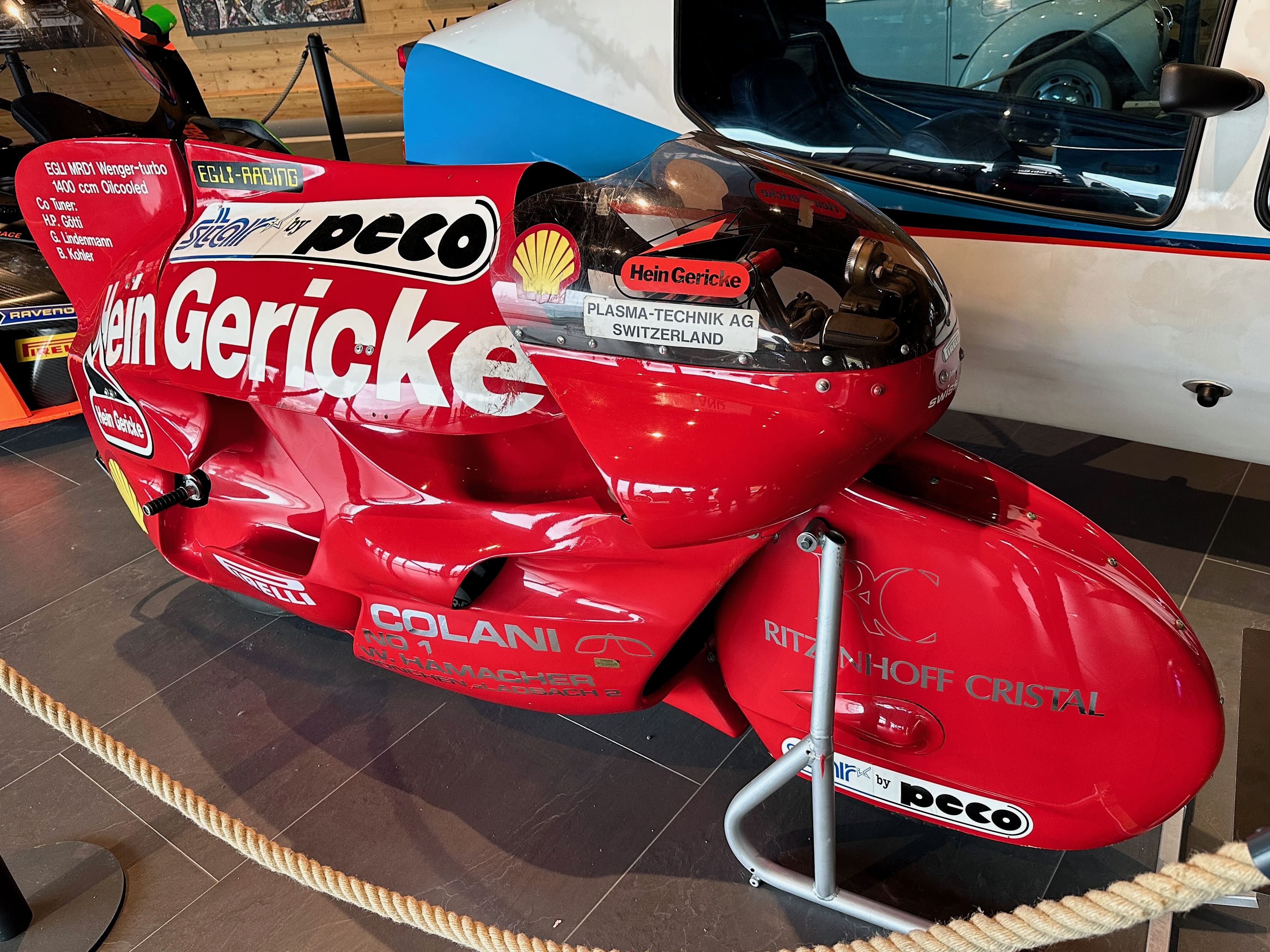
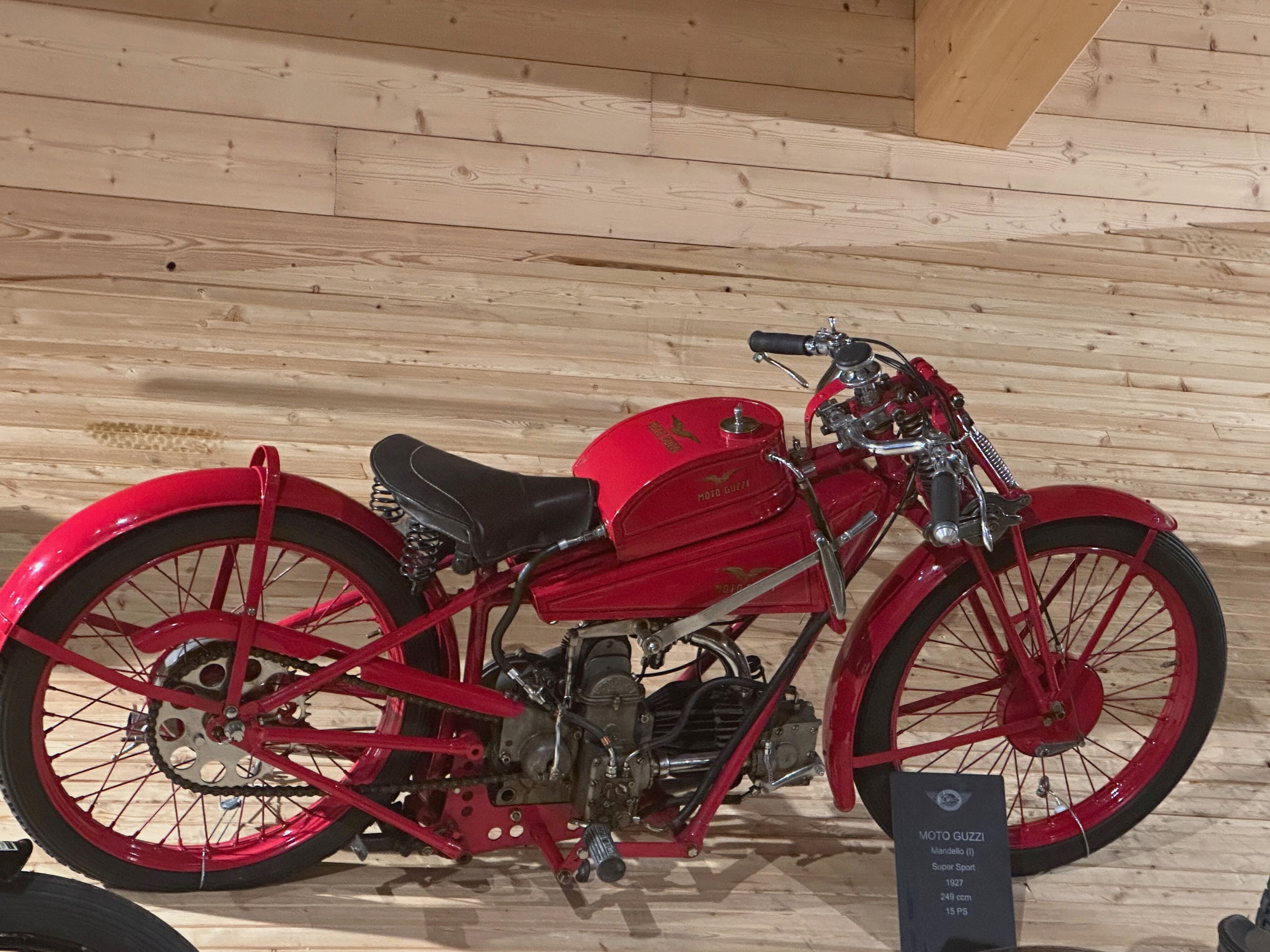
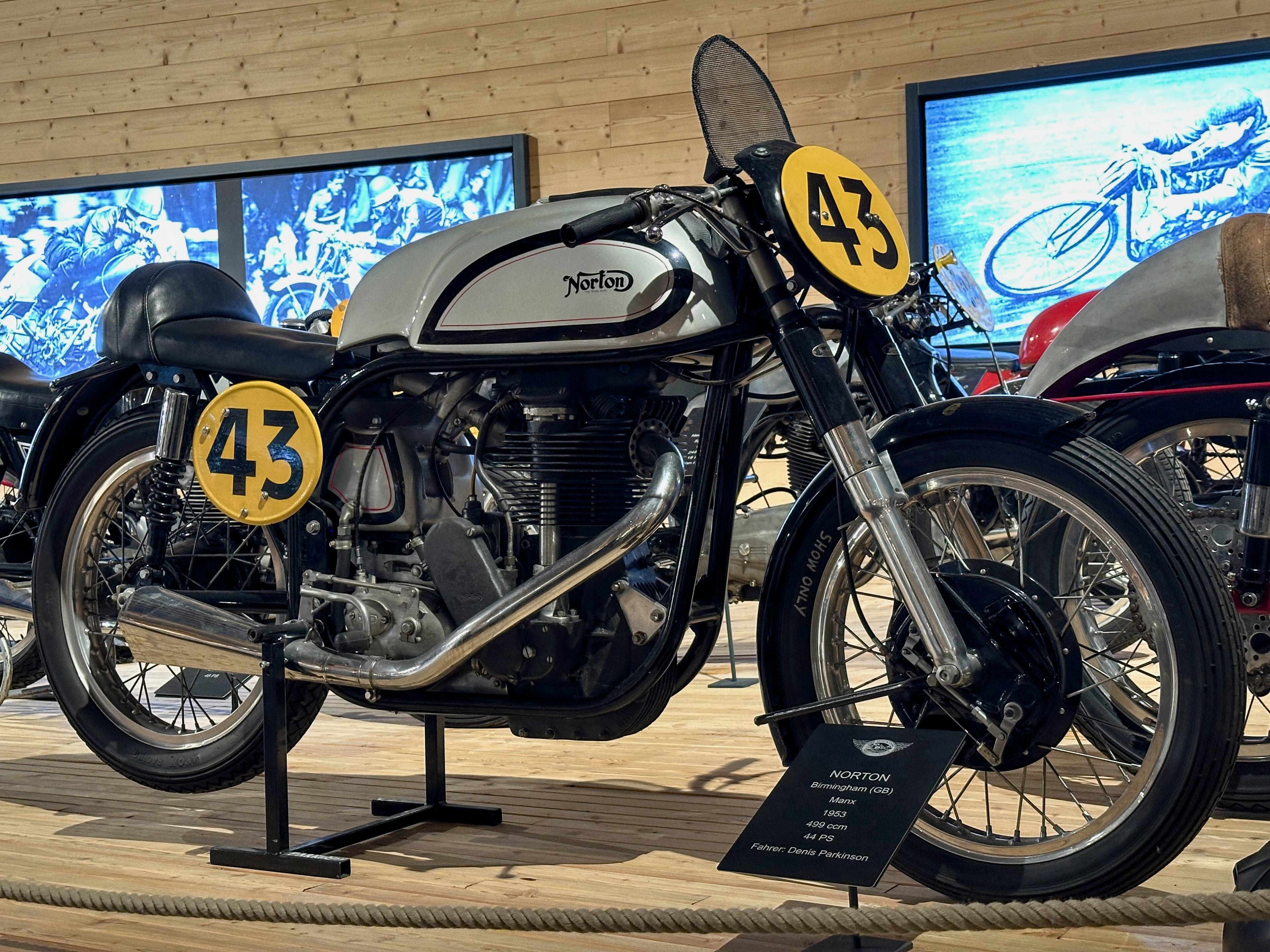
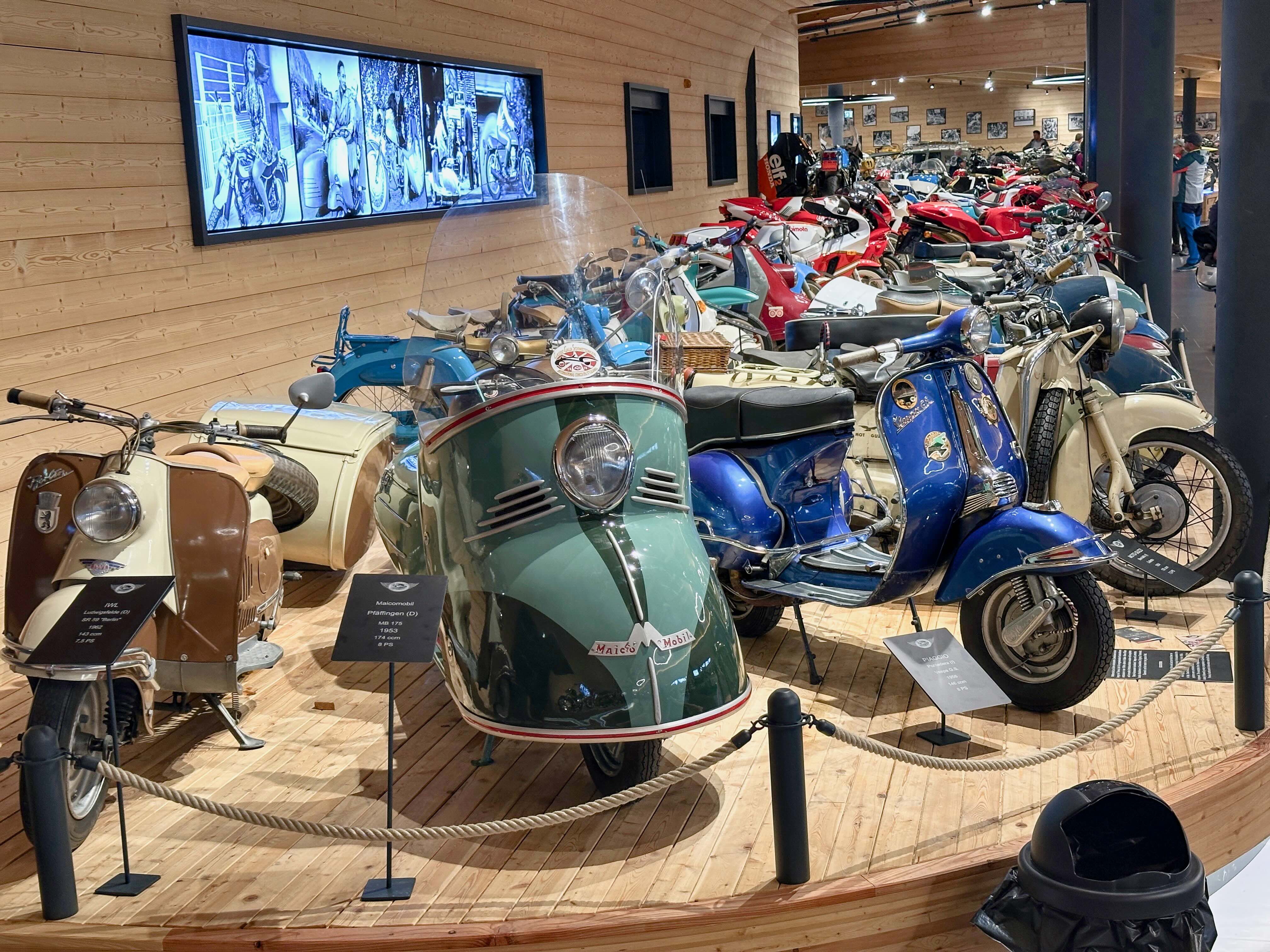
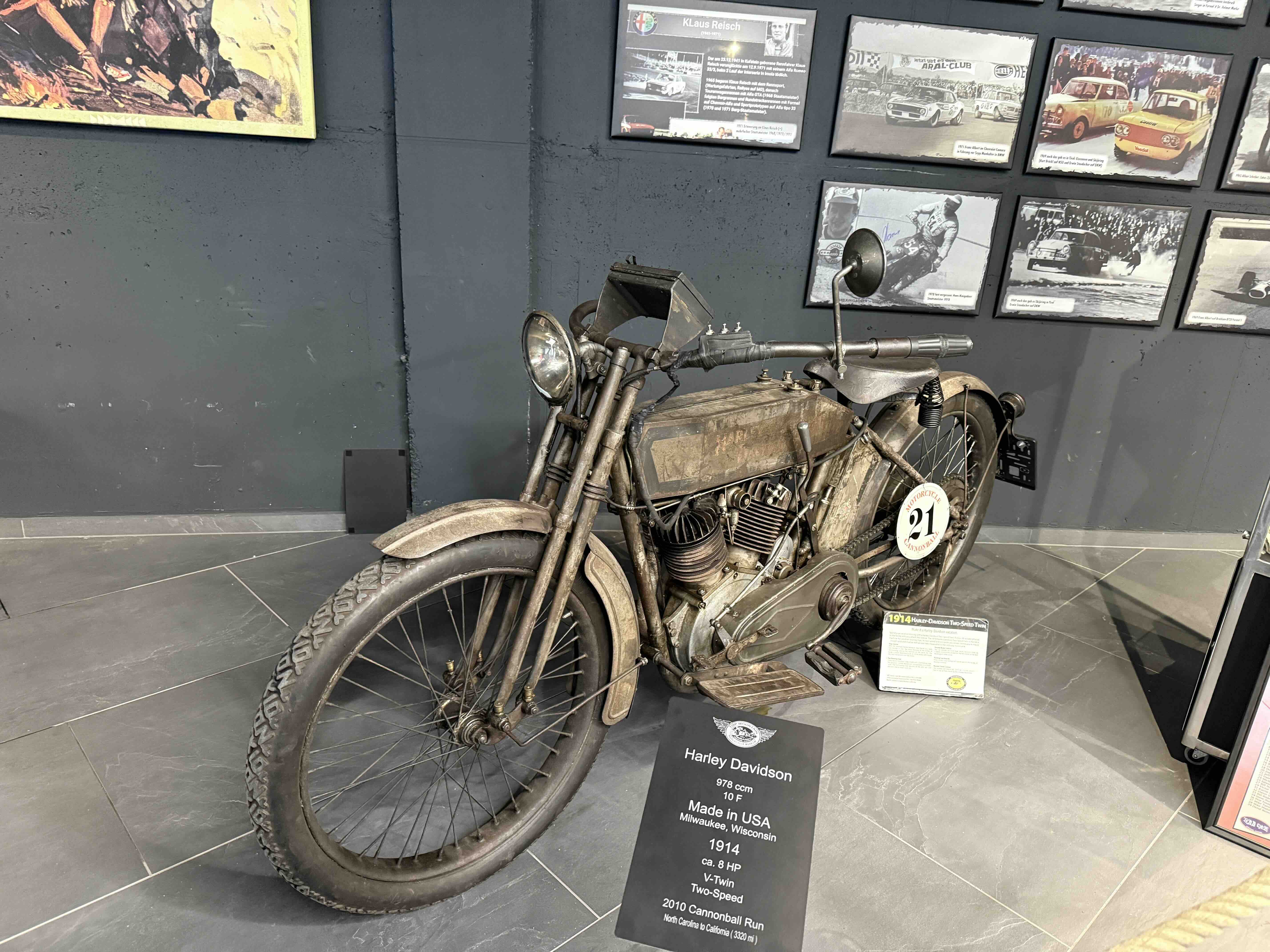
Heading upstairs to the main exhibition hall, you enter a vast space that’s almost impossible to capture in photos. By and large, the bikes are grouped by theme — early 20th-century racers, post-war British and Italian machines, American twins and fours, 1960s and ’70s Japanese bikes, rotary-engined curiosities, scooters, and the last 40 years of race machinery.
There’s a strong partnership with Red Bull, and on display is a 2017 KTM RC16 GP bike along with just about every other notable KTM — including a few scooters from back when the company’s motto was Ready to Commute rather than today’s Ready to Race.
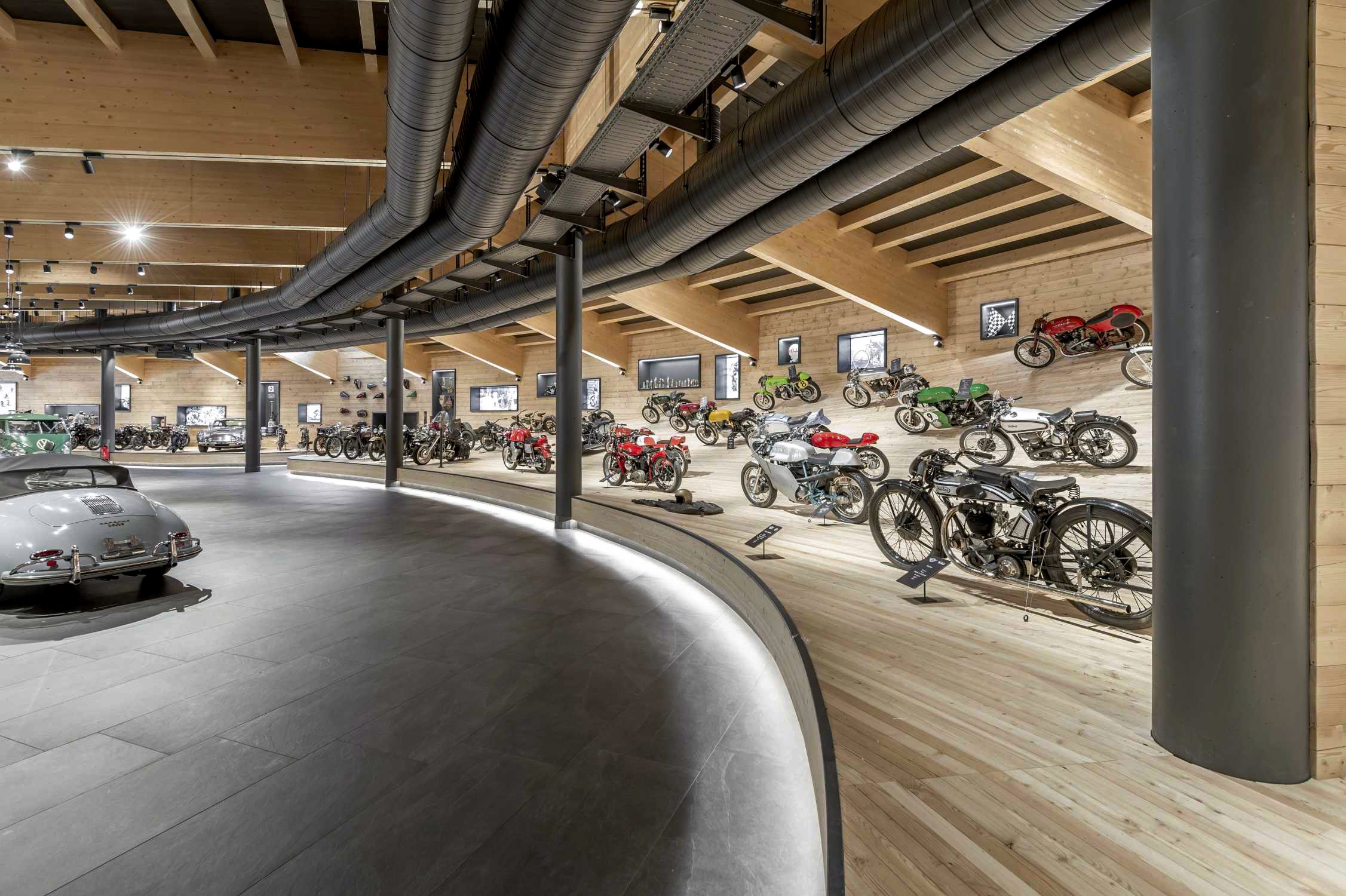
Machines that caught my eye included the mighty Vincent Black Shadow, the Münch Mammoth, all the groundbreaking Japanese bikes from 1968 to 1980, the Benelli Sei, the Suzuki rotary, and a sectioned Honda RC45 — I guarantee it’s the only one in the world.
Some of the exhibits are genuinely weird — like a Honda flat-twin 125 scooter and a stunning Maico scooter. And who’d have thought so many rotary-engined bikes were produced? At least five are on display, representing Britain, Germany and Japan. It seems everyone had a go, but no one could quite make them work. I also wasn’t aware that Ferrari — yes, that Ferrari — once produced a solid range of bikes.
As it’s a European museum, the majority of bikes hail from that part of the world, and many of the brands will be unfamiliar to Australians, having never made it to our shores. The Japanese and American marques are still well represented — particularly their landmark models — but overall the collection leans heavily European.
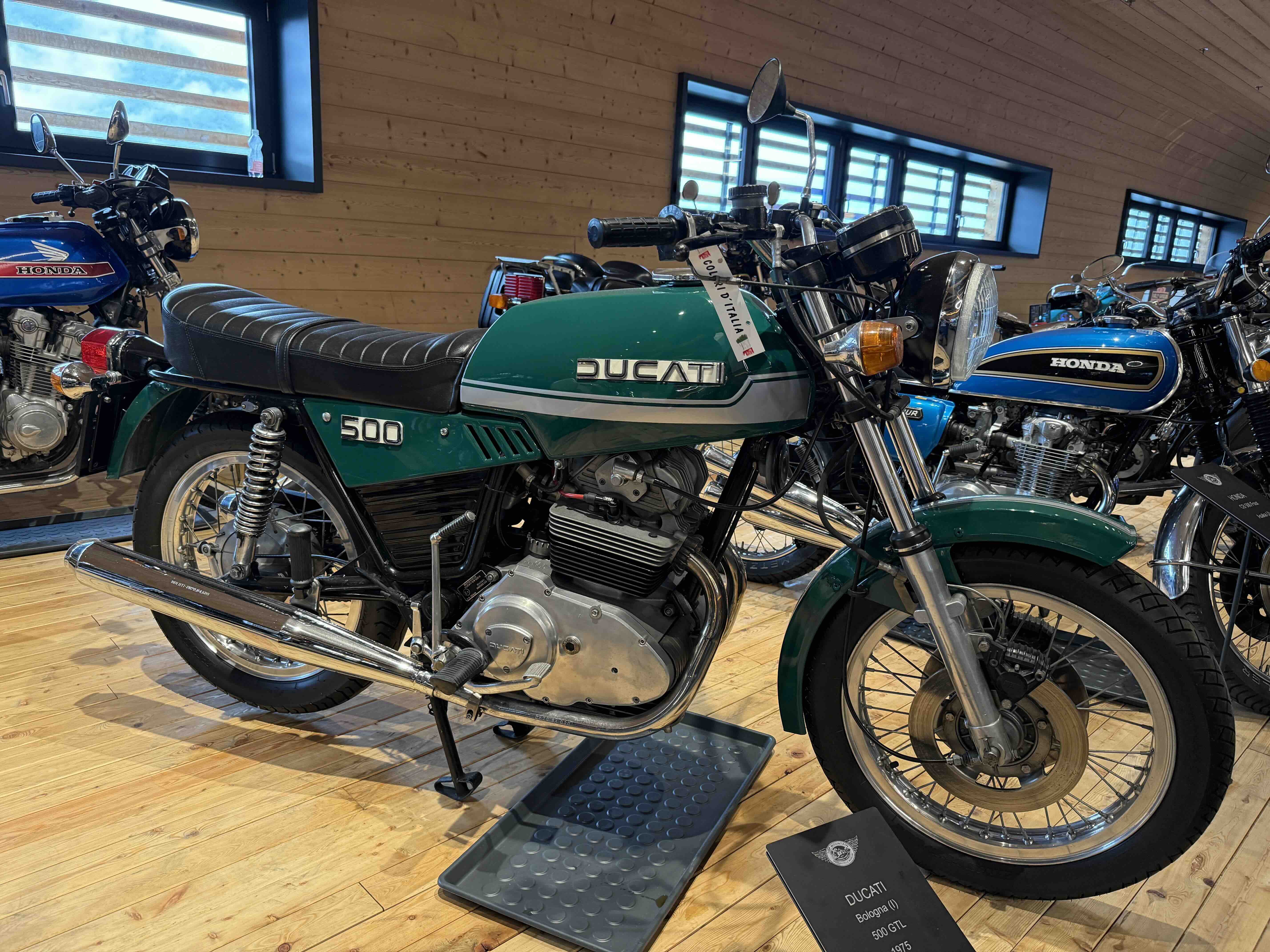
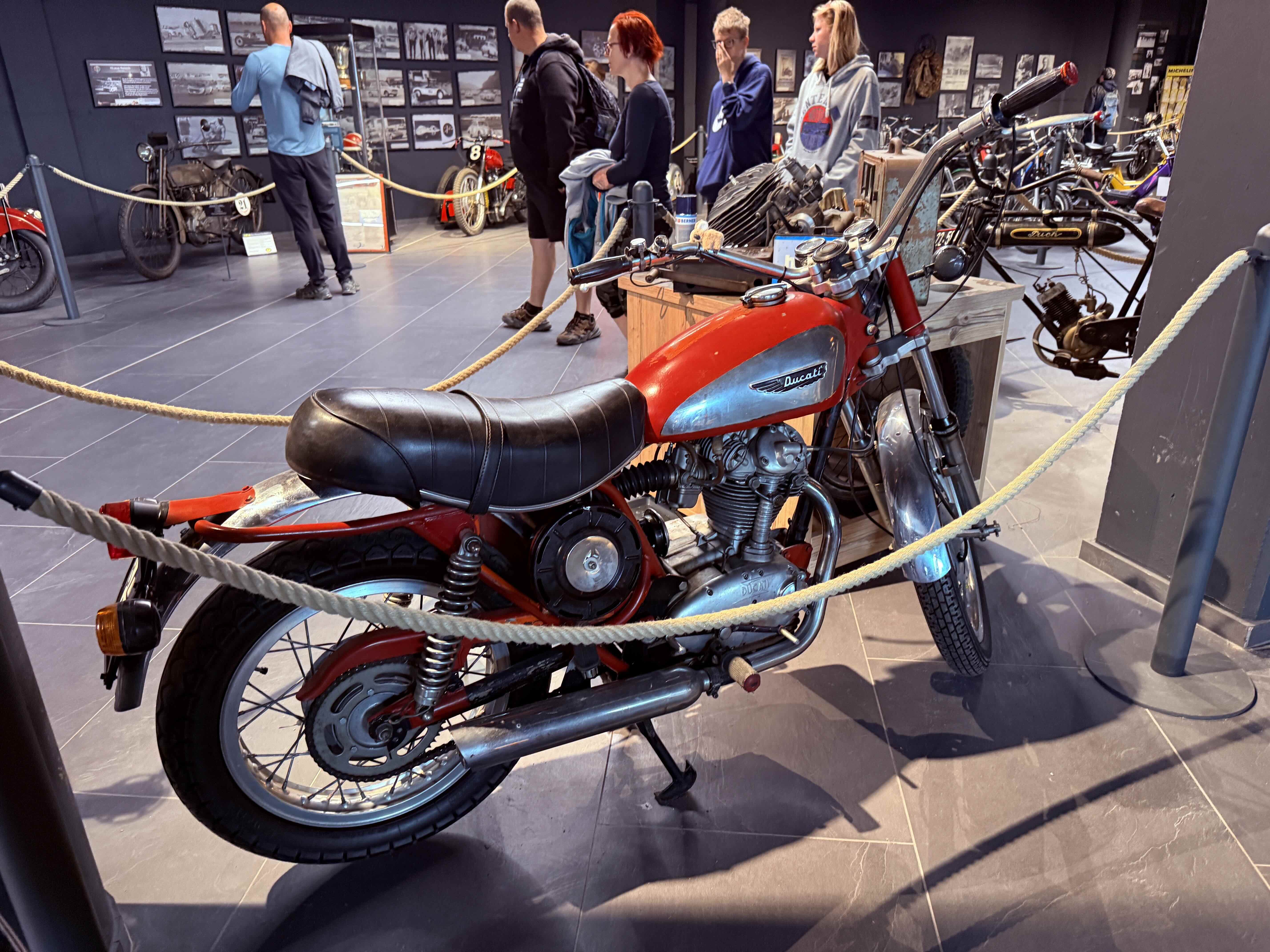
There are a few dirt bikes on display, but Australians who grew up during the 1970s off-road boom will find the collection solid, yet far from complete. Most of the 500 bikes are owned by the family, although a handful are on loan. Some machines are so rare that borrowing them is the only viable option.
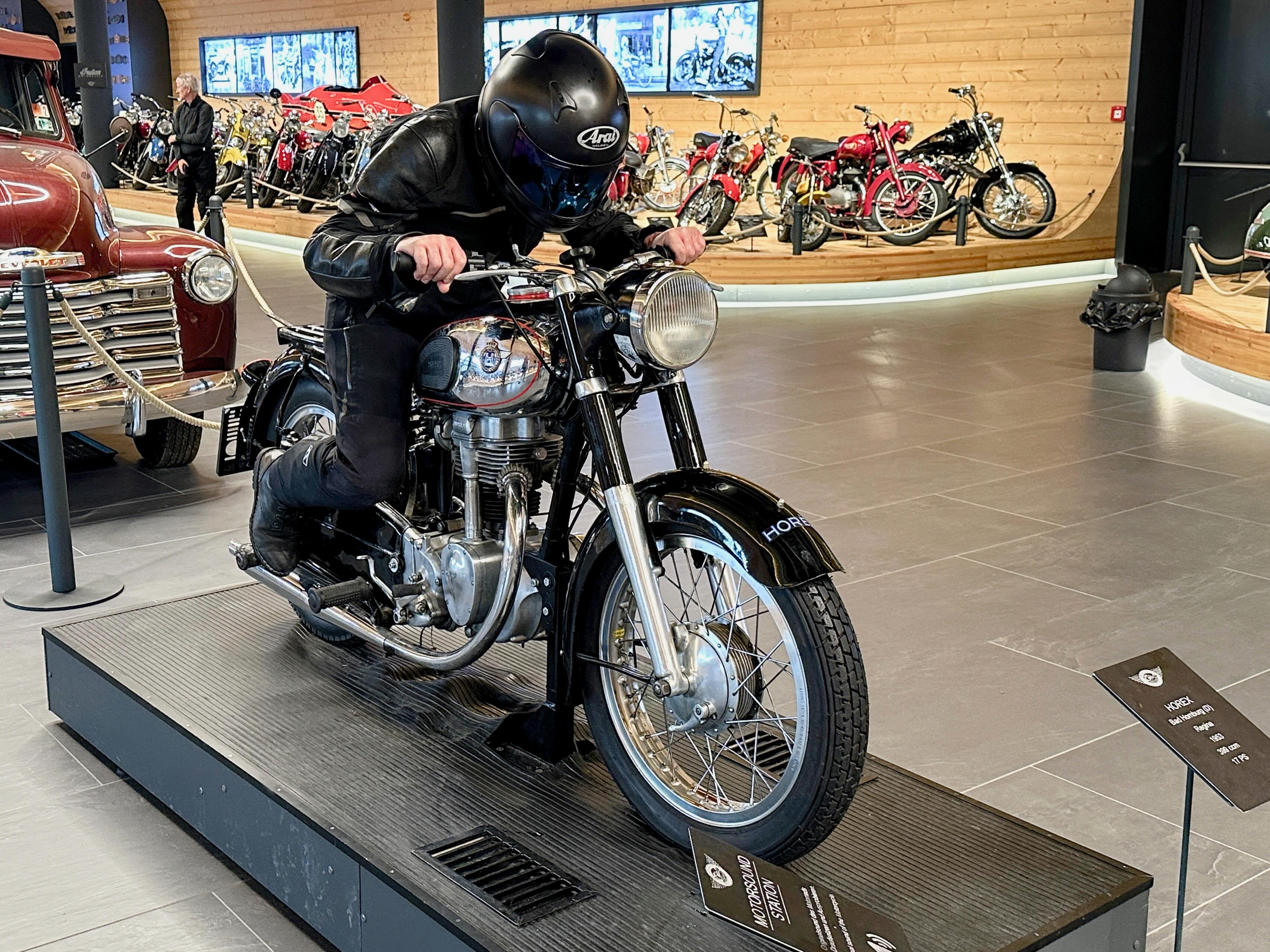
For something completely different, there’s a 4D cinema where you can “ride” the latest KTM bikes — mounted on gimbal platforms — over a cyberspace version of the pass, all without moving an inch. Kids (and plenty of adults) love it. After all, who wouldn’t want a motorcycle with a crash-reset button?
Of course, most visitors will want to ride the real pass — and why not? I can’t overstate how spectacular it is, especially for wide brown land dwellers. To enjoy this special pleasure, timing is everything: the Timmelsjoch Pass is open only from the end of May to the end of October. Top tip: Go in September — it’s still relatively warm and the summer school holidays are over. The toll for a bike is roughly $25 one way or $35 return.
If your motorcycle isn’t available but your snow skis are, you’re still in luck — the area is open all through winter.
SHOULD YOU MAKE THE EFFORT TO SEE IT?
The answer, of course, depends on your personal level of two-wheeled passion. What we can say is that it’s one of the world’s truly great motorcycle museums. There are others with larger or more specialised collections, but none can match the Top Mountain Motorcycle Museum — both for its setting and its bucket-list riding location.
I rented a bike in Munich, rode down to the Dolomites on the Italian–Austrian border and spent a week exploring some of Europe’s finest motorcycling roads (but that’s another story). Visiting the museum was part of that adventure — and one of its highlights. Any rider (or skiing rider) who finds themselves in that part of the world should make the effort to check it out.
PHOTOS: SUPPLIED & PHIL JAMES