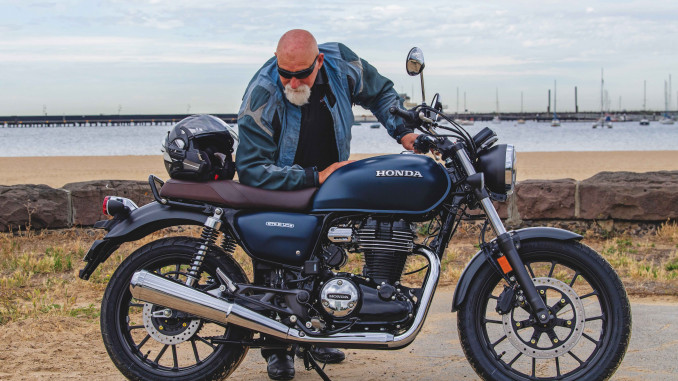
Inexpensive, attractive, modern and styled from the 1960s, there’s a lot to like about the new Honda GB350.
Before I go into details about the Honda GB350, let’s take a look back at when Soichiro Honda moved a nation out of the ruins of WWII with his small and reliable motorbikes that got better and better through the following decades. The ’60s and early ’70s saw the nicest people riding Hondas as the marque infiltrated the dominance of the British and American brands. Honda produced road bikes with nothing larger than the 450cc “black bomber” until they rocked the world with the mighty CB750 in 1969.
Hands up who hasn’t ridden a Honda? Just as I thought. Only a few diehards. In my young and stupid days, from bush bashing a beaten-up 305cc Dream to graduating to my first road bike, a ’71 CB350 twin, the small-capacity Hondas hold fond memories. Yes, I still have one (make that three if you count the bits and pieces in the shed).
While all those famous 1960s-1980s machines were twins, Honda kept producing singles as well, in huge numbers — in Australia the XL250 was the best-selling bike in the country, and the same single-pot motor was used in various guises. By the 1980s, magazines were recommending the CB250RS single over the better-selling CB250N because it was lighter, cheaper and more fun to ride.
BACK TO THE FUTURE
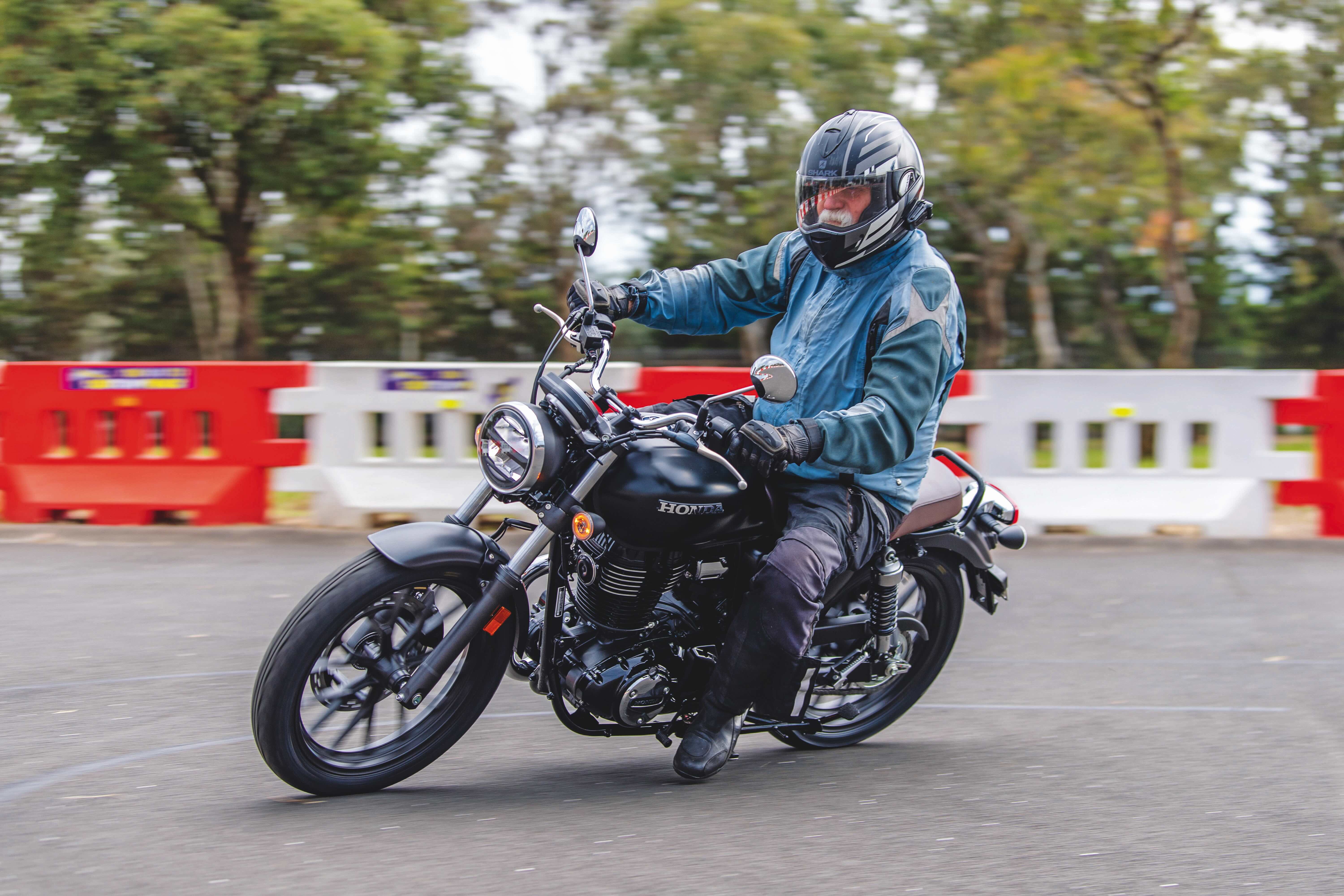
If you haven’t noticed, there’s a push in all directions for smaller, lighter, fuel-efficient forms of transport in both two- and four-wheeled configuration… and this has happened before, in particular during the 1970s when OPEC jacked up the price of Middle Eastern oil. So we’re seeing new bikes aimed at being economic transport rather than recreational.
While Japanese manufacturers have always had representatives in the 350 and under class, catering mainly to the Asian markets, Honda is entering the fray head on with the brand-new GB350. As it’s a single cylinder, I thought this would be a revised version of the bike Honda produces ostensibly for the Indian market. They’ve been making them for decades, with the 350cc capacity being popular there due to lower government fees and taxes. I was wrong. This bike is a brand-new design, manufactured in Japan.
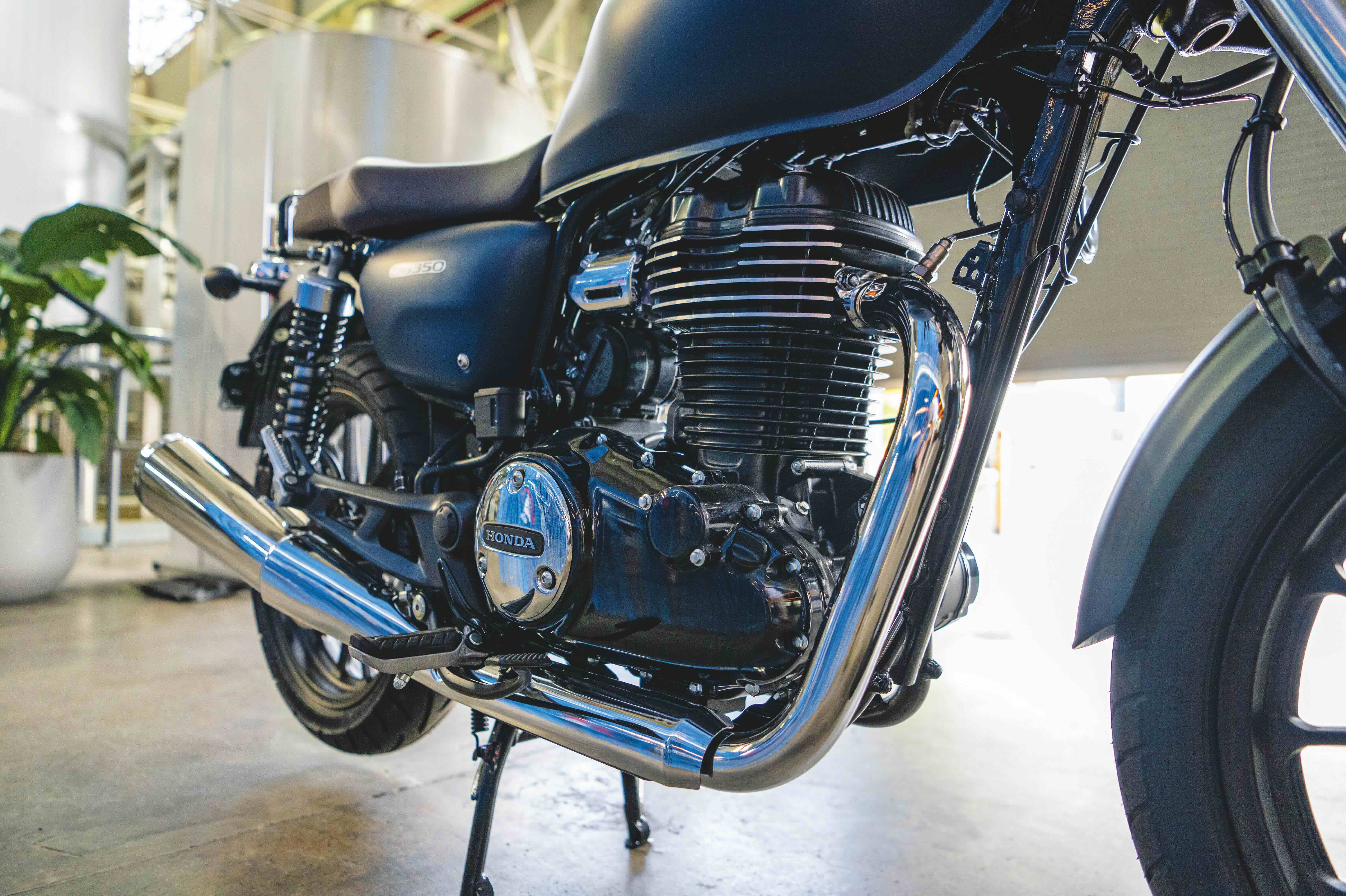
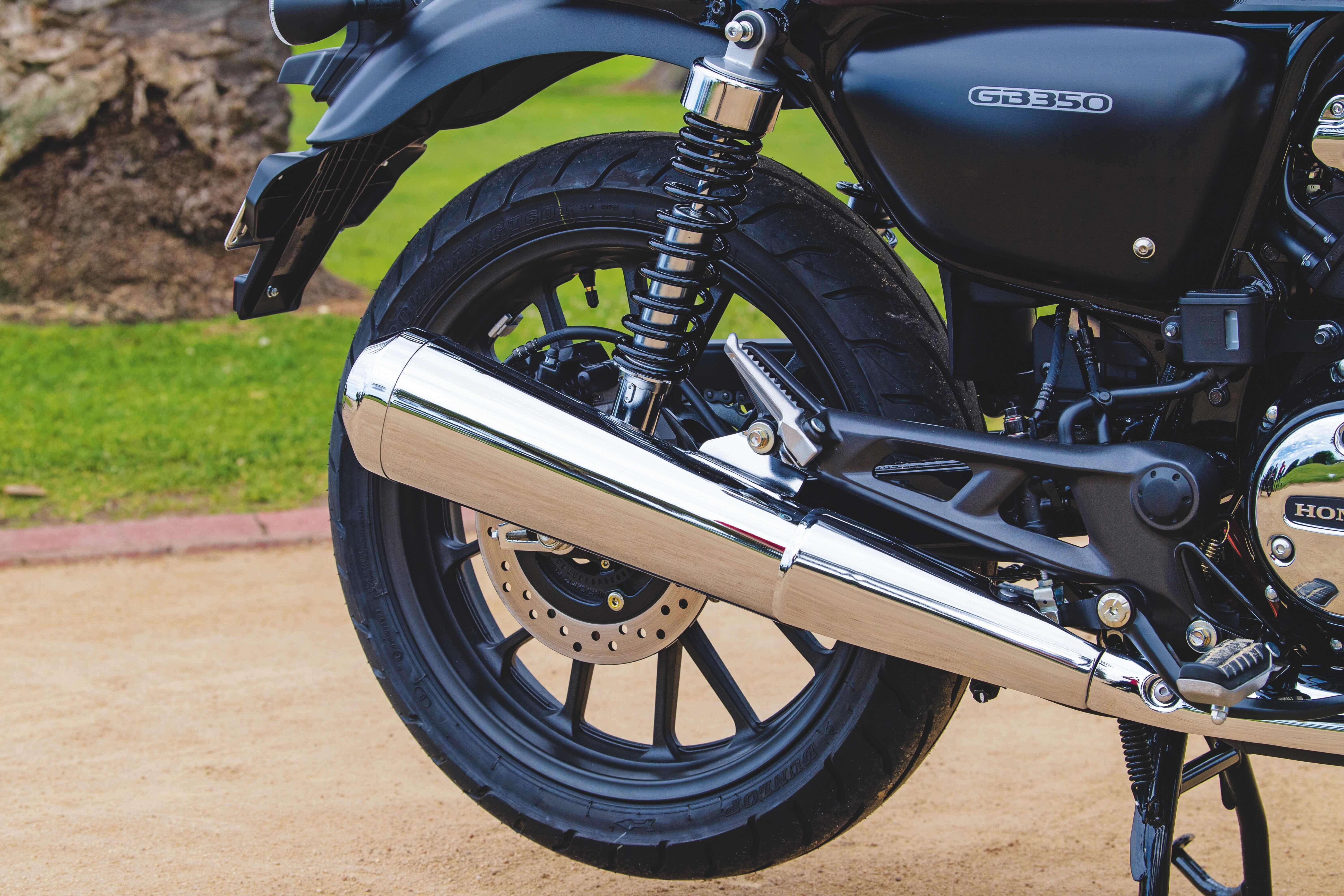
Easy-on-the-eye classic styling will appeal to the young, not-so-young hipsters and older returning riders. Rounded tank, twin shocks at rear with standard spring adjustment and 120mm of travel blend nicely with the chromed, slightly upswept exhaust that emits a nice burble. Even the blacked alloy wheels fit the styling. The rounded single instrument binnacle houses the analogue speedo and LCD easy-to-read information that can be scrolled through via button on the left side. Time, temperature, fuel use, trip meter and even an “ECO” green light highlights when you’re easy on the throttle. A good blend of classic styling but providing all the information expected these days.
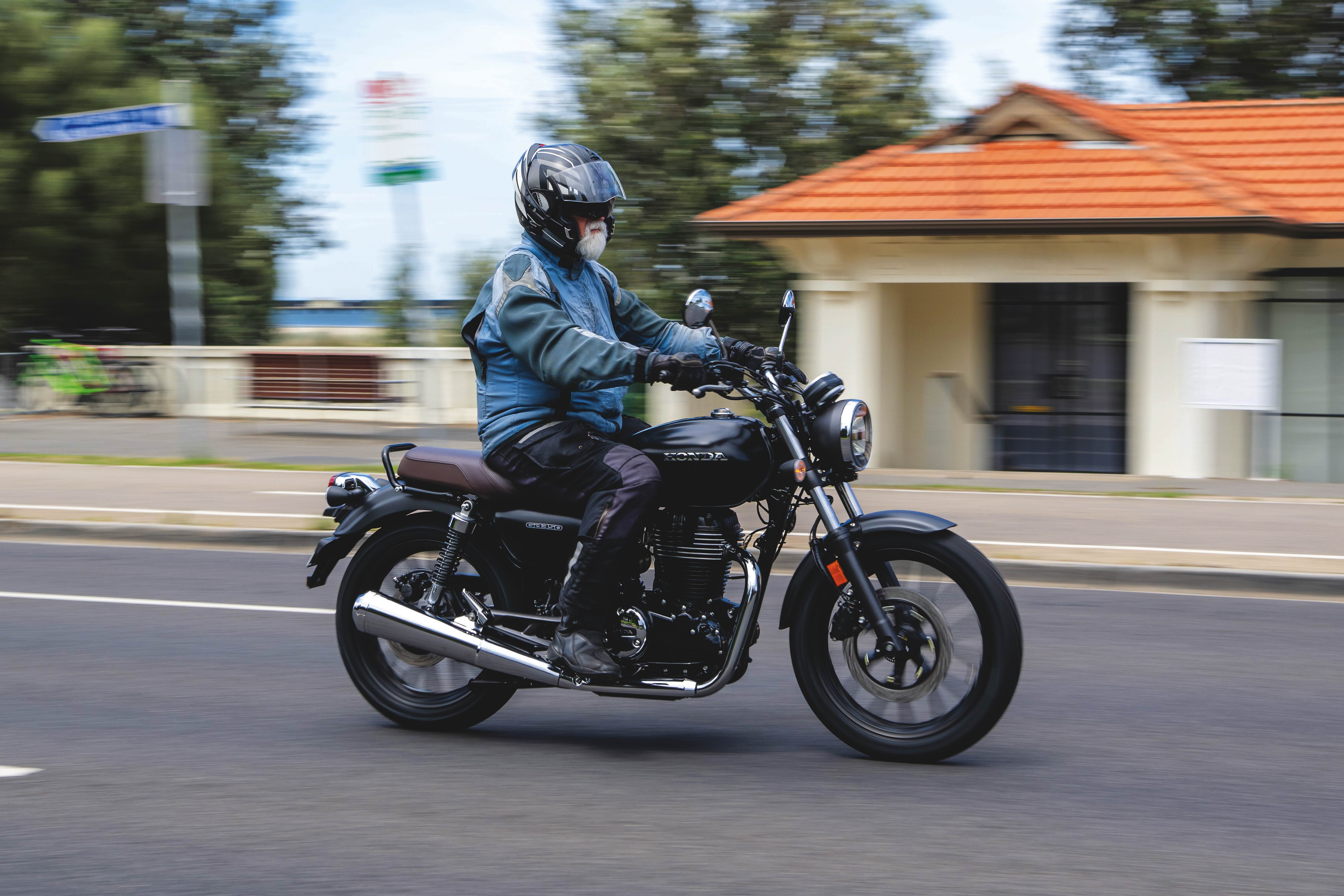
The 348cc single-cylinder air-cooled four-stroke powerplant producing 15.5kW (20.8hp) is on par with its obvious rival, the Royal Enfield 350 (and probably the new Triumph 400s). The Honda produces slightly more pull with 30Nm in the sweet spot of 3000rpm. Fuelling is via injection and neatly hidden behind chrome covers, staying in step with the classic style.
It boasts two-channel ABS, traction control, slipper clutch assistance, LED lights, smart phone voice control connectivity and is, of course, LAMS compliant. The GB350 technology is up there with the best in class. Some say traction control is overkill. Clearly, they haven’t lost the rear on slippery wet urban roads, tram or train tracks let alone diesel, oil and grunge common on our suburban streets, so if it works well in those situations, it’ll be a great feature unique to the Honda. I’ll even include tubeless tyres as a safety feature, having suffered flats at speed on tubed and tubeless rubber. A tubeless tyre going flat is a lot easier to control. As this bike will most likely be used by inexperienced and occasional riders, including these safety features enhances its appeal.
I’m average to larger framed and the ergonomics on this small-capacity bike were pretty good for me. I could sit in the firm saddle for an hour or so — no problem. While built for two, that might be a bit cosy. Footpegs and ’bars are in neutral positions, with the bars giving good leverage while filtering through tin tops. The little Honda was easy to balance at low speed.
Honda Australia is currently importing the standard GB350, which comes in two finishes, matt ‘Pearl Morion’ black or ‘Jeans Blue’ metallic. Either is pleasing on the eye. If these walk out the door, maybe they’ll consider other variants entering the lucrative smaller class.
THE URBAN JUNGLE
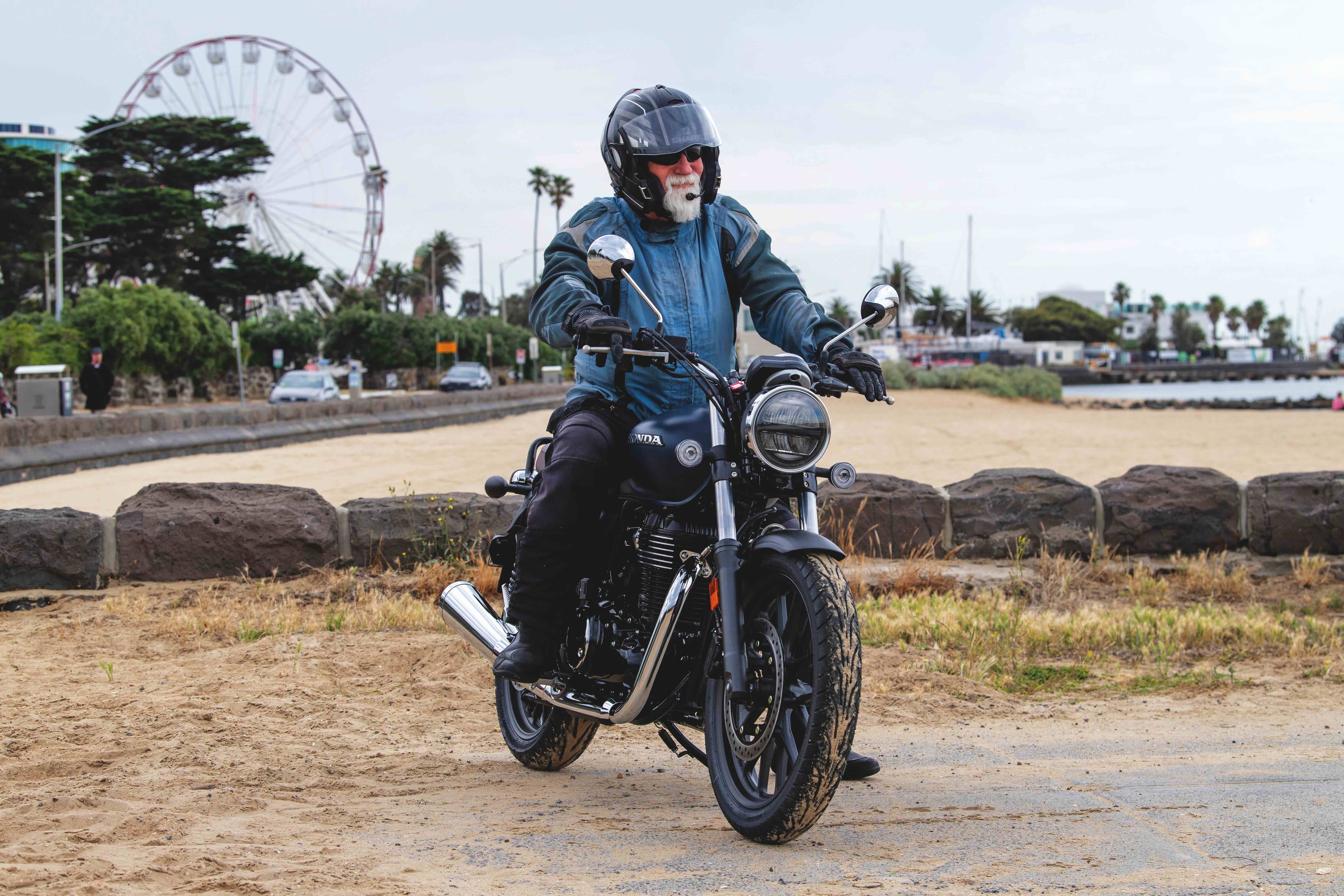
The natural habitat for the GB350 is the urban jungle, with the occasional fang to the beach or nearby countryside. With that in mind, we gathered at Honda’s northern base on the outskirts of Melbourne and after a quick lap or two on the Honda circuit, it was off into the fray of the morning peak hour. Entering a major road and accelerating to the 80km/h limit showed the 350 single willing to rev its heart out with the gears to match, giving adequate acceleration for its intended purpose.
Filtering through to the front at the lights is easy, with the bike well balanced for slow manoeuvring. The 350 has enough go to get up to speed entering freeways and mixing it with faster-moving traffic. Gear ratios seem right for getting off the line well enough and accelerating easily, if a little sedately, to freeway speeds. The five-speed box is typical Honda, with a good feel. Fourth will hold and accelerate okay to 100km/h, fifth lowers the revs and not much else. Lighting is LED as you’d expect, and tin top pilots mostly noticed us.
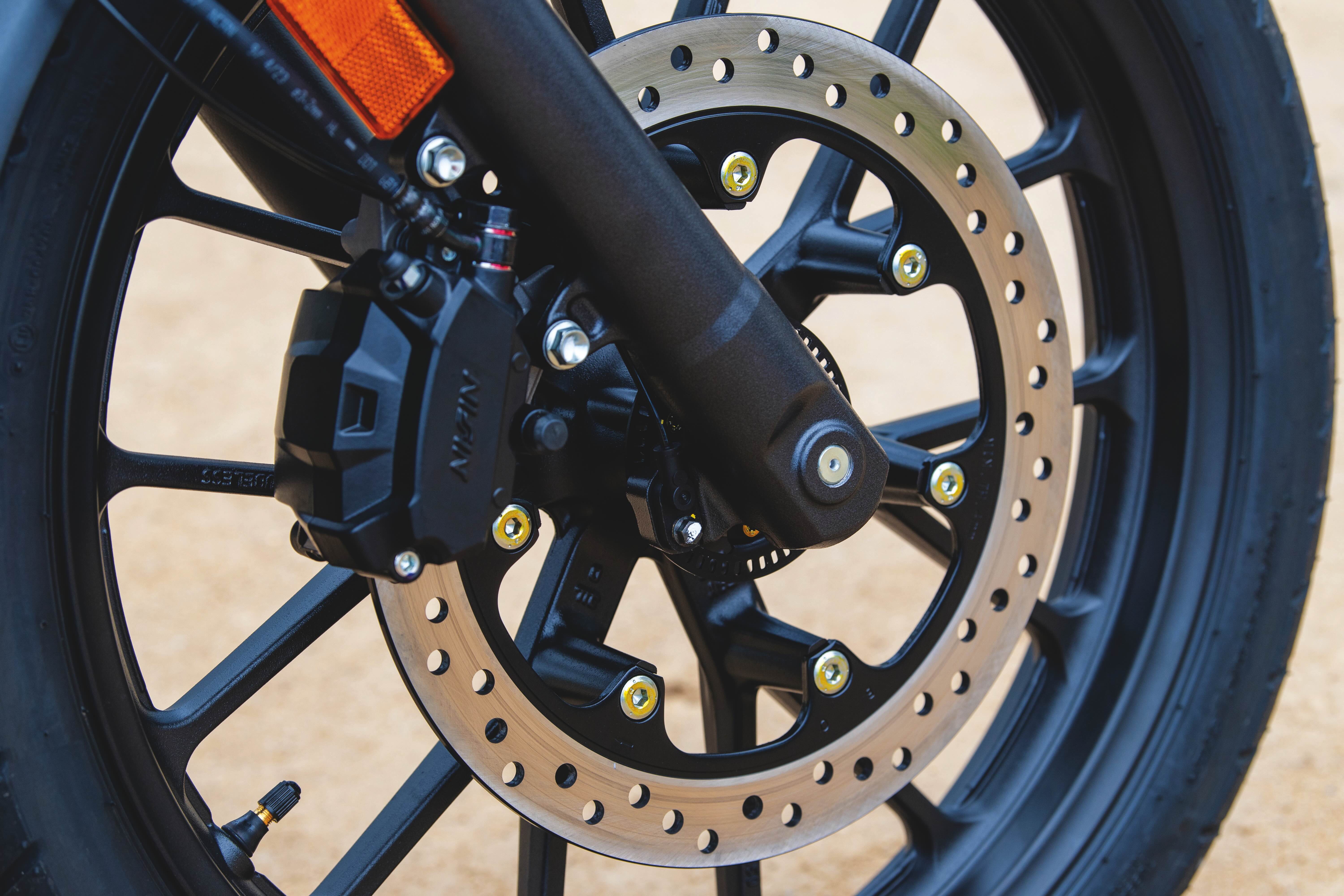
Moving into more sedate urban streets is where the GB350 is at its best. On test we filtered incessantly through the morning peak through back streets and major thoroughfares to the foreshore of Melbourne’s bayside suburbs. Avoiding dozy commuters, bicycles, and pedestrians glued to their phones meant constant use of the brakes — single 310mm up front and 240mm rear were up to the task. Suspension travel of 106mm front and 120mm at rear handled the rutted roads and speed humps without launching me skywards.
Cruising up and down Beach Road and participating in more traffic light starts didn’t produce any signs of fade from the brakes or complaint from the willing little single or its drivetrain. After resting in the shade of a boutique distillery for an hour or so, we emerged to wind gusts that would blow a dog off a chain. A city commute and then a battle into head winds at freeway speeds was the ultimate test for a bike this size.
Commuting can mean a pleasant ride into work in the morning and then a scramble in bad weather on the way home. While at times having the throttle pinned getting up to speed, the GB350 handled damn-near gale force winds and still held 100km/h. The conditions on the run back to Honda HQ were probably the worst (sans rain) a commuter will face, but the GB350 showed its mettle being well up to task.
ACCESSORIES TOO
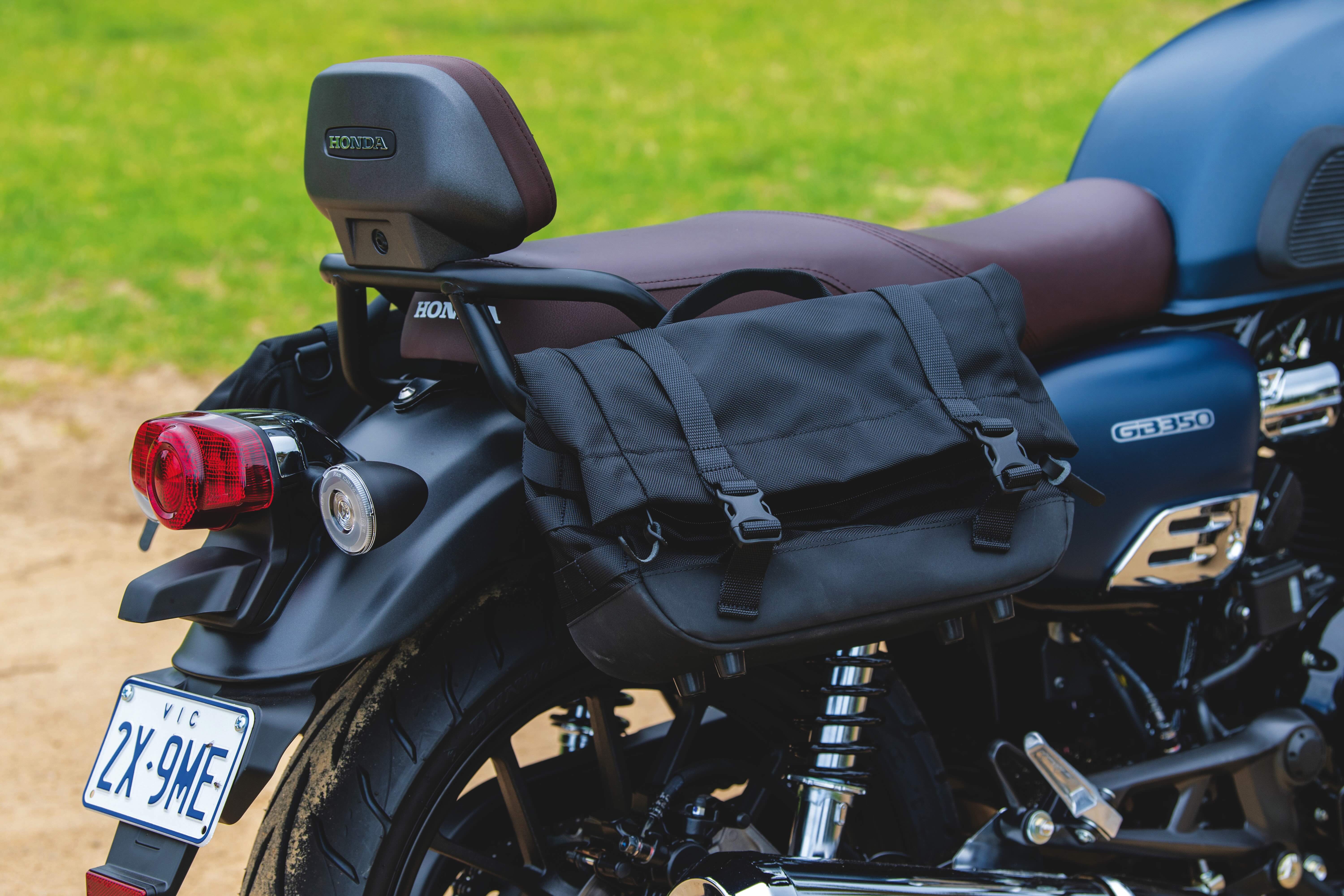
You can bling up your classic GB350 from an extensive options list: Large or smaller saddle bags, rear carrier or bag, front fork gaiters, instrument cowl visor or a larger one. How about a seat backrest or USB socket? A seat cowl may be more to your liking. The optional “knuckle” guards might keep your extremities warm, but to me they look out of place on this bike.
I might be getting picky in my dotage, but does it really need a heal-toe gear lever? Maybe that’s a trend that’s passed me by. Honda could have spent the money better on self-cancelling indicators. You can have any colour seat as long as it’s brown, unless you want to pay for the optional black seat with fancy stitching. At least it’s a darker shade of brown. Maybe I’m just not hip enough to appreciate brown seats.
The optional city-style soft panniers with bolted-on mounts make the helmet lock inaccessible. Not a game changer, but annoying. Commuting, you’ll need somewhere to carry your office essentials you can’t bear to be without at home, and saddle bags are much more comfortable and useable than a shoulder bag or backpack. I’d opt for the small city-style bags.
Commuting is all about costs. At $6999 the Honda GB350 is cheap, classy two-wheeled transport. The 15-litre tank is plenty for a standard weekly commute with a claimed 44km/L. On test and not sparing any of those neddies, I estimated a return of 36-37km/L. That’s cheap weekly running costs to get you to and from your coal face.
Now back to the shed and restoring a couple of those early ’70s Honda 350s.
SPECIFICATIONS
Honda GB350
ENGINE
Type: Air-cooled single-cylinder four-stroke, 2 valves
Capacity: 348cc
Compression ratio: 9.5:1
Engine management: Digital with fuel injection
PERFORMANCE
Claimed maximum power: 15.5kW (20.8hp)
Claimed maximum torque: 30Nm @ 3000rpm
Fuel consumption: 44km/L (claimed)
TRANSMISSION
Type: 5-speed constant mesh
Final drive: Chain
Clutch: Slipper
CHASSIS AND RUNNING GEAR
Chassis: Steel cradle
Front suspension: Conventional forks
Rear suspension: Twin shocks
Front brakes: Single 310mm disc with ABS
Rear brake: Single 240mm disc with ABS
Tyres: F: 100/90-19; R: 130/70-18
DIMENSIONS AND CAPACITIES
Rake: N/A
Trail: N/A
Kerb weight: 181kg
Seat height: 800mm
Wheelbase: 1441mm
Fuel capacity: 15 litres
ETCETERA
Price: $8041 (Ride Away, Sydney)
Colours: Matt Pearl Morion Black, Matt Jeans Blue Metallic
Test bike supplied by: Honda Australia
Warranty: 24 months
Website: https://motorcycles.honda.com.au/models/onroad/street/gb350