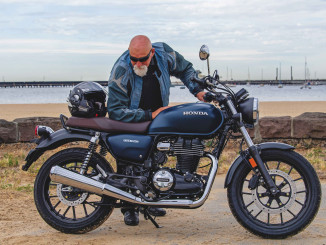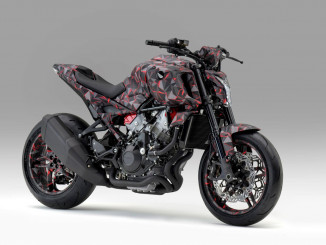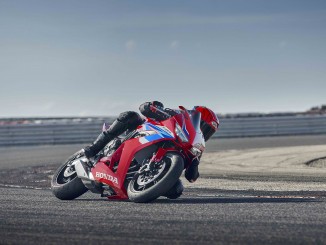
Old became new again when Honda re-introduced the Hornet nameplate in 2023 with the CB750 Hornet. This was ARR’s launch report at the time…
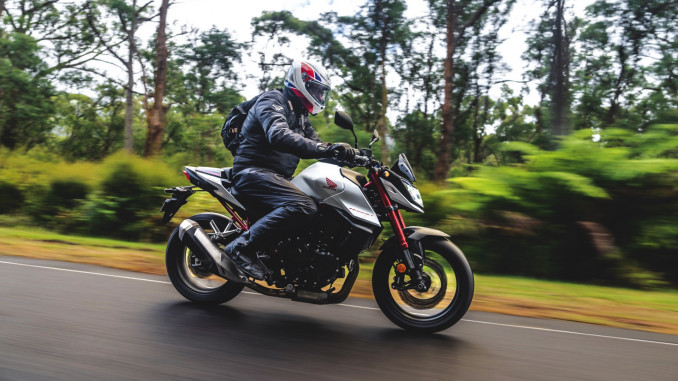
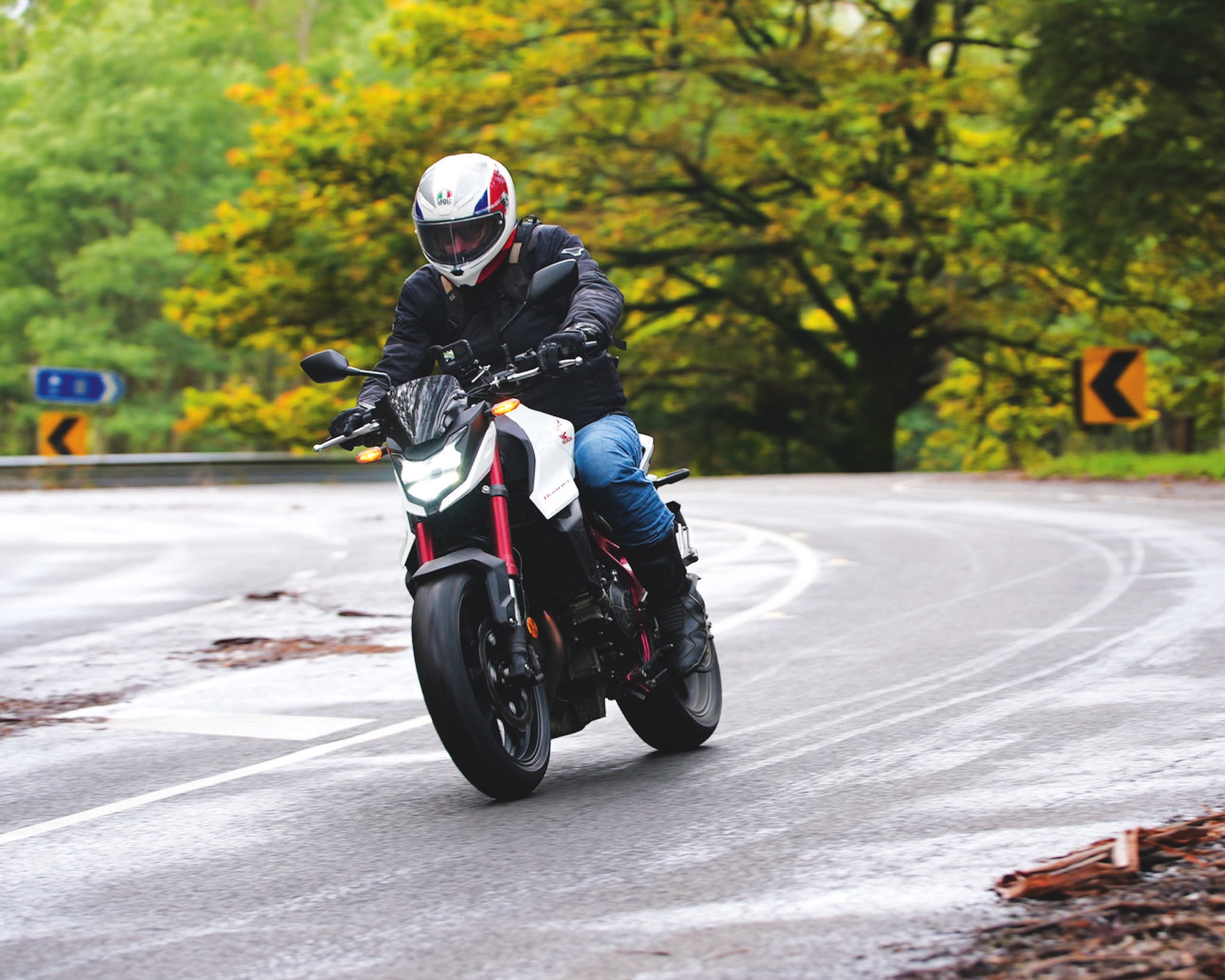
I was on the Honda CB750 Hornet and the corners were flowing, left, right, left, right… uphill most of the way. Another uphill right and as I exited the corner, I saw the lyrebird scampering across my path. I rolled off and sat up, but our cute, shy and flightless bird was quicker than I’d expected and he was off into the bush long before there was any chance of a collision.
My pace was tempered by the wet road, a result of overnight rain and cold temperatures, and I was enjoying myself far more than usual for a wet ride; a combination of the lightweight Honda CB750 Hornet, brand-new tyres and the glorious midrange of the new machine combined to make riding the ranges east of Melbourne great fun, even in wet weather gear.
This new bike is the first CB750 and the first Honda Hornet with two cylinders… and as a fan of four-pot bikes, I’m seeing their demise as disappointing. But there are reasons behind the changes — they make sense and I need to get over myself. It’s about the ride, not the engine configuration.
A NEW HORNET
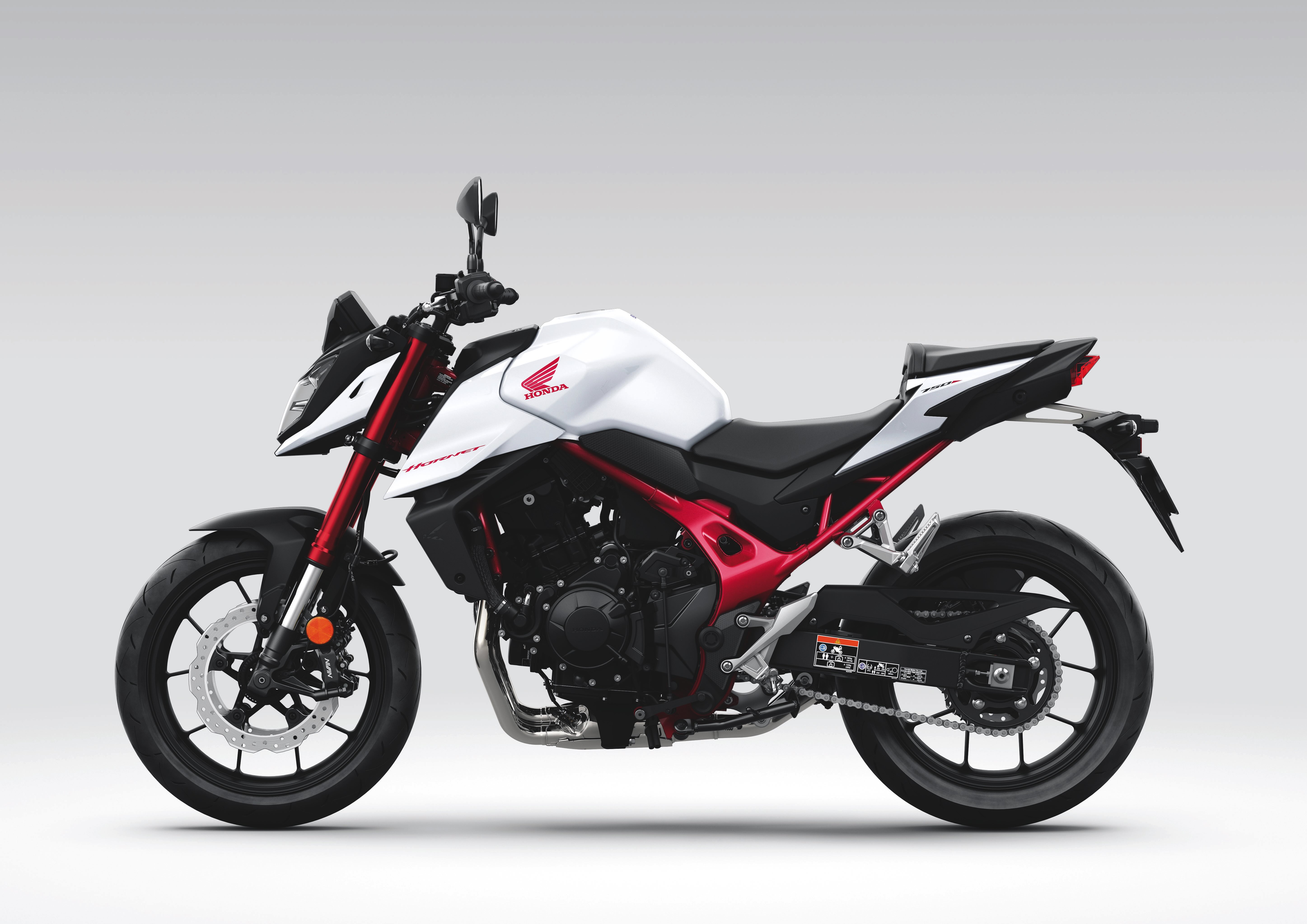
“The shape of a Honda Hornet’s tank is inspired by the insect’s wing,” the assembled bike scribblers were told at the launch of the new bike. The Vespa is named for the sound of a wasp (vespa is wasp in Italian), so that’s two families of two-wheelers named for one bug… but where’s the yellow one?
It’s usually only the big yellow and black wasps that are referred to as hornets, and Honda’s making a yellow Hornet — but we don’t get that one in Australia, only the white or black. A bright yellow would be awesome… maybe next year!
The last Honda Hornets we saw were around 20 years ago and they came in two flavours — 600 and 900. Naked streetfighters thanks to their Supersport-derived powerplants, they were fashionable with their high-mounted mufflers, reasonably affordable and as versatile as hell, capable of taking you to work during the week and blowing the cobwebs out of your mind on weekends.
Honda may have invented the affordable road-going Superbike with the CB750, but was happy to drop the capacity from its range as tastes changed… this is the first CB750 in decades, too. Even today it’s an unusual choice. 650s fit into the LAMs category and seem to be vastly more popular around the world today than 750s, with most manufacturers having something at or a little under 650, including Honda.
The real reason the new CB750 exists isn’t, however, to compete in the LAMs learner market — it’s to take on Yamaha’s MT-07 and 700 Ténéré plus the Suzuki GSX-8S and 800 V-Strom. Remember, this is just the first bike powered by Honda’s new 750 twin — the Transalp adventure tourer will be next and more will follow. I’m guessing a CMX cruiser and maybe a faired touring model could be on the CAD screens at Honda HQ.
What we have right now is the streetfighter — 190kg dripping wet (well, that was how I rode it), 91hp (67.5kW), 75Nm of torque… regular readers will know I believe the 100hp/200kg package is a great formula for a road bike, offering spirited performance without undue weight. Combining those figures with a $12,099 (plus the dreaded on-road costs: around $13,500 ride away, depending on where you live) makes this bike an absolute bargain, provided it’s any good (which it is… spoiler alert, it’s actually bloody great).
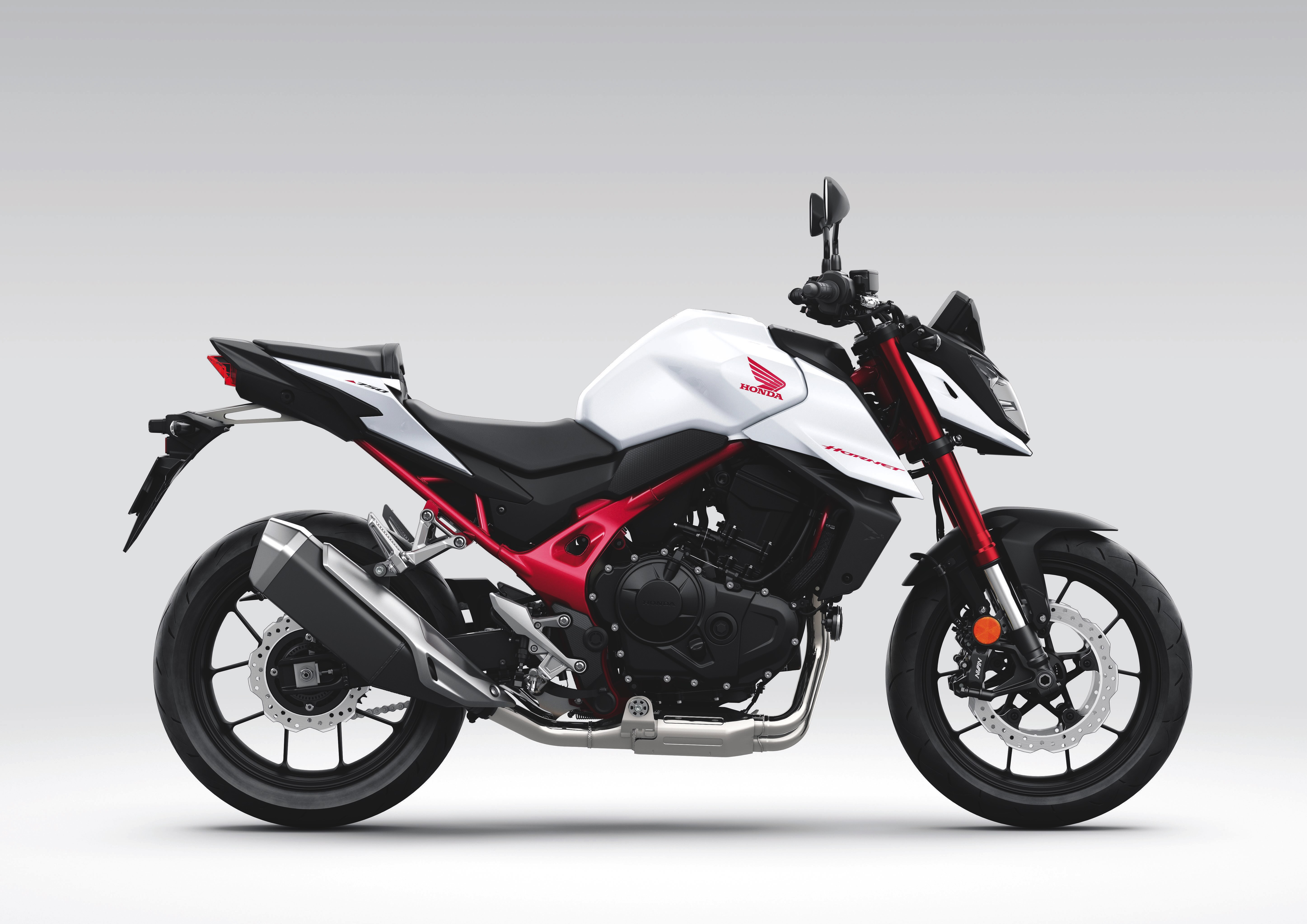
From a distance its streetfighter style is sporty, modern, naked. Closer it’s recognisable as a Honda in ways that are difficult to describe — maybe the conservative colours, lack of contrasting graphics, the way the Unicam engine is familiar from the Africa Twin. Add it all up and no bike enthusiast will think you’re riding a Yamaha.
Yet it would have been Honda’s long-term nemesis which built the bike the CB750 really targets — the MT-07. A hugely popular bike for Yamaha, especially in Europe, the MT-07 has popularised the parallel twin engine for mid-range bikes because it’s good-looking, very capable and affordable. The CB750 beats the current MT-07 in every one of those categories with one giant caveat: in Australia it’s the MT-07LA which is the big seller, the sleeved-down sub 650cc version that is learner approved… the HO (high output, 689cc) model sells well, but nothing like the LA.
On the other hand, Honda doesn’t really need a LAMS CB750; its range of 500cc twins, 650cc four and 300s are big sellers anyway.
A NEW MOTOR
Built to power a variety of machine styles, Honda’s new 755cc liquid-cooled parallel twin is an all-new powerplant. Of course, its concept draws heavily from the 1100cc twins, but there are many unique features.
Being a modern Honda it’ll come as no surprise it features a Unicam top-end — a single overhead cam of ingenious design which Honda claims provides the benefits of dual cams with less weight and allows for a more compact design.
Honda’s engineers used knowledge gained in the development of its CRF dirt and adventure bikes to build the compact motor. There are downdraft air intakes with a Vortex Flow Duct designed to create better combustion, which might be reflected in the excellent fuel consumption: the 15.2L tank is good for over 300km, with the bike telling me my fuel usage was 4.7L/100km, and I wasn’t being gentle on the throttle.
Unlike some of the new-generation twins, there’s no balancer shaft — the primary drive gear has a double job, feeding power to the clutch and reducing crankshaft vibrations. Of course the crank has a 270-degree firing order to give a V-twin feel. The cylinders also use a Ni-SiC (Nickel-Silicon Carbide) coating, as used in the CBR1000RR-R Fireblade and CRF450R, the only other two models to get the treatment so far… a new-generation of the engine coatings we’ve had for decades and built to reduce wear and improve piston-to-cylinder sealing.
Pushing around a lightweight bike means the engine feels responsive and sprightly. It’s the midrange where the bike really shines: at 6000rpm the tacho needle (OK, it’s a digital display, but what you see looks like a needle sweeping around a clockface) is pointing straight up — it’s the meat of the torque, peaking at 7250. I was able to swing between turns up a winding mountain road leaving the bike in third, letting the torque do the job.
The old four-cylinder Hornets were born of racetracks, their engines re-purposed from machines designed to set fast lap times and win races. As such they were peaky, needing to have a lot of revs onboard to make rapid progress — especially the 600, which is the more comparable bike. These days mid-range means anything up to 900cc.
For all of my love of the inline four, this is progress. Gone are the twin-cylinder tingles and lacklustre performance of twins in decades past, replaced by lightweight, torquey and flexible motors. Another benefit should be cost of ownership. In general a naked twin will be cheaper to maintain than a four, although we don’t have hard data on that yet. The Hornet’s service schedule is oil every year or 12,000km, oil and air filters every second change and valve clearance check every 24,000.
TECH AND MORE
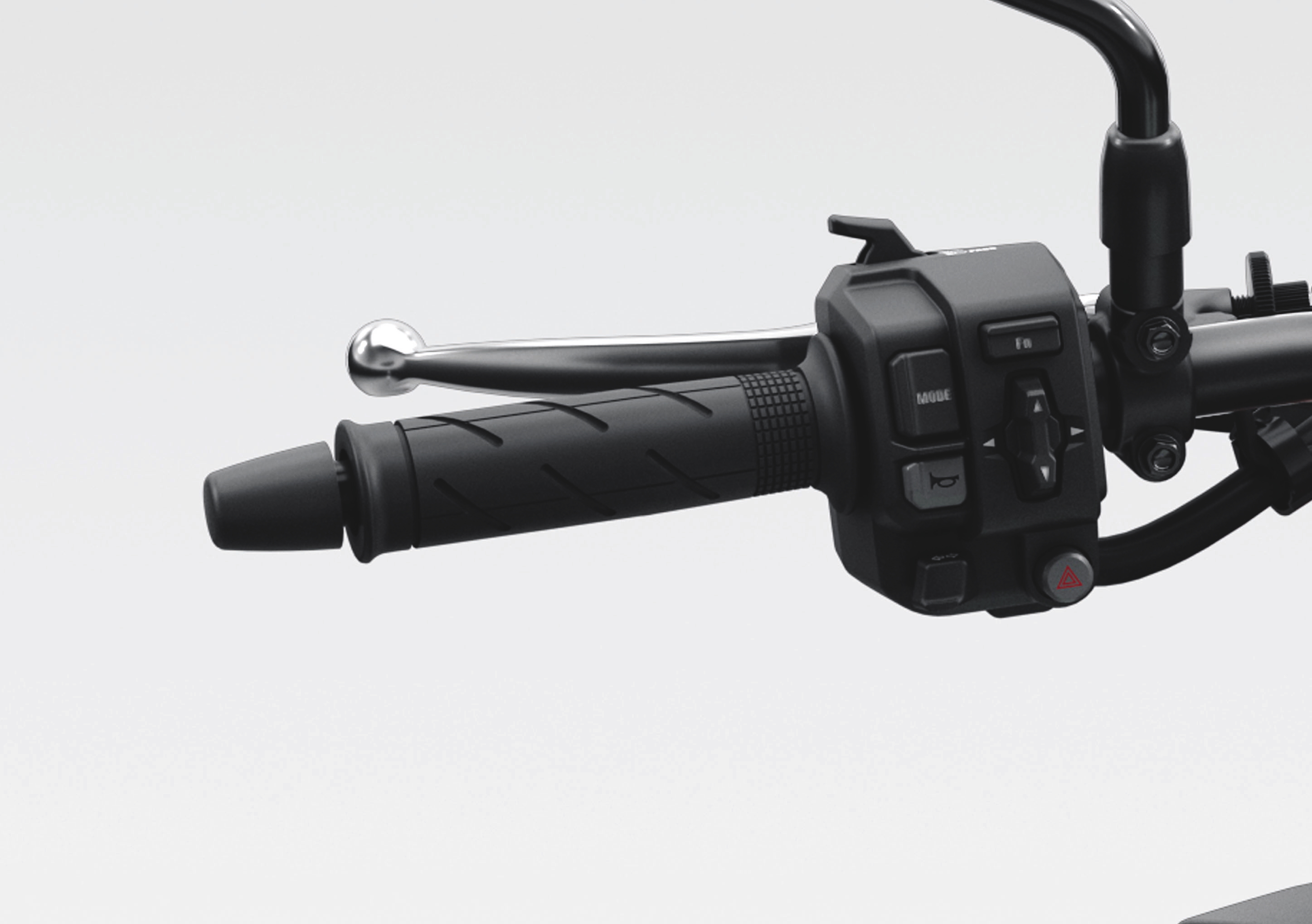
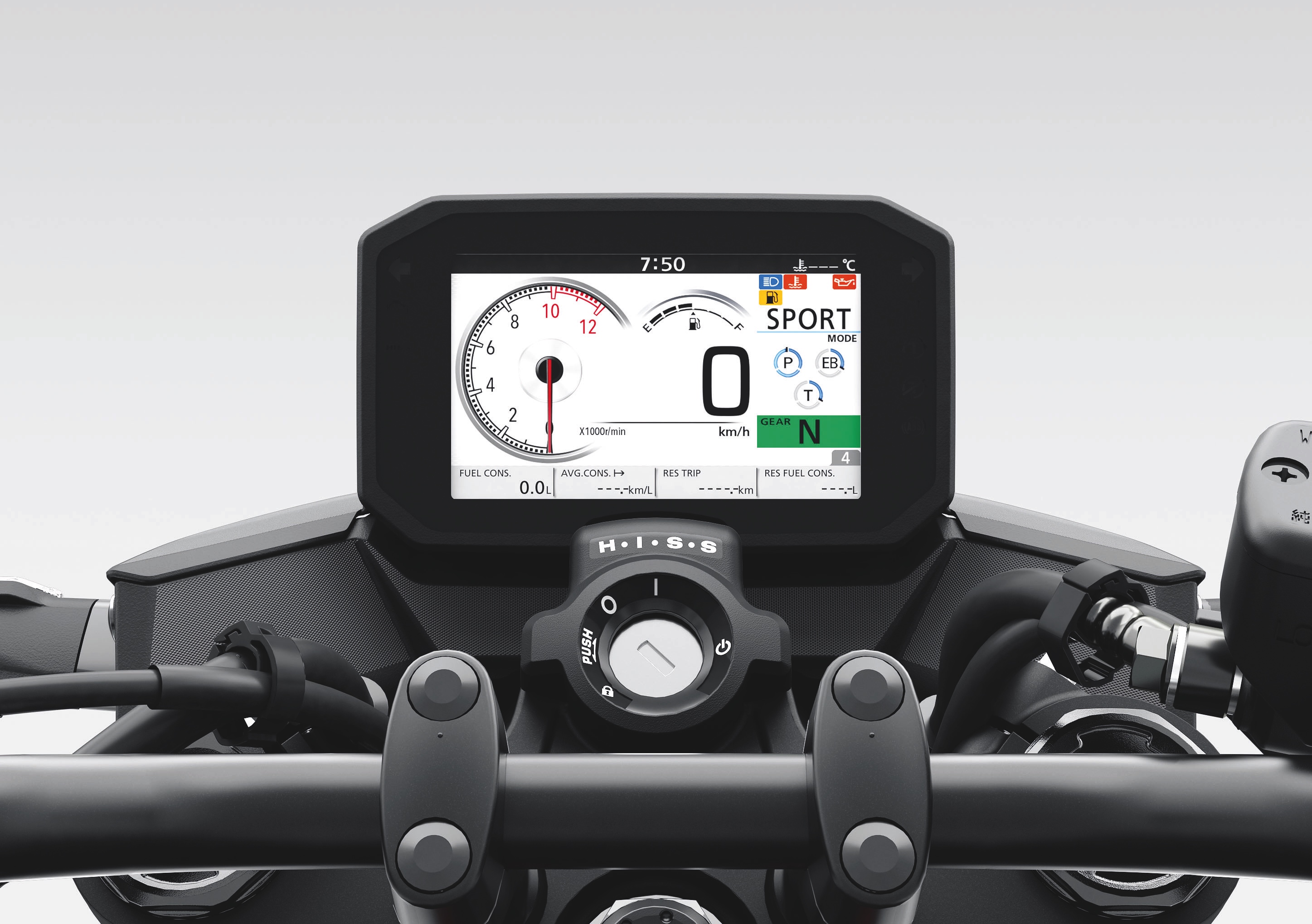
Big-bike technology is starting to trickle down to lighter, more affordable machines; the Hornet features Honda’s flavour of power modes and electronic safety controls. There’s throttle-by-wire, three power modes (Sport, Standard, Rain), Engine Brake Control and Honda Selectable Torque Control, aka traction control, which has wheelie control built-in. Upright it’ll let the front wheel come up a touch, but you’ll have to switch it off to do the massive wheelies the bike is perfectly capable of.
I started out in Rain mode and hated it, despite the road being wet. I moved to Standard, which was fine, but really I liked Sport — the power delivery is still fine (not too aggressive) if you’re an experienced rider. I’m sure people buying the CB750 as their first big bike will appreciate the softer power delivery of the other modes, and rain mode is probably great for people who only ride in wet weather when it catches them out.
There’s also a User mode, where you can set each parameter individually. I liked that, because I dislike engine braking (it’s a personal thing). If you turn off the HSTC, it comes back on the next time you turn the ignition back on. Interestingly, all of the modes still provide 100 per cent power — even Rain mode. It’s just the throttle response that changes. Most bikes with Rain mode reduce total output.
The Hornet has standard ABS, not cornering. The assist-and-slipper clutch is light and easy to use but doesn’t have an adjustable lever, and the optional quickshifter felt a little old-school to me. Using the clutch made the bike jerky and not using the clutch for low-rpm shifts was clunky. If I were only riding the Hornet on the road I wouldn’t bother with the quickshifter.
The instruments are awesome — five-inch TFT (Thin Film Transistor) technology and it’s a delight to use. There’s everything there I can reasonably think of except an ambient air temperature gauge. If you have the optional heated hand grips the controls are there, as is the set-up for the Honda Smartphone Voice Control System (HVCS), “which links the rider to their Android or IOS smartphone while on the move and allows voice management of phone calls, messages, music and navigation”.
Well, that’s what’s supposed to happen, but we couldn’t get my iPhone to play ball; despite downloading the required app and following the instructions, no joy. The same bike connected easily to an android phone, so maybe it needed a firmware update or something. I asked about Android Auto/CarPlay integration (which Honda has on the Africa Twin and Gold Wing) and was told that would have required hardware and software which would have made the instruments bulkier and more expensive, so Honda went with its proprietary system. Interestingly it doesn’t appear to need a special type of headset — any Bluetooth unit should work and voice activation is not just functional but encouraged.
There’s space under the pillion seat to store your phone and a USB-C port to charge it.
The lighting is all LED and the indicators are self-cancelling — they use technology to track the path of your tyres, comparing front to rear. When the system decides you’ve completed a turn, it shuts down the indicator.
I reckon the system works not because I had the presence of mind to run experiments during my one day on the bike, but because in a group ride of seven Hornets, I didn’t notice a single time where someone had completed a turn and left their blinker on. That never happens. Honda has built an emergency flashing system into the brake lights — hit them hard and they flash fast rather than just light up.
CHASSIS, SUSPENSION AND BRAKES
The tech is in more than the engine. The forks are trick Showa SFF-BP units, there’s Pro-Link rear shock, a new thin-walled chassis… but beware the smoke and mirrors. The chassis and swingarm are steel. For some people that will be a deal-breaker, but you’d be nuts to think so; this is high-tech steel, thin walled and light. The chassis weighs in at just 16.6kg, considerably lighter than many other chassis in Honda’s line-up. Motorcycles moved to alloy chassis for stiffness and lightness — computer-aided design, modern manufacturing techniques and advanced metallurgy have all but eliminated the need for alloy in a sub-100hp streetbike.
When it come to the forks though, Honda’s making a big deal of the fact that they are Big Piston Separate Function Forks… but given they are also non-adjustable and built to a price, what’s the big advantage? That said, I thought they were fine, especially over smoother roads, and they weren’t particularly harsh over bumps.
The rear shock has five-way preload adjustment and there’s a spanner in the toolkit for adjustment. In standard trim it’s OK, probably better than I expected for a $12,099 motorcycle, but they had to make savings somewhere and this is one spot where they did that. Experienced riders who know how great suspension feels will want to flick this unit for an aftermarket one, but that’s true of every bike in this category and price point… and experienced riders who demand better suspension probably aren’t in the market for a Hornet anyway, so I totally understand where Honda is coming from here. Still, if you hang on to your CB750 for a couple of years then decide to replace the rear shock because it’s worn out, you’ll probably end up wishing you’d done so sooner.
Honda has chosen to run a very standard front tyre (120/70-17, a mix of Dunlop and Michelins on the press bikes) but a 160/60-17 on the rear… and I think that’s smart. 160s are quite a lot less expensive than 180s, and this bike will appeal to buyers looking for economic ownership, not just purchase price. A 90hp streetbike doesn’t need a 180.
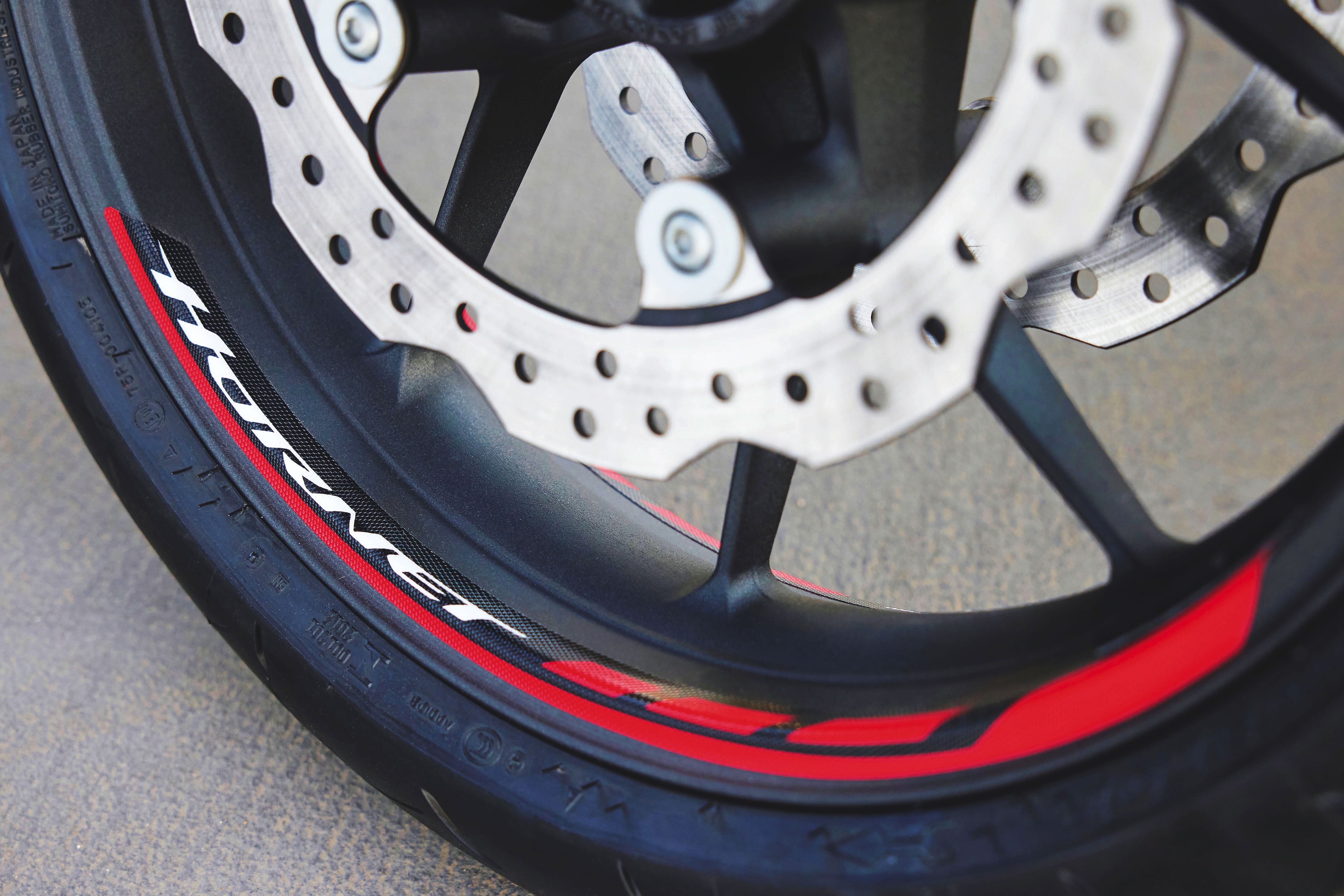
The brakes are Nissin calipers gripping wave discs and they are fine. They don’t have the bite of top-level equipment and I certainly wasn’t taxing their performance on wet public roads, so I can’t comment on how they would stand up to a thrashing down a mountain. However I don’t think any buyer will be immediately seeking out better braking performance.
ACCESSORIES AND OPTIONS
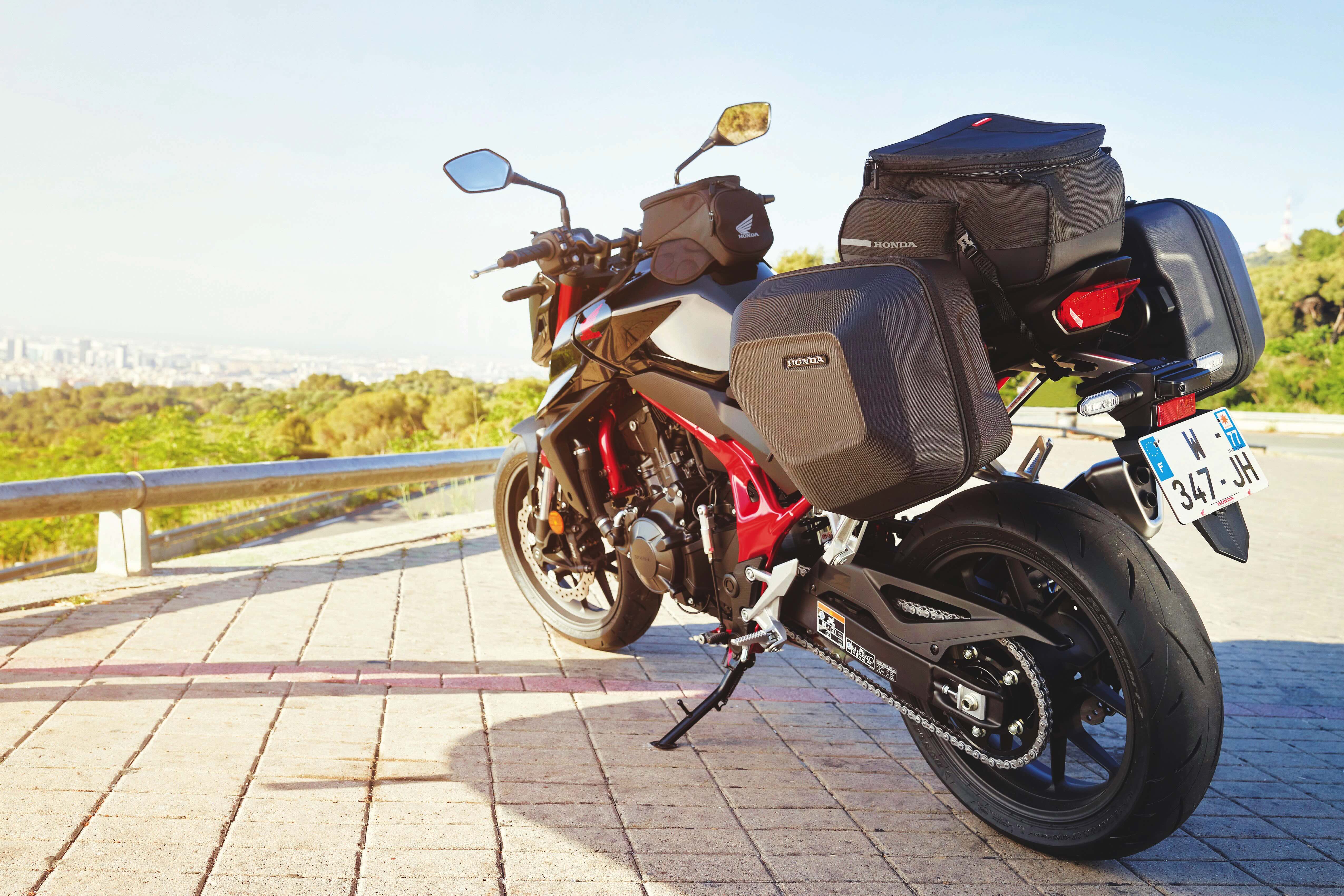
Honda is offering a suite of accessories for the CB750, including luggage, heated grips, quickshifter and bling bits. The seatbag and tankbag looked especially good, the panniers… they mount high and beside the pillion seat, with some of the weight carried behind the rear axle. Not as nicely integrated as some, but it’s awesome to see Honda taking the versatile role the Hornet will be expected to fill seriously.
A GIANT KILLER?
Honda has built the Hornet to be a nice bike — exciting but not threatening, versatile but sporty, inexpensive but built well. It’s got more tech than most of its competition at a price they might be shocked by, and it doesn’t do anything badly. Indeed, I keep coming back to the fact this bike is incredible value for money.
I’m wondering if the Japanese are starting to seriously see the threat of the Chinese eating their market share and are looking for ways to build bikes that beat the newcomers back.
Whatever the reasoning, the Honda CB750 Hornet is no pretender. It’s a seriously good motorcycle at a very low price at a time where sticker shock is very real at dealerships. From a value-for-money perspective, the Hornet gets five stars, no doubt about that. It’s not perfect of course, but if you’re looking for an all-rounder for both transport and fun, it’s hard to think of any other bike that offers more bang for buck.
WHY A TWIN?
Announced in 1968 and first sold the following year, the CB750 is a legendary bike, the machine which re-defined affordable performance and offered riders a smooth, powerful, reliable and attractive package for everything from commuting to touring and, of course, racing.
It was so popular the rest of the Japanese Big Four followed suit, building four-cylinder bikes in their millions — and riders around the world lapped it up. Younger readers may have never heard of the UJM (Universal Japanese Motorcycle), a term used to describe any naked Japanese inline four.
As the ’70s slipped into the ’80s, the philosophy of “Win on Sunday, Sell on Monday” was rampant, so manufacturers were building faster and faster sportsbikes… but to get race-winning performance from them it took engines to crazy places — like having all the performance in the top third of the rev range.
BMW, Ducati, Harley-Davidson and even Moto Guzzi managed to stay in business building twins with usable torque rather than high-power-output screaming fours, but the Japanese brands were the big sellers. People were starting to take notice, though. At the first public ride day at the then-new Eastern Creek Raceway (now Sydney Motorsport Park) I photographed a BMW R 100 GS Boxer twin carving through the field of GSX-Rs, FZRs and CBRs… because the guy could ride, obviously, but everyone else was trying to learn the track and keep their bike on the boil — GS guy could keep his engine thumping along nicely while picking his lines with ease. It is usable torque which makes for rapid, easy progress and I was seeing that in action.
Later that decade, Yamaha released the TDM850 and Super Ténéré 750, what I consider the first of the modern parallel twins — liquid cooled, four valves per cylinder, midrange motors. The TDM was hugely successful in Europe, where its balance of weight, comfort, performance and price was prized. The Super Ténéré was the first adventure bike powered by a liquid-cooled parallel twin — and now it’s a defining characteristic of the mid-range adventure bike class.
V-twins, however, looked to have become the configuration of choice for a while. Most brands experimented and Suzuki was very successful with its 650 and 1000/1050 models. However, Yamaha had introduced the sporty TRX850 in the 1990s and while it sold well in Australia, it wasn’t sold at all in America and didn’t last on the market. What it did do, though, was introduce the world
to the 270-degree crank.
By off-setting the firing order of the engine, the sound and feel of the motor went from “British twin drone” to “Italian bike thump”. It gave a parallel twin a V-twin sound and feel. It took a while but eventually the idea caught on, and now nearly all the over-650cc parallel twins available today have a 270-degree firing order.
Along the way riders were discovering the joys of torque rather than horsepower. Yamaha introduced the MT-01, a massive V-twin cruiser engine in a sporty chassis and it was incredible to ride (but too expensive and weird to sell). However the die was cast and the range of bikes spawned by the Massive Torque idea has gone on to be very, very successful for Yamaha, in particular the twin-cylinder MT-07. BMW, KTM and now Honda and Suzuki have followed suit with mid-range liquid-cooled twins with 270-degree cranks.
It also turns out it’s easier to get a 750cc twin to comply with noise and emissions regulations than it is with a four, for all sorts of technical reasons beyond the scope of this article, but when Honda sat down to design a CB750 for 2023, I’m sure some engineers wanted to stay with tradition and build a four… but the economics and the market had changed.
SPECIFICATIONS
Honda CB750 Hornet
ENGINE
Type: Liquid-cooled SOHC parallel-twin four-stroke
Capacity: 755cc
Compression ratio: 11:1
Engine management: Digital electronic
PERFORMANCE
Claimed maximum power: 67.5kW (91hp) @ 9500rpm
Claimed maximum torque: 75Nm @ 7250rpm
Fuel consumption: 4.7L/100km
TRANSMISSION
Type: 6-speed constant mesh (quickshifter optional)
Final drive: Chain
Clutch: Slip and Assist
CHASSIS AND RUNNING GEAR
Chassis: Steel Diamond thin-walled chassis. Box section steel swingarm
Front suspension: Showa SFF-BP non-adjustable 41mm USD forks. 130mm travel
Rear suspension: Single Pro-Link spring/damper unit adjustable for preload. 150mm of travel
Front brakes: Dual 296mm wave discs. Nissin radial mount 4-piston calipers. ABS
Rear brake: 240mm disc. ABS
Tyres: F: 120/70ZR17 R: 160/60ZR17
DIMENSIONS AND CAPACITIES
Rake: 25°
Trail: 99mm
Claimed wet weight: 190kg
Seat height: 795mm
Wheelbase: 1420mm
Fuel capacity: 15.2L
ELECTRONICS, RIDER AIDS & CONVENIENCE FEATURES
5-inch TFT instrument display. All LED lighting. Self-cancelling indicators. Emergency stop flashing brake lights. Riding modes, switchable traction control (HSTC), 2-channel ABS. Smartphone (HVCS) connectivity. Underseat USB-C charging port
ETCETERA
Price: $12,099 + on road costs (approx. $13,500 Ride Away)
Colours: Pearl Jasmine White, Graphite Black
Test bike supplied by: Honda MPE Australia
Website: https://motorcycles.honda.com.au/models/onroad/street/cb750-hornet
Warranty: 3 years unlimited kilometre (2 year std + 1 year bonus)