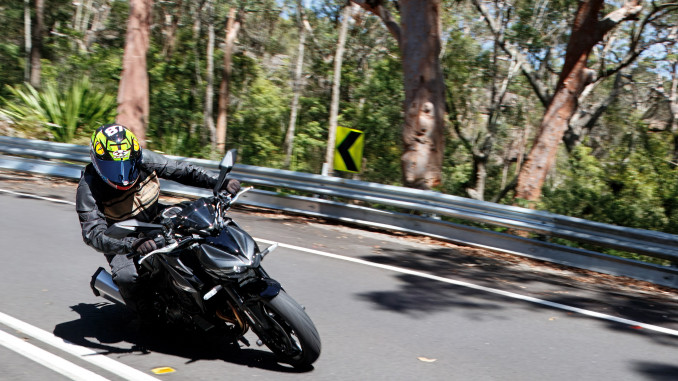
The flagship Kawasaki Z1100 supernaked now has more punch, more tech and broader real-world usability.
Earlier this year we tested the Kawasaki Z1100. Kawasaki’s Z models have always been about emotion as much as outright performance. When the “Sugomi” design philosophy arrived with the 2014 Z1000, it defined the modern Z identity – sharp styling, a crouched stance, and a riding experience that encouraged you to seek out corners purely for the enjoyment of riding. The new Z1100 builds on that idea, but it also broadens the bike’s appeal. It remains unmistakably aggressive, yet it is also more sophisticated and more usable than previous big-capacity Z models.
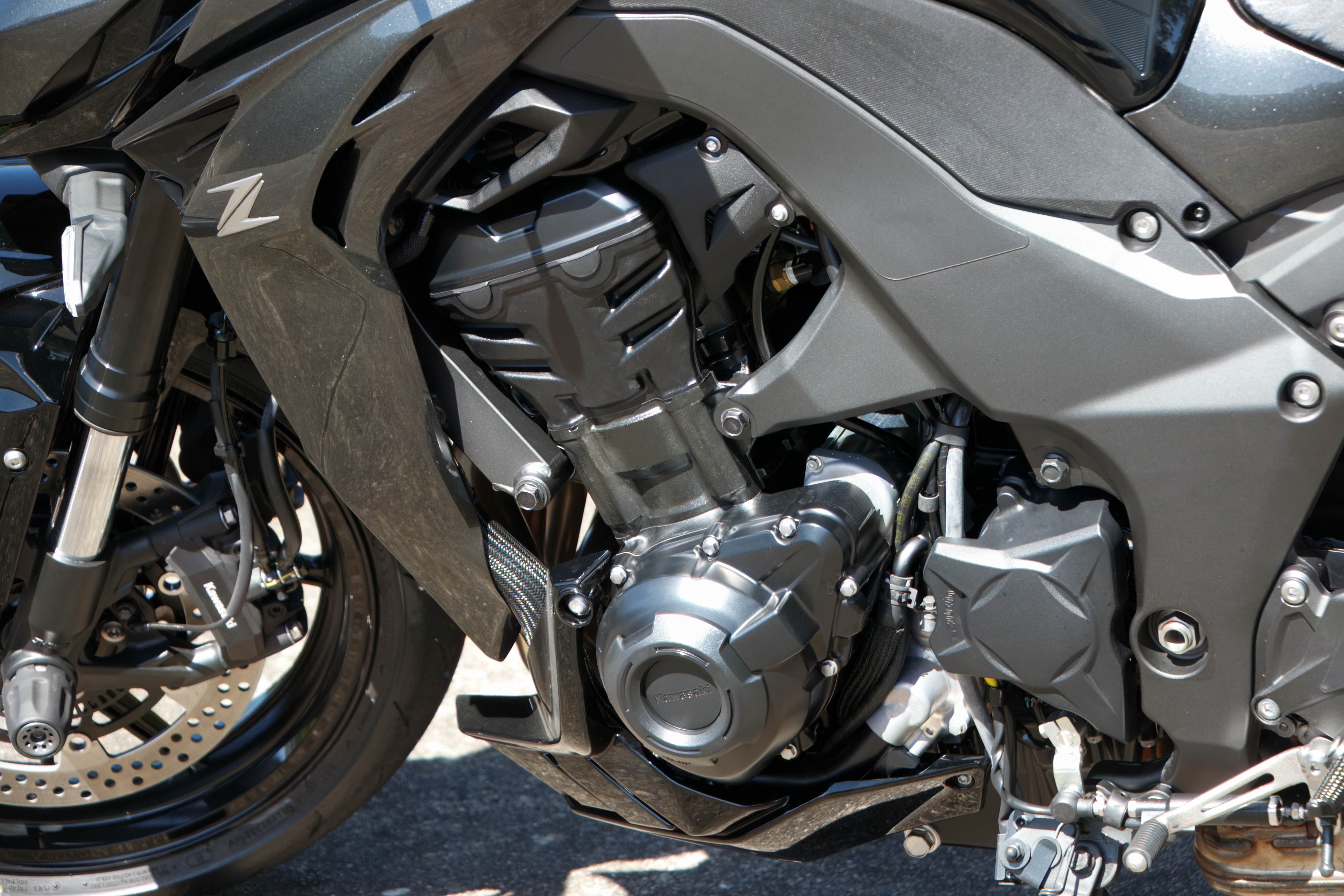
The most obvious change is capacity. The Z1100 replaces the old Z1000 formula with a larger 1099cc liquid-cooled inline four. The increase comes through a longer stroke – bore and stroke now measure 77.0mm x 59.0mm – and Kawasaki’s focus has clearly been on strengthening low and midrange performance rather than peak power figures.
Claimed outputs are 100kW (134hp) at 9000rpm and 113Nm at 7600rpm from a machine with a claimed 221kg kerb weight. While these numbers don’t top the class on paper, the way the Z1100 delivers its performance makes it feel stronger than the figures suggest.
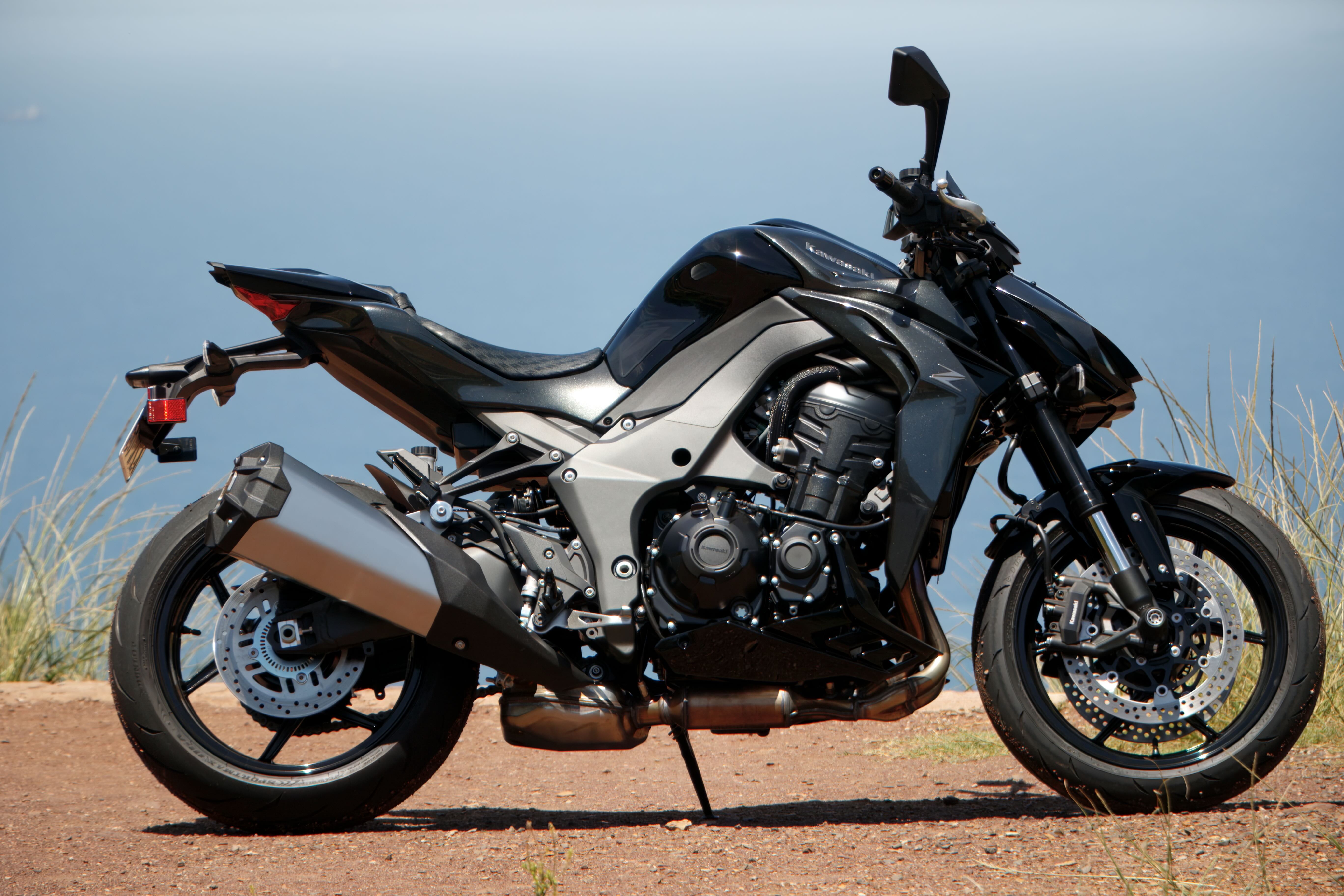
A key mechanical change is the adoption of Electronic Throttle Valves, which Kawasaki says “results in smooth, natural engine response”, and there is no doubt that is how it feels when you crack the throttle. That throttle has a ride-by-wire system which enables a modern electronics suite that includes integrated riding modes, while an IMU feeds data into Kawasaki’s safety systems such as KTRC traction control, KIBS cornering ABS and Kawasaki Cornering Management Function. The Z1100 also comes with cruise control and an up-and-down quickshifter.
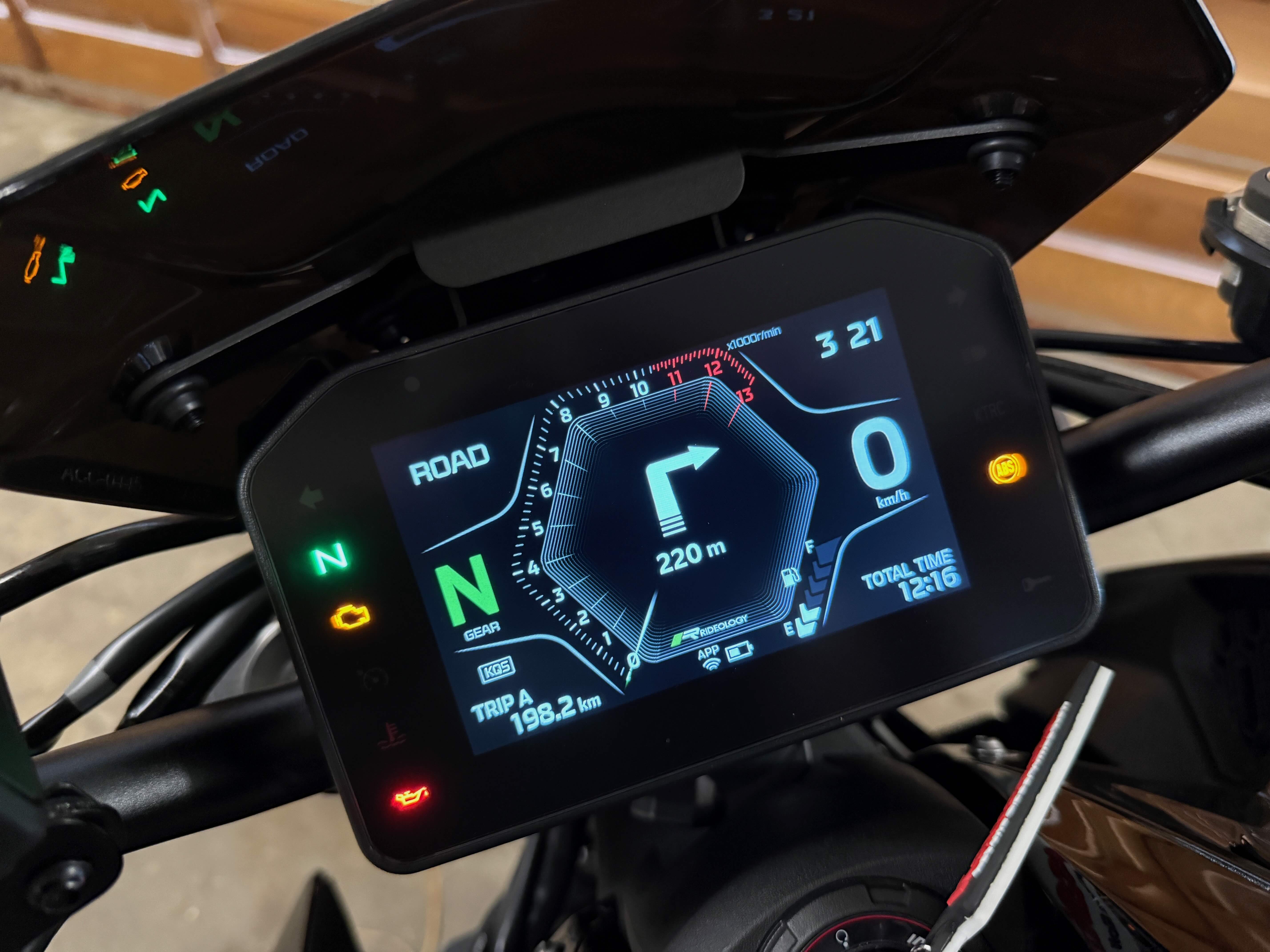
The cockpit receives a five-inch TFT display with smartphone connectivity via Kawasaki’s Rideology app. In practical terms, the Z1100 moves away from the “raw streetfighter” approach and positions itself as a fully equipped flagship supernaked.
Mass centralisation remains a priority. The Kawasaki Z1100 uses an aluminium twin-tube frame with the engine acting as a stressed member, while a 4-2-1 exhaust system routes through a large pre-chamber beneath the engine before exiting through a single silencer. The layout lowers the centre of gravity and concentrates mass close to the bike’s centreline, which contributes directly to the bike’s agility.
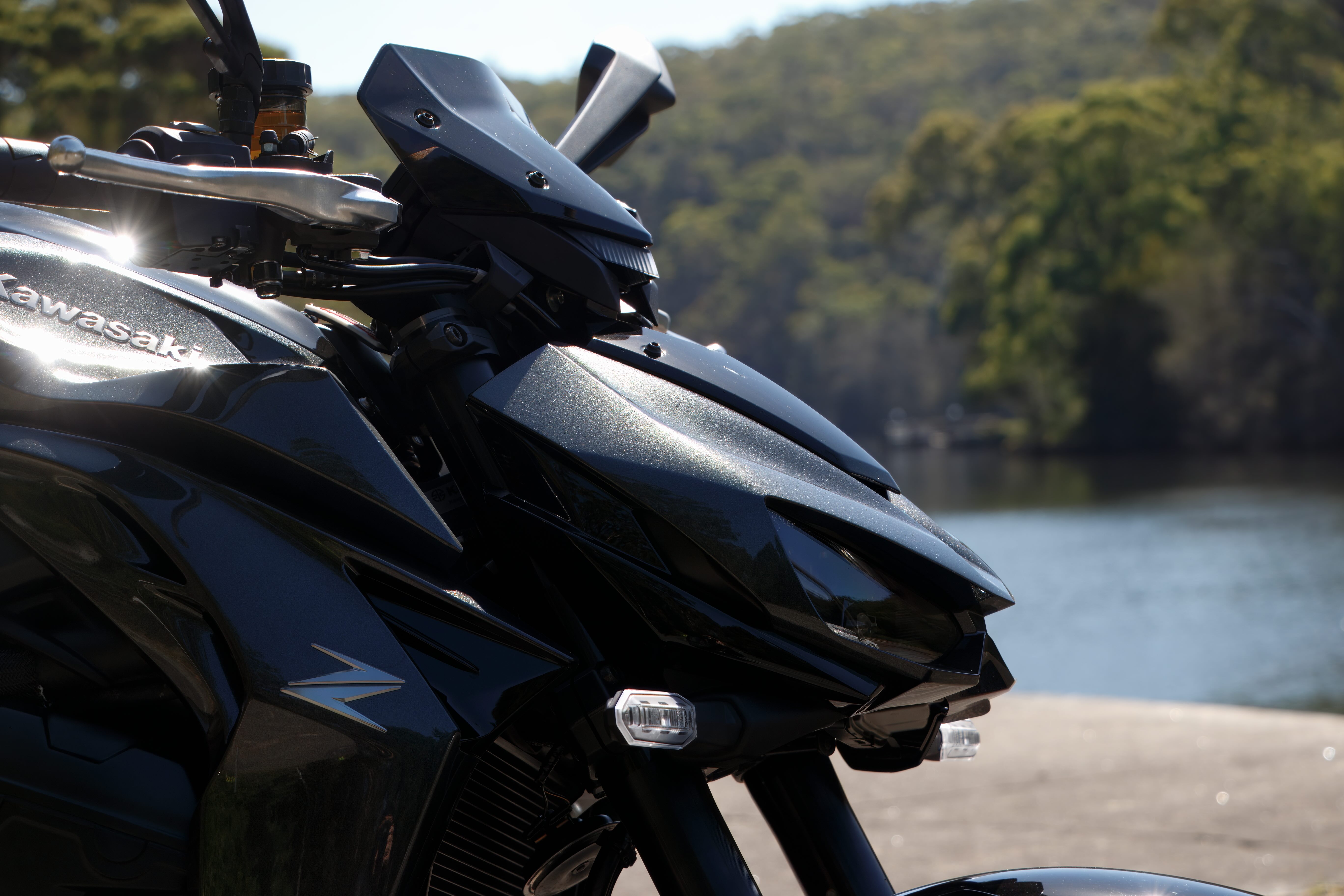
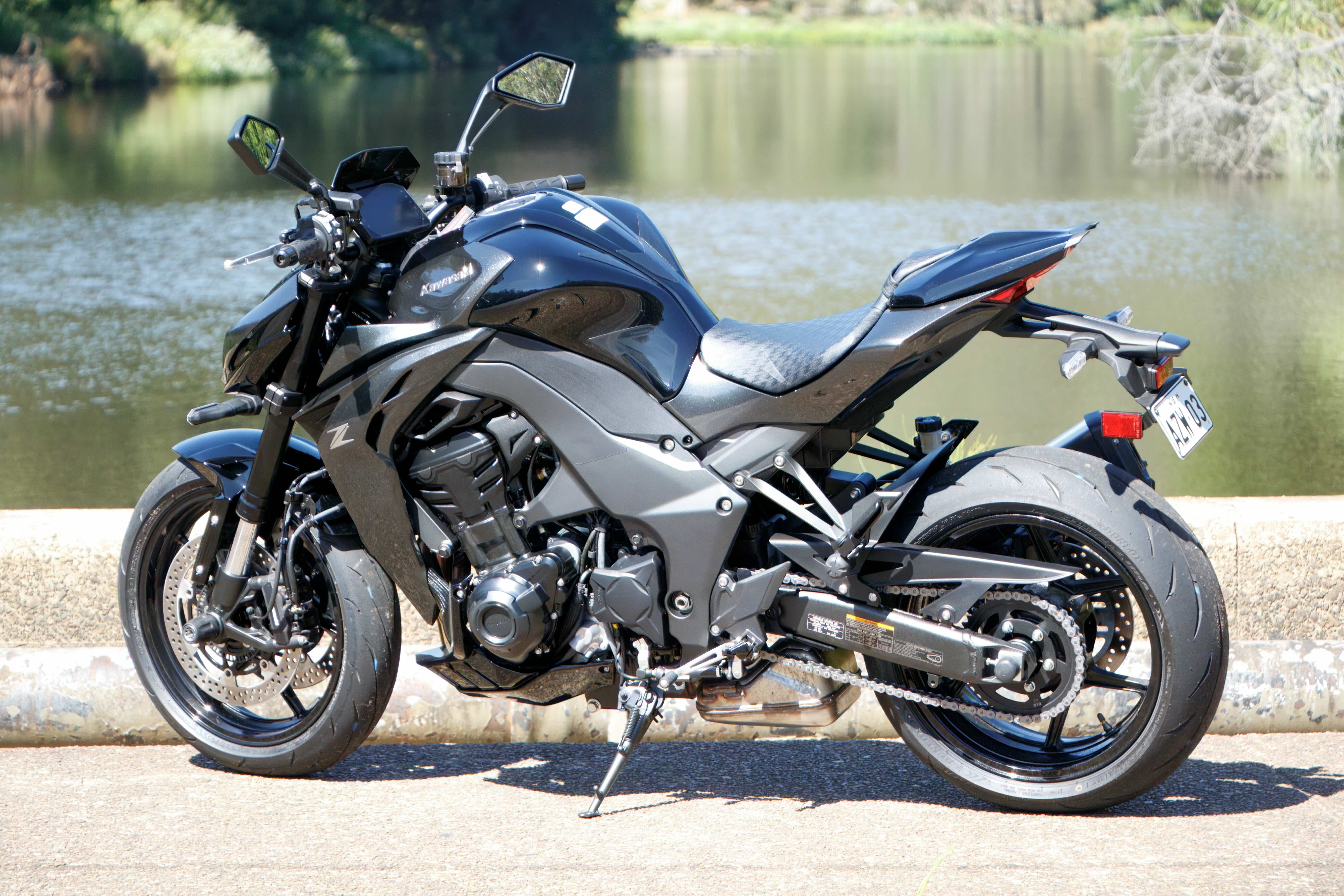
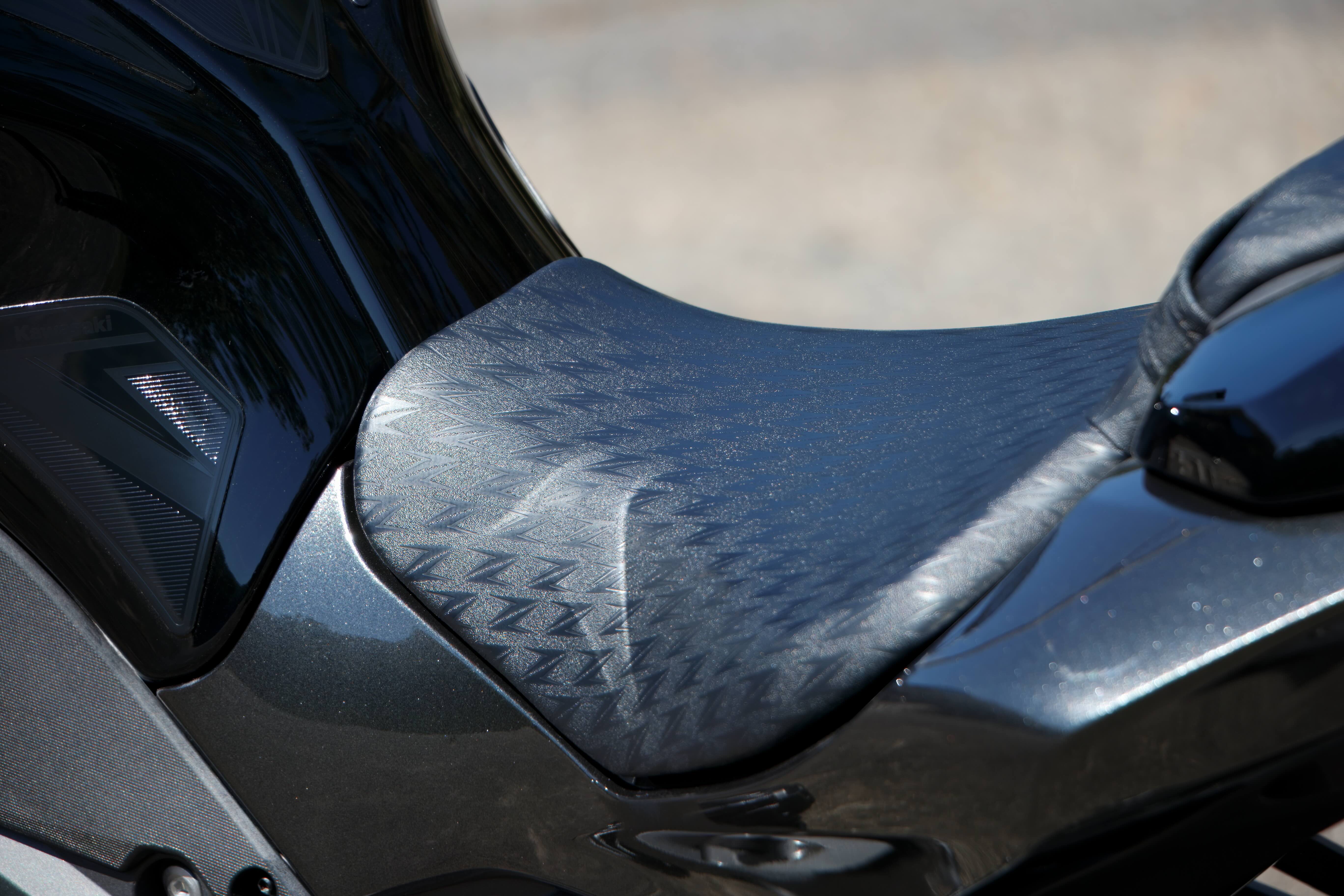
Styling remains aggressive. The Z1100 carries the familiar crouched stance and angular bodywork that defines the Z family. The test bike’s paint finish and detailing were particularly impressive – chrome badges, textured seat material with subtle Z logos and careful finishing touches that lift the overall impression above the typical blacked-out naked bike.
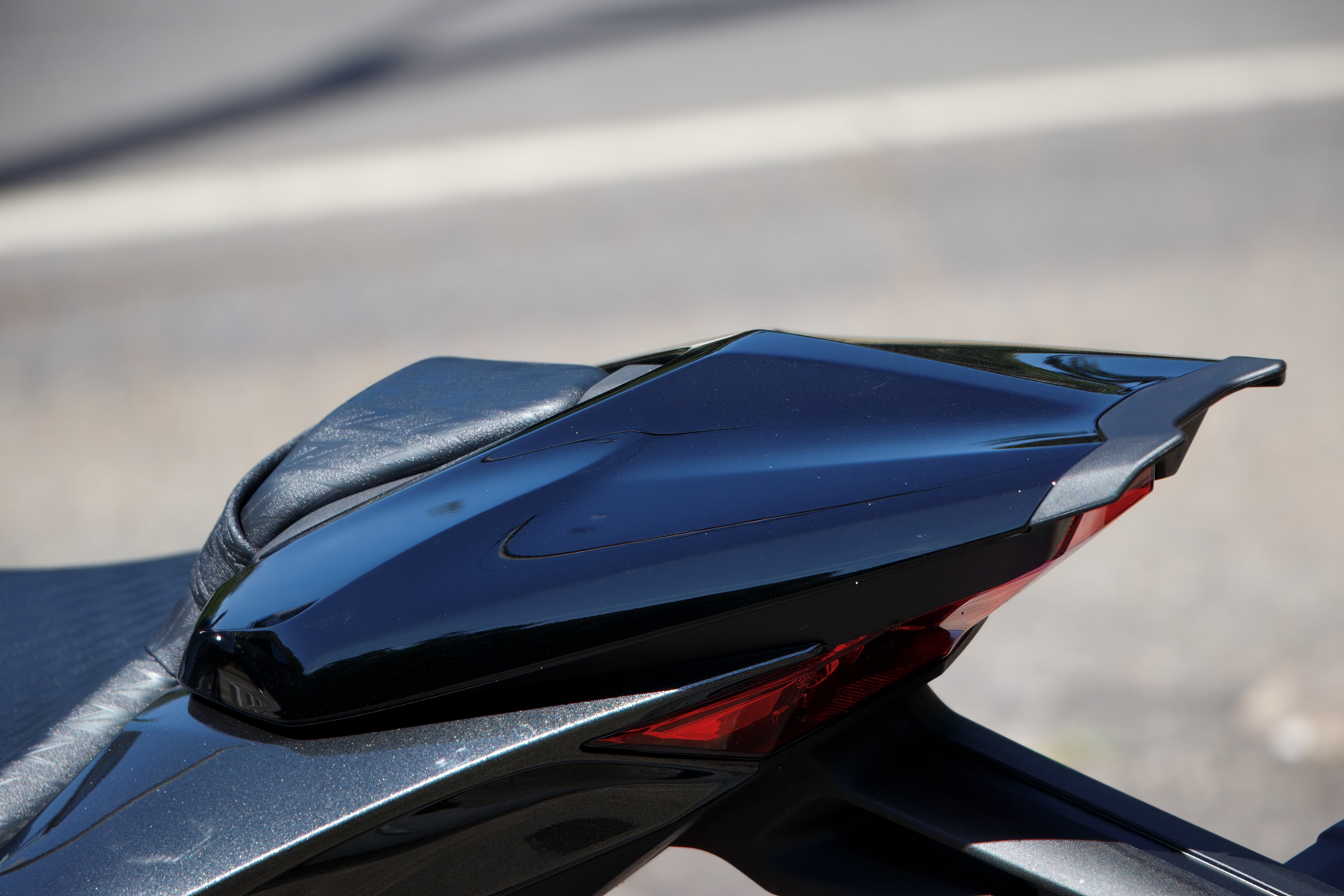
The exhaust silencer is large, but its distinctive shape integrates well with the bike’s design rather than appearing as an afterthought. With the optional pillion seat cover fitted, the tail looks sharper again, reinforcing the bike’s streetfighter attitude.
INITIAL IMPRESSIONS
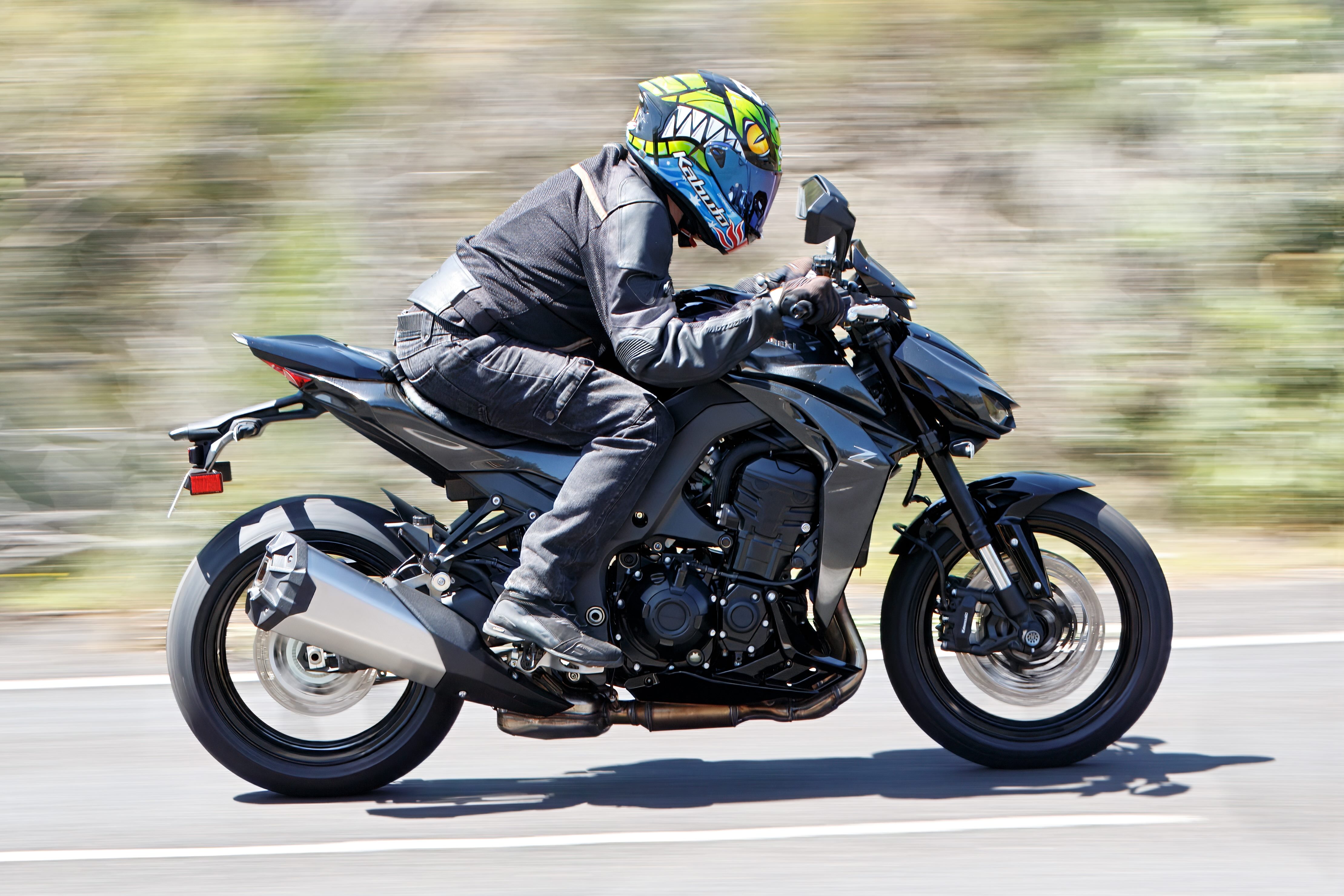
Climb aboard and the first surprise is how sensible the Z1100 feels. Despite its aggressive styling, the riding position is upright and comfortable. The handlebar is wide without being excessive, the reach to the grips is short, and the footpeg position strikes a good balance between sporty and practical.
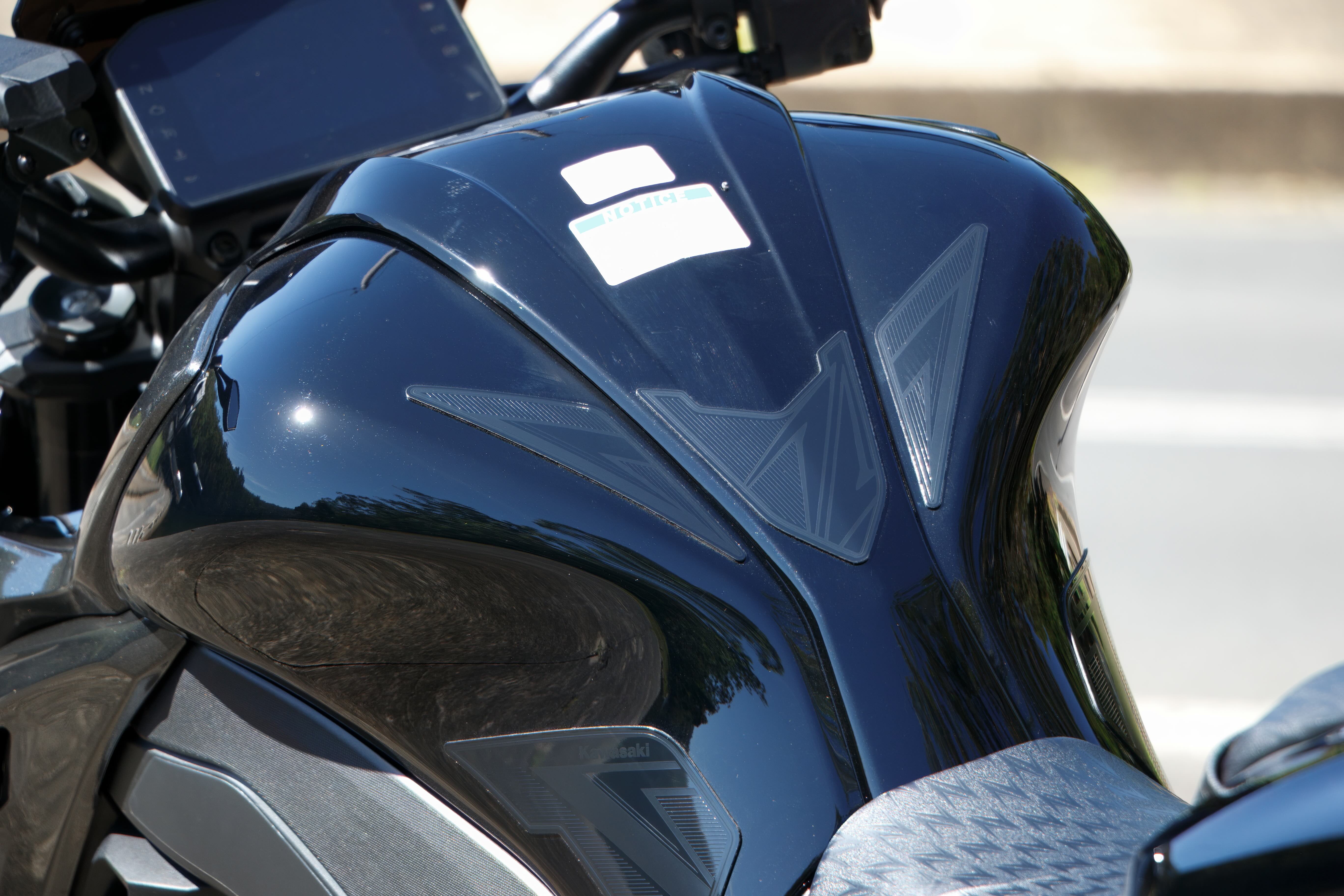
Seat height is 815mm and feels manageable even for shorter riders. The tank appears wide when viewed from outside the bike but is well sculpted where your knees grip it. The seat itself offers enough space to move around during spirited riding while remaining comfortable on longer journeys.
The mirrors deserve particular praise. They are clear, well positioned and largely free from vibration — something that cannot be said for all naked bikes.
Switchgear takes some familiarisation. Most functions are controlled from the left switchblock and the small lettering requires a moment to decipher at first. Once you understand the layout, it works well enough, but the interface isn’t the most intuitive in the class.
The five-inch TFT display is bright and easy to read. Two display layouts are available, including one that integrates turn-by-turn navigation when connected to the Rideology smartphone app. Without navigation active, the central display can show maximum lean-angle readings — a feature that some riders will no doubt enjoy more than others.
The system also displays a comprehensive range of data including gear position, riding mode, coolant temperature, fuel range, fuel consumption, battery voltage and more. It’s a lot of information, but the layout keeps it readable.
Rideology connectivity is hit and miss, offering maintenance reminders, ride logs and navigation functions, but the latter requires activation through a dealer-supplied QR code and, during testing, the connection occasionally dropped out while also drawing significant battery power from my phone. Like many such systems from other manufacturers, Kawasaki’s Rideology is useful but not flawless.
PERFORMANCE
If spec sheets told the whole story, the Z1100 might appear merely competitive. On the road it feels much stronger than that.
The engine delivers a fabulous combination of traits – strong low-end torque, a muscular midrange and an eager top end. Around town it pulls cleanly from low revs, making the bike easy to ride without constant gear changes. Out on the open road the midrange becomes the star of the show, delivering strong drive out of corners.
When pushed harder, the inline four rewards you with a proper rush toward the 10,500rpm redline. The power curve feels broad rather than peaky, giving the engine a flexible character that works well across different riding situations.
The longer stroke contributes to the strong torque delivery, while the well-sorted ride-by-wire control provides throttle precision. Fuelling is smooth at low rpm yet still responsive when you open the throttle aggressively.
Kawasaki’s ride-by-wire system also enables a useful set of integrated riding modes that allow the bike’s character to be tailored to conditions. Riders can choose from Sport, Road, Rain and a manual Rider mode. Sport delivers the sharpest throttle response with full power and minimal traction control intervention, while Road is the default setting for everyday riding, balancing strong performance with a slightly calmer electronic safety net. Rain mode reduces output to roughly 75 per cent and increases traction control intervention to help manage grip on wet or slippery surfaces. The Rider setting allows you to mix and match power modes and traction control levels – including turning traction control off entirely – which will likely be the preferred setup for experienced riders who like to slide the rear and lift the front.
One of the most enjoyable aspects of the engine is the induction sound. Under hard acceleration, the intake produces a distinctive howl that adds a sense of drama even though the exhaust note itself is quite restrained. The exhaust tone is pleasing without being loud – almost certainly the result of modern emissions restrictions. The engine still produces a satisfying mechanical soundtrack, especially when combined with the intake noise.
The gearbox shifts cleanly and ratios are well spaced. Kawasaki has revised gearing so that fifth and sixth gears are longer than before. At 100km/h the engine sits just above 4000rpm, making highway cruising a relaxed affair with the cruise control set.
The assist-and-slipper clutch is light and progressive, and the quickshifter works well in both directions when used with purpose. At very small throttle openings it can feel slightly inconsistent, but under decent acceleration it shifts smoothly.
Fuel consumption hovered around the mid-five litres per 100km range during testing, which aligns closely with the claimed 5.6L/100km figure. With a 17L fuel tank, that allows for up to 300km between refills.
CHASSIS
The Z1100’s aluminium twin-tube frame is designed to deliver both rigidity and rider feedback. The engine acts as a stressed member, with a combination of rigid and rubberised mounting points that allow a small amount of vibration to reach the rider. It’s noticeable through the handlebar and footpegs, but it contributes to the bike’s character rather than detracting from it.
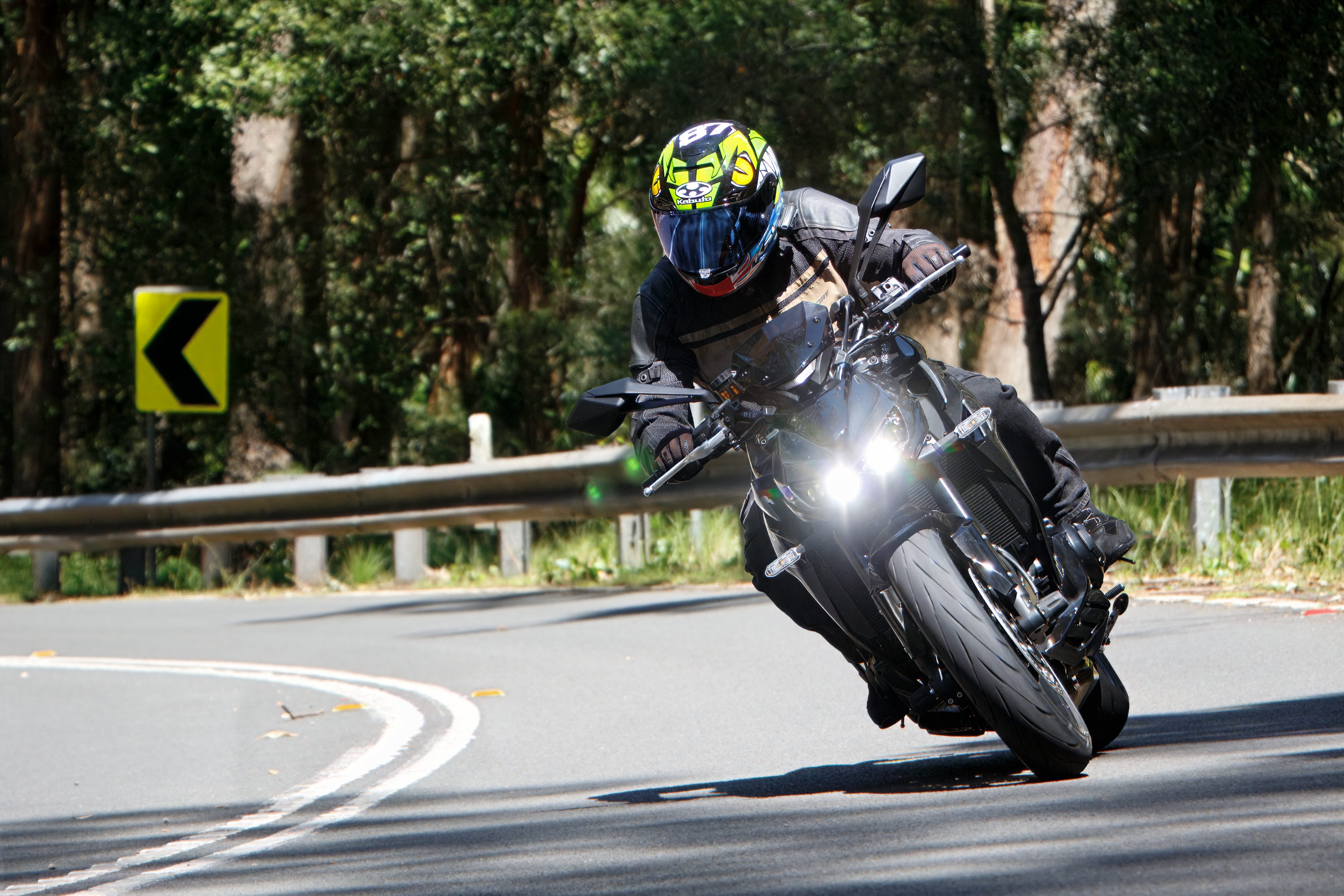
Steering is quick. The bike tips into corners rapidly and feels much lighter than its 221kg kerb weight would suggest it should. Once you adapt to that responsiveness, the chassis becomes seriously rewarding. Mid-corner stability is strong and the bike holds its line well, while on corner exit the strong midrange torque drives the bike forward with gusto.
Up front is a Showa SFF-BP inverted fork with full adjustability. The suspension is firm enough on its standard settings to control aggressive riding, but compliant enough to deal with rough surfaces. Brake dive is well controlled, maintaining stability under hard braking.
At the rear, Kawasaki’s Horizontal Back-link suspension positions the shock above the swingarm to improve mass centralisation and protect it from exhaust heat. The rear suspension feels well matched to the front, offering good support under acceleration and predictable behaviour over bumps.
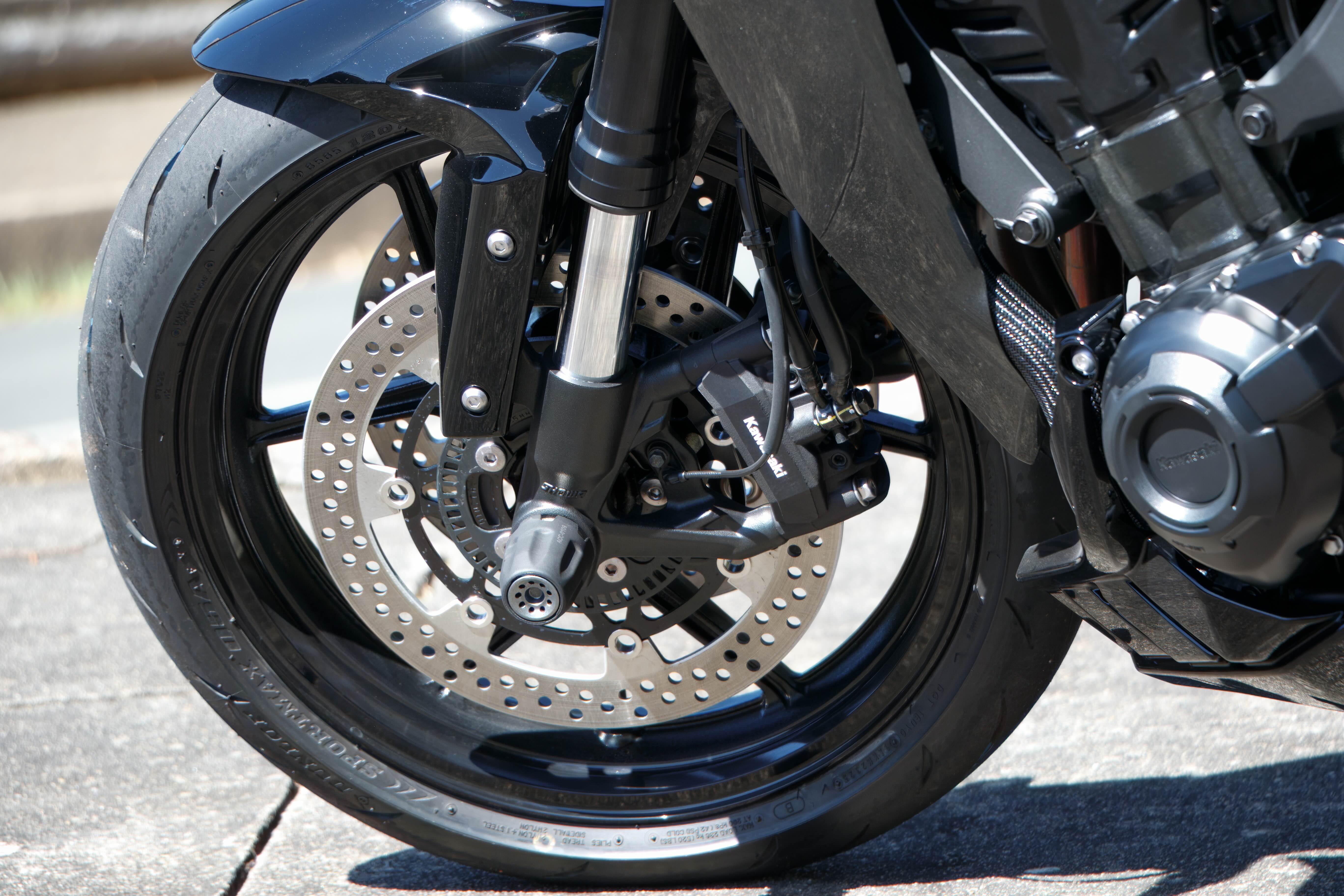
Braking performance is excellent. The twin 310mm front discs and Kawasaki-branded radial-mount monobloc calipers deliver strong stopping power and good lever feel, while the rear brake is useful for settling the chassis mid-corner.
Tyres are Dunlop Sportmax Q5A units – 120/70ZR17 at the front and 190/50ZR17 at the rear. They are designed to offer a good compromise between solid grip on the road and longevity, and the rear features a multi-tread formula to provide improved mileage without sacrificing cornering grip. While I can’t vouch for their longevity, I can vouch for their performance, which is impressive on the road. They provided good feedback and grip when I pressed on in dry conditions, and I had nothing to complain about when it inevitably rained on test.
PRACTICALITIES
Compared with earlier Z models, the Z1100 offers several features that make it easier to live with.
Cruise control is particularly welcome on longer rides. It reduces fatigue on highway sections, although its speed control can vary slightly on steep inclines or descents, so you still need to keep a close eye on the speedo, especially in heavily policed areas.
The optional USB-C outlet provides convenient charging, but it looks like an afterthought and occupies valuable handlebar space. Combined with the already busy cockpit, fitting a phone mount requires careful positioning.
Under-seat storage is minimal and the compact pillion seat prioritises styling over passenger comfort. With the optional pillion cowl fitted, the bike looks fantastic, but pillion practicality is essentially removed.
Lighting is fully LED. Two projector units operate for low beam and all four illuminate on high beam, providing decent night visibility.
SUMMARY
The Z1100 feels like the natural evolution of Kawasaki’s big naked concept – more refined, more technologically advanced and better suited to real-world riding.
The engine is the highlight. Its strong bottom end, muscular midrange and eager top end make it engaging across a wide range of riding conditions.
The chassis is quick and responsive, rewarding riders who stay engaged with the bike. Suspension quality, strong braking performance and sticky tyres complete a well-balanced package.
Technology adds both safety and convenience without overwhelming the riding experience. While the interface takes some learning and connectivity features could be improved, the overall package feels appropriately modern.
The Z1100 retains the aggressive personality that has always defined Kawasaki’s Z family, but it now delivers that character in a more complete and versatile machine.
OPTIONAL EXTRAS
Our Z1100 test bike was fitted with a number of optional accessories:
Front axle slider $144.29
Scratch Resistant Film $46.37
Frame slider $263.44
Crankcase protector $133.18
Tank pad $93.22
Knee Pad set $93.22
Scratch Resistant Film $42.15
Meter cover (wind deflector screen) $139.86
USB outlet $101.6
SPECIFICATIONS
ENGINE
Type: Four-cylinder, DOHC, 16 valves
Capacity: 1099cc
Compression ratio: 11.8:1
Engine management: Fuel injection, 4 x 38mm throttle bodie
PERFORMANCE
Claimed maximum power: 100kW (134hp) @ 9000rpm
Claimed maximum torque: 113Nm @ 7600rpm
Fuel consumption: 5.4L/100km (measured)
TRANSMISSION
Type: Six-speed constant mesh
Final drive: Chain
Clutch: Wet multi-disc assist and slipper
CHASSIS & RUNNING GEAR
Chassis: Aluminium twin-tube frame, engine as stressed member
Front suspension: 41mm Showa SFF-BP USD fork with compression and rebound damping and spring preload adjustability, 120mm travel
Rear suspension: Horizontal back-link shock with rebound damping and spring preload adjustability, 136mm travel
Front brakes: Dual semi-floating 310mm discs,
radial-mount four-piston monobloc calipers
Rear brakes: Single 260mm disc, single-piston caliper
Tyres:
F: 120/70ZR17 Dunlop Sportmax Q5A;
R: 190/50ZR17 Dunlop Sportmax Q5A
DIMENSIONS & CAPACITIES
Rake: 24.5°
Trail: 101mm
Claimed weight (wet): 221kg
Seat height: 815mm
Wheelbase: 1440mm
Fuel capacity: 17L
ELECTRONICS, RIDER AIDS & CONVENIENCE FEATURES
IMU with Kawasaki Cornering Management Function, KTRC traction control (3 modes + off), KIBS cornering ABS, power modes, integrated riding modes, two-way quickshifter, electronic cruise control, 5in TFT colour display with smartphone connectivity,
all-LED lighting
ETCETERA
Price: $20,481 ride away (price checked in 2000 postcode)
Warranty: Two years, unlimited kilometres
COLOURS: Ebony / Metallic Carbon Gray
Website: Kawasaki Australia