The Ducati Multistrada V2 S is a touring bike built by a sportsbike company.
Considerably lighter with similar power and torque to earlier models, yet easier, simpler and cheaper to maintain, the new Ducati Multistrada V2 S is a touring bike built by a sportsbike company.
In Sport mode the bike reminds me of a Supermoto, what with its tall stance and cast wheels, and it goes, handles and stops a bit like one too. Nobody should buy a Multistrada V2 S for its sporting prowess alone though, as the bike is so much more than that, and the fun you can have in the twisties lifts this bike away from much of the opposition.
The new engine feels far more modern. While you lose some bottom-end power, its throttle response is far better, so it’s much smoother to ride through the rev range – none of the lumpiness of the older Testastretta motor at small throttle openings. This means you won’t really ride the bike below 3000rpm, which is where the midrange starts.
Compared to a V4 Multistrada, you lose two cylinders, 55-odd horsepower, and a heap of torque, but you also shed a significant amount of weight – and cost.
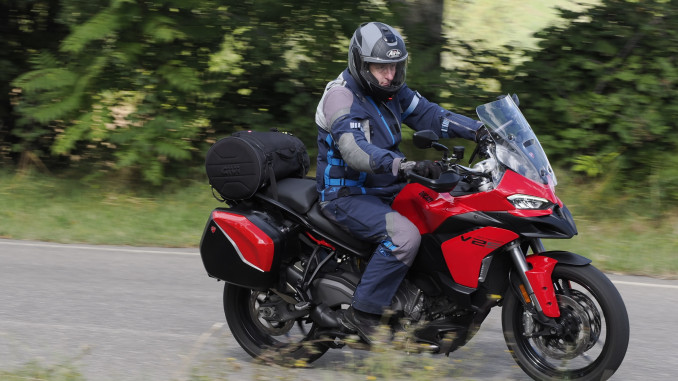
This is a bike for people making a more sensible decision than going the whole hog on the big-bore V4, while saving considerable money in the process. I spent nearly two weeks riding the Multistrada V2 S, mostly with my partner Kirrily on the back in Touring mode, but I also had the opportunity to ride it solo, ride it fast… and even commute to the MotoGP at San Marino for a few days. It proved to be an extremely versatile machine.
Of course, no motorcycle is perfect, and there are several glaring oversights – that would be a good way to put it – that Ducati has chosen to ignore, such as keyless ignition and panniers which seem to come from the early 2000s rather than the modern expandable and centrally locked units you find on some bikes.
But those minor quibbles aside, the new Ducati Multistrada V2 S with its active suspension, 85kW (115hp) horsepower and a dry weight of only 200kg offers a spirited ride, great handling, good comfort, and lots of very handy versatility.
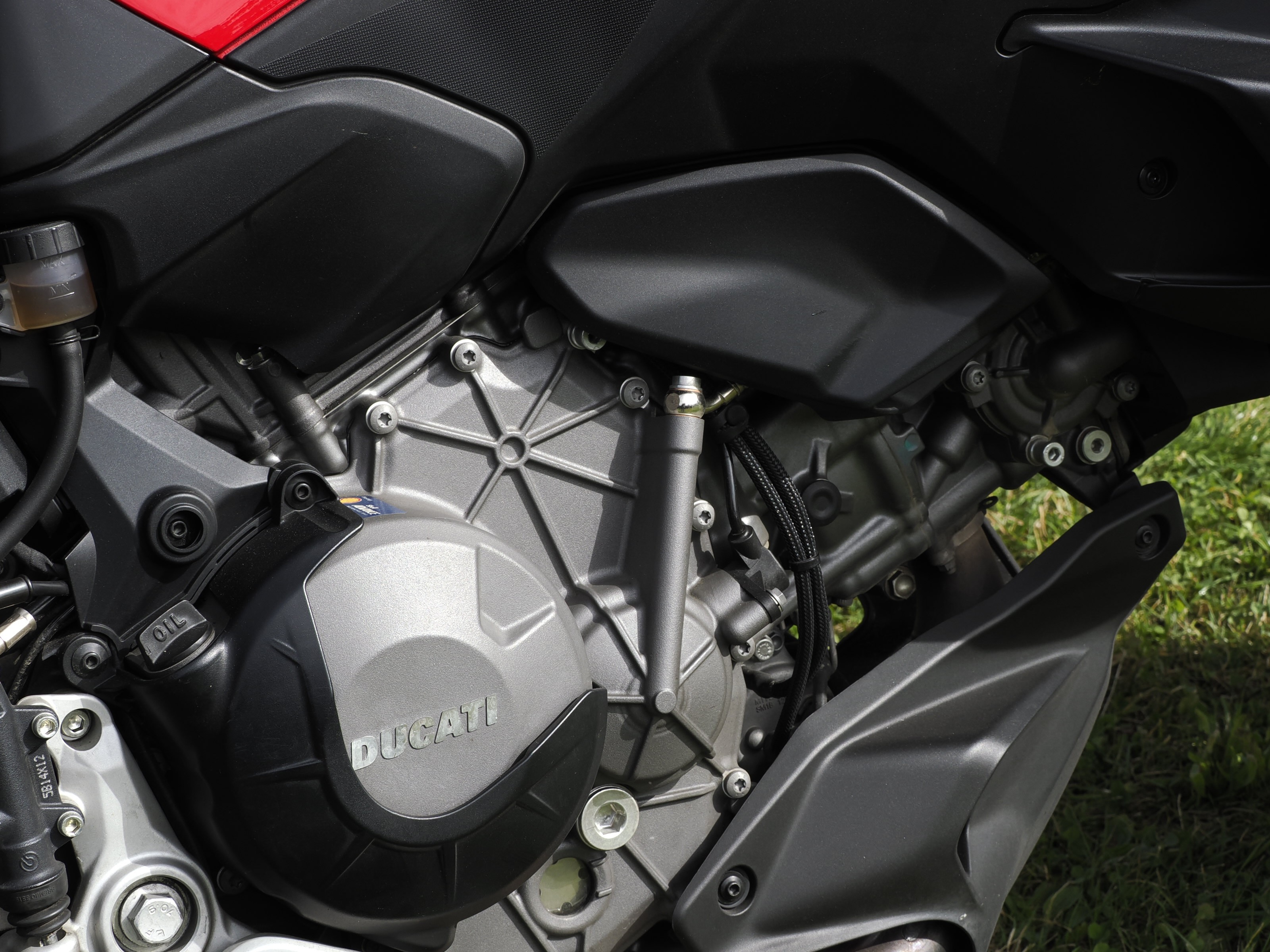
THE ENGINE
The new V2 engine is just under 6kg lighter than the engine it replaces and is far less complex, at least in a maintenance sense, because this one has done away with Desmodromic valve actuation and has gone to valve springs, just like the V4 did before it. That doesn’t mean there isn’t advanced tech inside this engine.
There’s everything from intake variable valve timing, hollow stem intake valves, Ducati’s Quick Shift 2.0, aluminium wet cylinder liners, and a gearbox that is actually slightly different to the sportier bikes using the same engine to make touring a little bit more comfortable. Its power output is fairly linear from about 3000rpm up until about 8000rpm, when it starts to tail off in the way it produces power. But I found I very rarely went over 8000rpm. I just didn’t need to.
There’s well over 75kW (100hp) being produced out of a total of only 85 (115hp), so changing up was well and truly overdue by then. The torque curve is also extremely flat, producing maximum torque at around 8250rpm, with most of that torque available from 4000rpm. So there’s simply no need to rev this bike hard, although you can if the right road is in front of you.
Making touring even easier is a slightly lower first gear and a slightly taller sixth gear compared to other bikes in the Ducati range using the same engine. This means lower revs when cruising on the freeway and easier take-offs when leaving the lights with a load and a passenger. The flywheel also has 20 per cent higher rotating inertia, which again just makes the whole bike that bit nicer to ride.
The V-twin engine does produce some vibration, but after a little while, to me it felt more like character than a real annoying problem. Because it is that V-twin lump – and a 90-degree V-twin at that – Ducati has not gone down the path of so many manufacturers to produce a parallel twin, but stayed with its history and heritage.
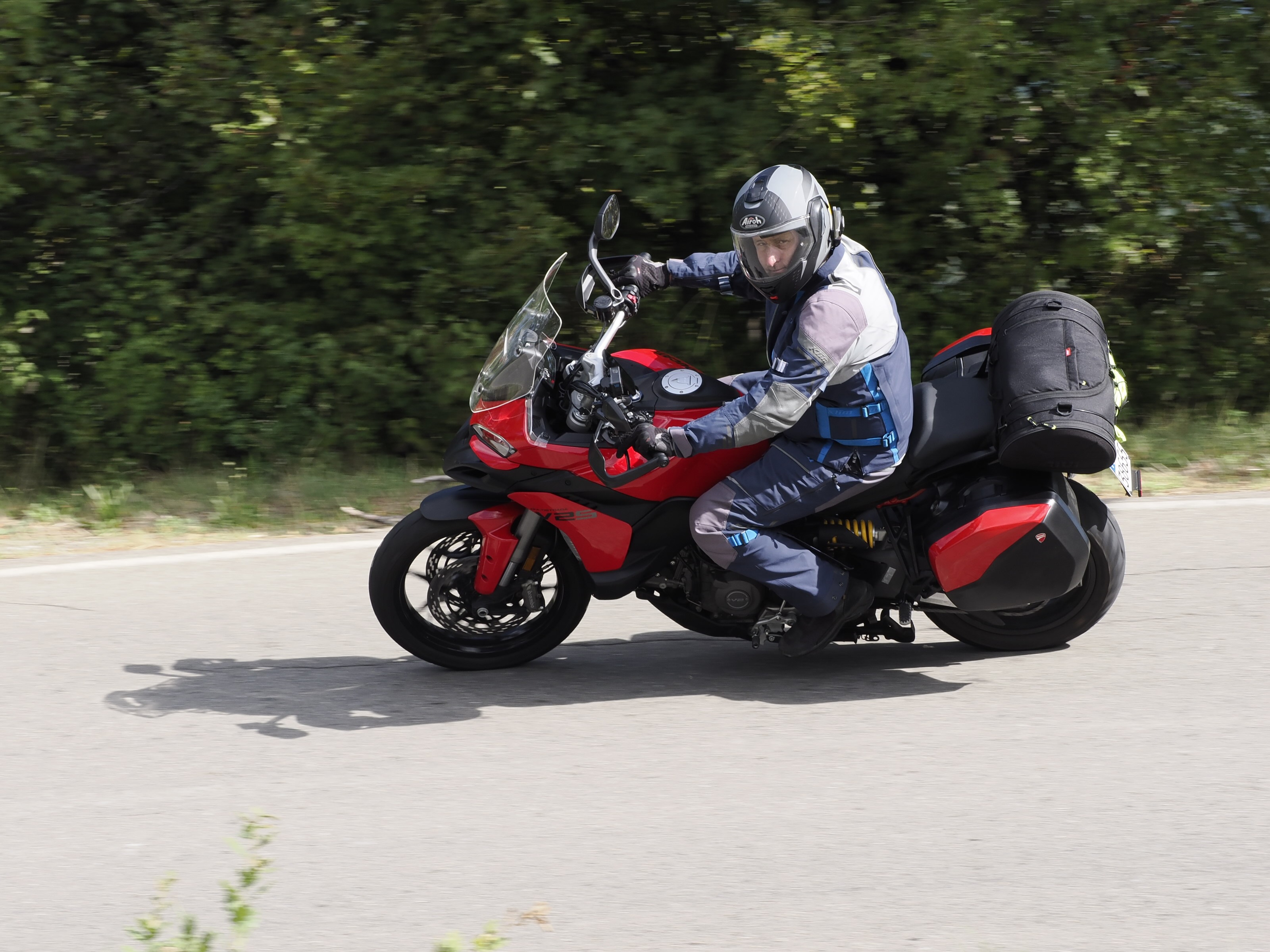
THE CHASSIS
Unlike the engine, Ducati has actually gone away from its history and disposed of the trellis frame of earlier models, replacing the front part of the chassis with a lightweight monocoque aluminium frame, although the rear subframe is still a steel trellis. It’s completely new, completely different, and uses the engine as a stressed member. All three parts – the swingarm, subframe and front aluminium section – all bolt to the engine to create a lightweight solution to the chassis demands.
The changes have resulted in a total weight saving of around 18kg over the old Desmo-powered V2 S, making the bike easier to flick around, lighter to push around when stopped, and of course all this reduction in weight helps things like fuel economy and parking.
SPORT, TOURING AND URBAN
Multistrada literally means “many roads”, and the new V2 S is at home on all of them – even a bit of gravel. It’s best suited to fast touring – the riding position is comfortable all day, the quality suspension deals with both spirited riding and bad road surfaces, yet the flexible engine is easy to use while filtering through traffic.
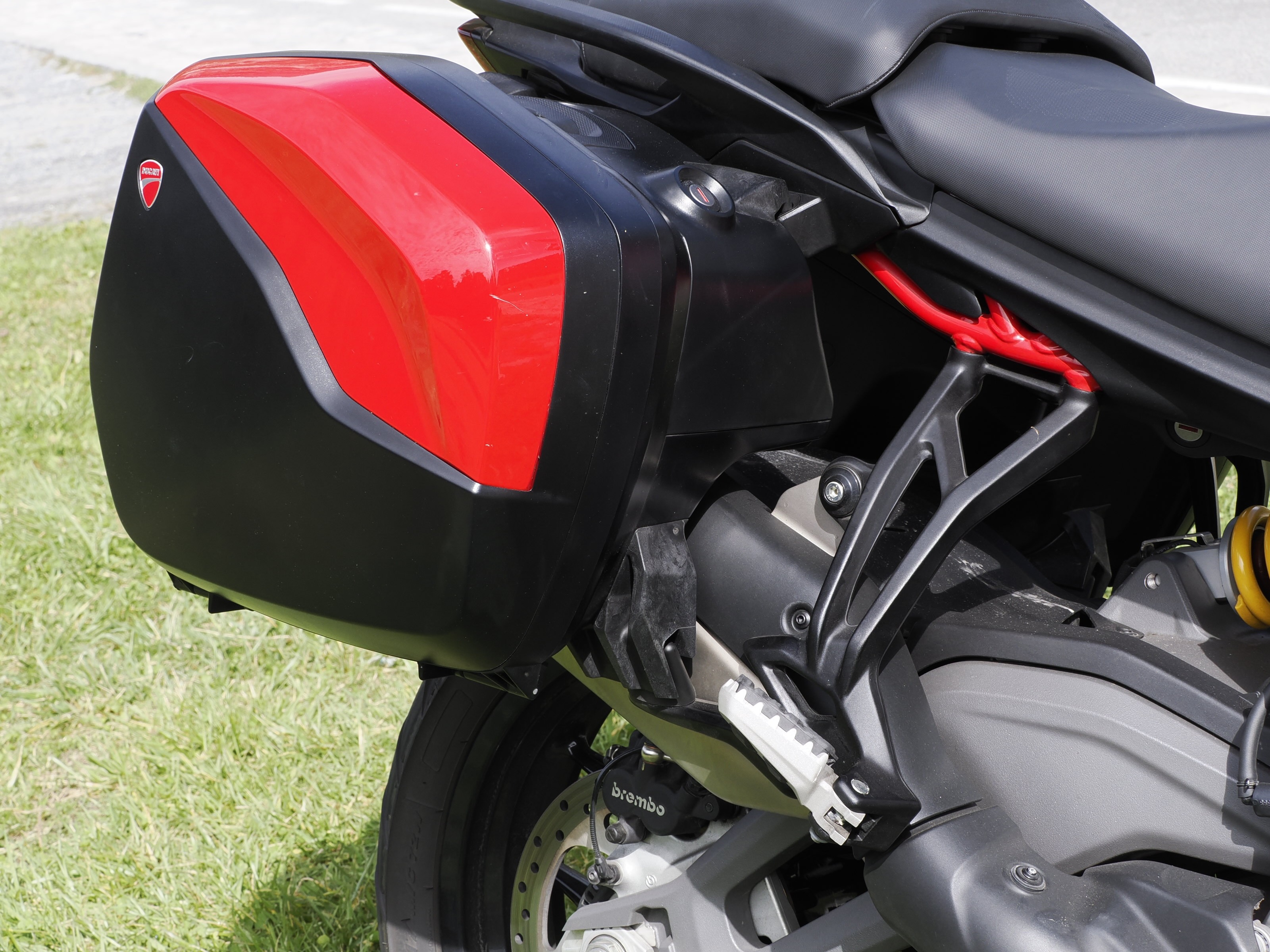
IS IT AN ADVENTURE BIKE?
The Multistrada V2 S is kind of an adventure bike. It sort of looks like one. It’s got a 19-inch front wheel, but even Ducati describes it as road-oriented with a light off-road capability. The simple fact is this is a road bike with a little bit of capability to go on dirt roads and gravel roads, which is just about perfect for many Australian riders who would like to be able to ride on a decent gravel road but are never going to do anything much more serious than that.
As such, it comes with Pirelli Scorpion Trail 2
tyres and has decent suspension travel to help keep the bike comfortable, capable and safe in those light off-road conditions. You can get spoked wheels as an accessory, but why you’d try and turn this bike into something like a DesertX, which it will never be, is a complete mystery to me, and I think a complete waste of money. If you really want a proper adventure bike for going into the bush and taking on trails, sand dunes and fire trails, buy the Desert X, don’t buy the Multistrada.
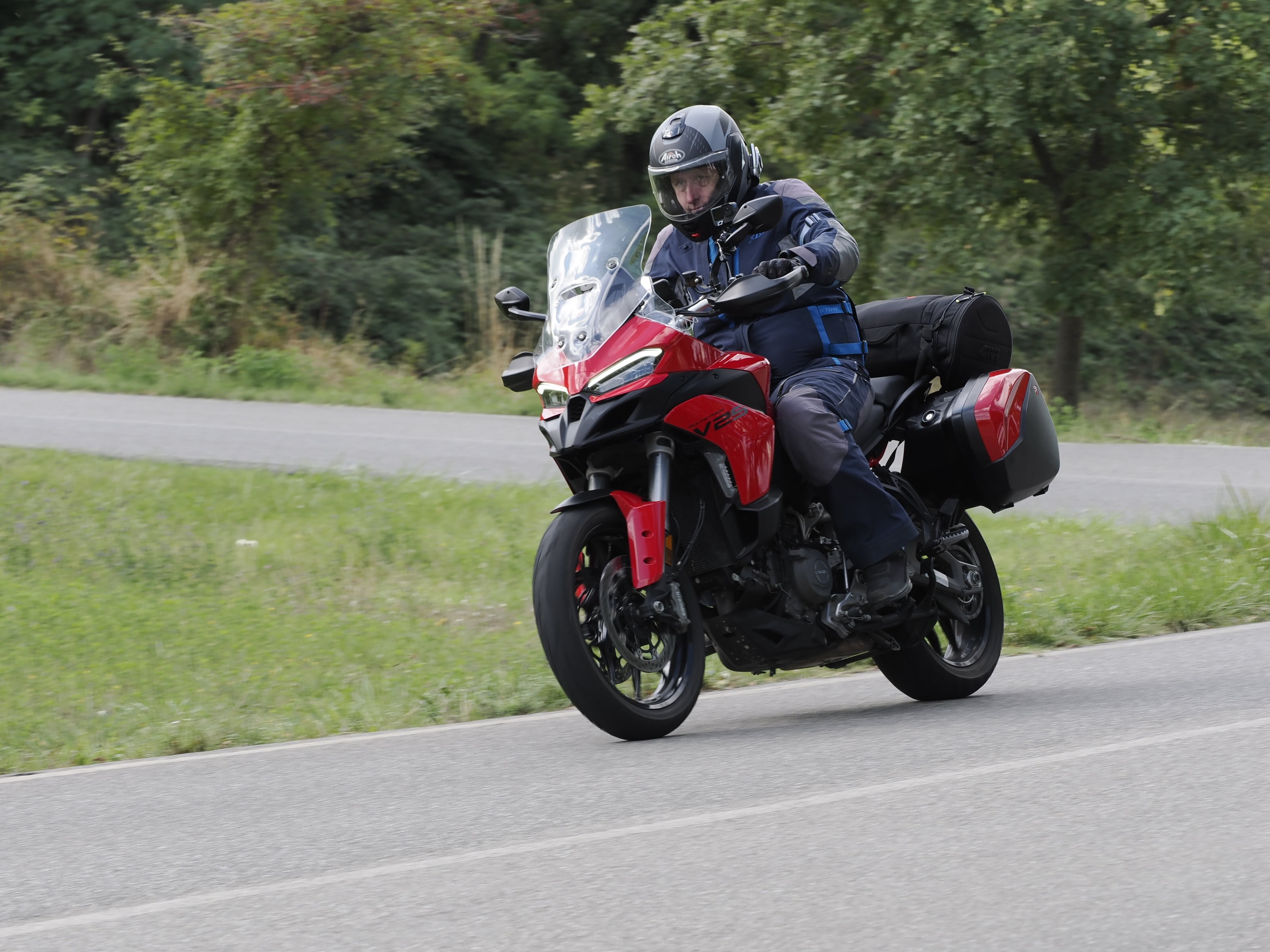
WHERE IT EXCELS
Where the Multistrada does excel is on bad roads. I was really quite shocked to discover the roads in some of the mountainous regions of Italy are as bad as the roads of rural New South Wales – with subsidence, potholes and lots of road damage from trucks and weather conditions. The Multistrada, though, soaked it up very well. Where a more stiffly sprung bike may have been a handful, maybe even dangerous, the Multistrada, by and large, absorbed all the bumps, lumps and gravel bits and pieces that were thrown at it, and did it with aplomb.
When the roads smooth out, the quality suspension and modern chassis actually start to feel like they could handle a lot more power than the engine produces – it never gets flustered or bouncy, despite the long travel and adventure bike heritage.
COMFORT AND ERGONOMICS
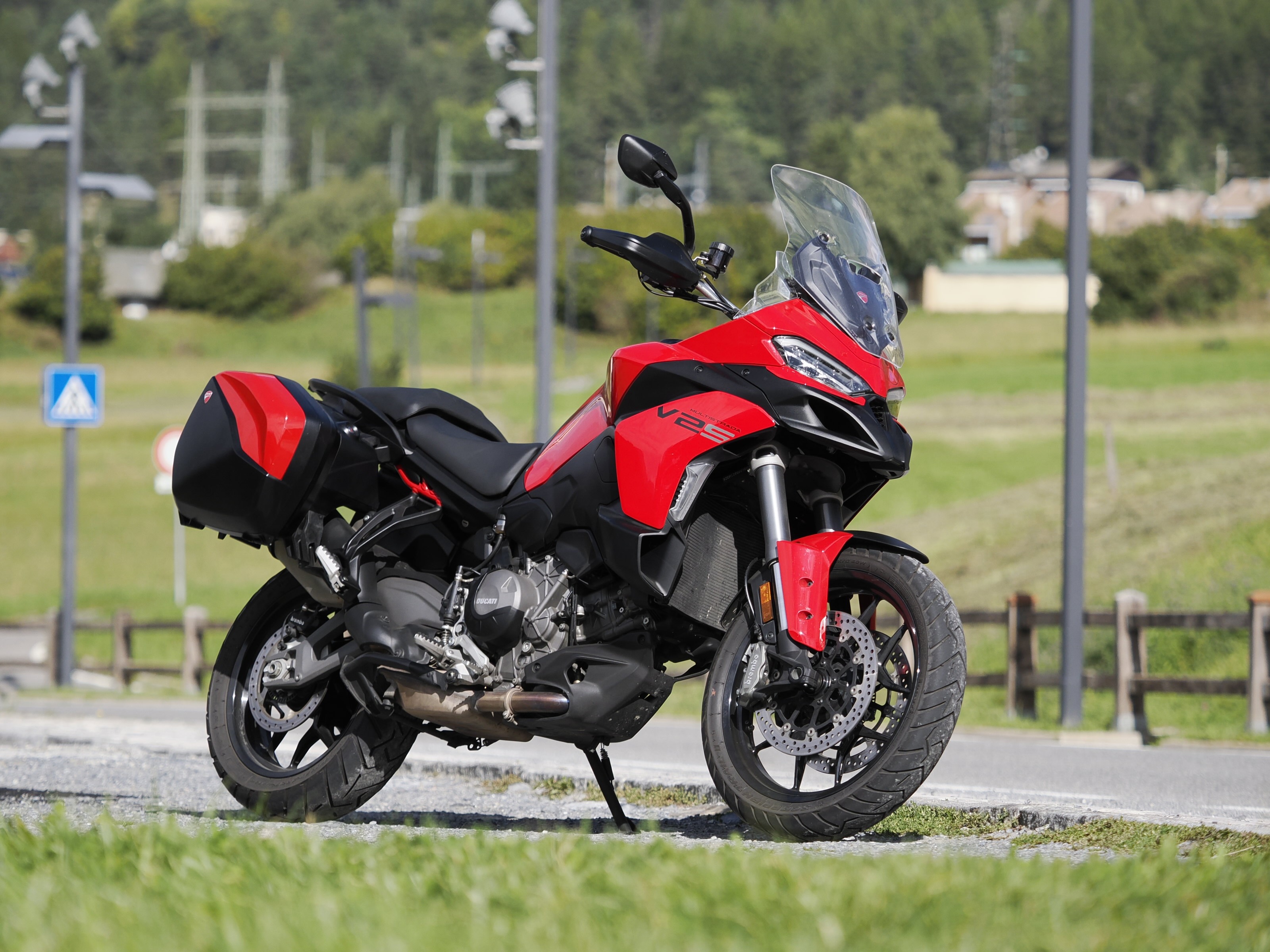
It’s more comfortable too, with a refined riding position giving the rider a bit more room than the previous model and a pretty good back seat as well. Yes, it’s not a grand touring motorcycle for a passenger, but it is still vastly more comfortable than most motorcycles when two people are on board. There’s plenty of room for legs with the panniers fitted, and there’s a decent grab rail as standard. But if you want a top box, that’s very much an optional extra.
The machine we tested was a V2 S Touring, which is a V2 S with the touring pack included – panniers, centrestand and heated grips.
If you want the top box and a tank bag, you can get that in the Urban Package. Aluminium panniers are available too, if you really want to go down that path, but again, that’s really the category of the Desert X.
As I mentioned earlier, it’s a little bit more comfortable than the earlier model, and the seat height is adjustable across a number of ways. There’s 20mm of adjustment in the standard seat, and you can buy a high seat or a low seat, and there’s also a low suspension kit. So you can get the seat as low as 790mm or as high as 870mm. This bike should suit a large range of people, regardless of their height.
RIDING MODES
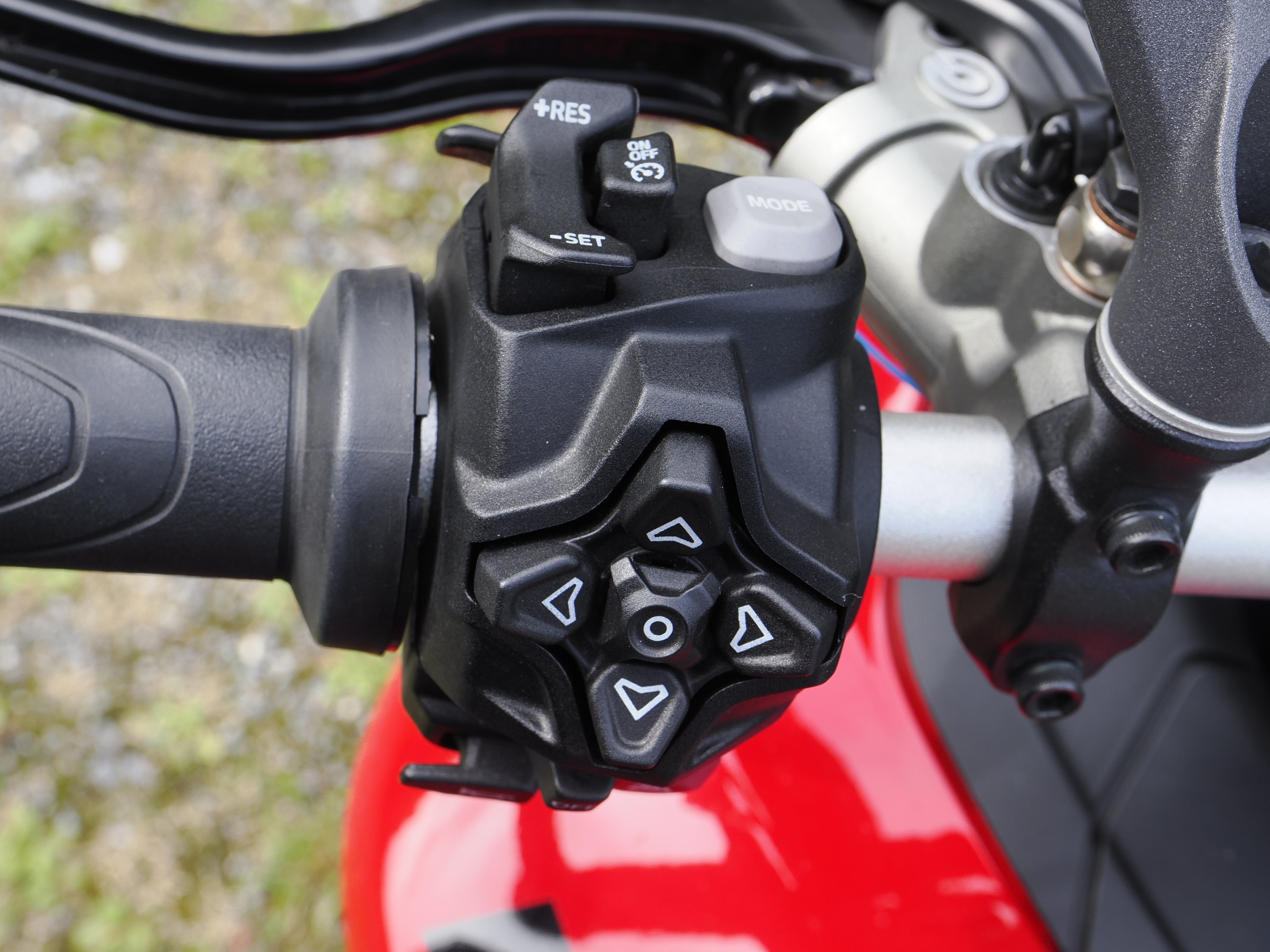
The new V2 S comes with Sport, Touring, Urban, Enduro and Wet riding modes, so for each type of riding that you might do on a Multistrada, there is a mode to suit you. Sport and Touring both offer 85kW (115hp), the maximum output. Sport has a dynamic throttle response while Touring has a smooth throttle response – and guess what I used most of the time? Touring.
Urban, Enduro and Wet all drop the power level to 70kW (95hp) and have reasonably tame throttle response, although the Enduro one is a little bit more dynamic. So you can certainly tailor this bike very quickly and easily through the switchblocks to whatever conditions you’re riding in. Most of the time, I stayed in Touring because I preferred that smooth throttle response with the full horsepower, but Sport was certainly a lot of fun on the twisty, winding roads that I found in the mountains of Italy – at least the good ones.
FEATURES AND TECH
The tech was one of the first things that shocked me about the bike when Ducati handed it over to me at its factory in Borgo Panigale, Bologna. Edo, one of the marking team blokes, handed me a key. That’s right, a key – not a fob. A newly developed European touring bike that doesn’t have a keyless ignition.
Works for me. Until the BMW R 1300 RT I tested recently, which had BMW’s Keyless ignition plus integrated centrally locking panniers, I haven’t been a fan of keyless ignitions, although these days they are much better than in the past.
I was more than happy to have a key I could put in my pocket (or in a pannier as that’s where it lived when I took the panniers into a hotel room).
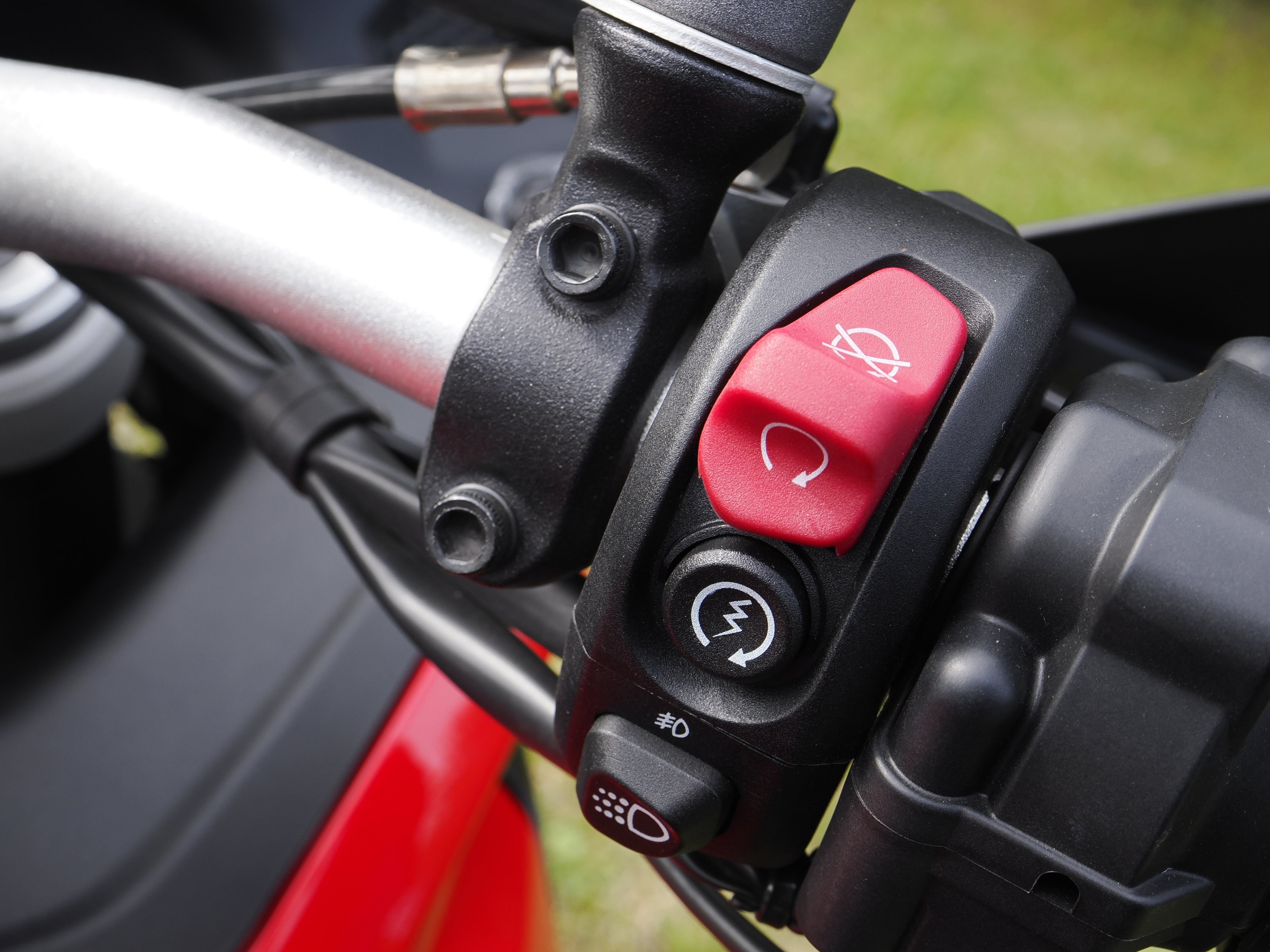
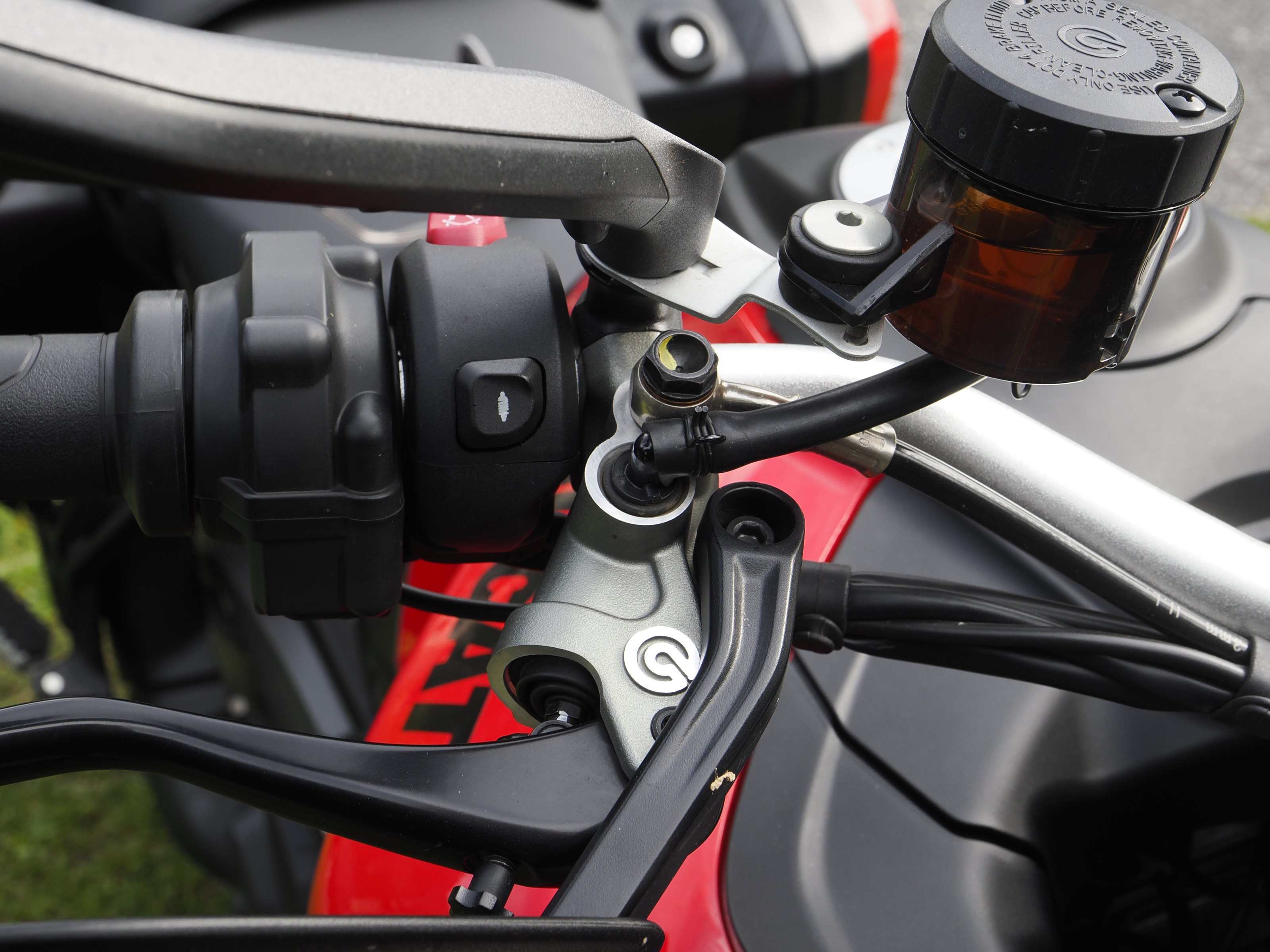
Along with the riding modes, you’ve got three levels of ABS, and you can switch that off (though I don’t think you can in Australia). You’ve got cornering ABS, DTC and DWC. Other features include Quick Shift 2.0, which gives you a very good quality quickshifter. Cruise control is standard. The brake light flashes rapidly if you’re in an emergency stop. There’s a USB-A socket in the fairing – why this isn’t USB-C is a complete mystery, but it’s better than nothing.
I almost missed one of the headline features – suspension lowering at a stop, first seen on the Harley-Davidson Pan America some years back and generally a wonderful feature… but here it lowers the seat height by 8mm, so little it’s basically a waste of effort – something that could go wrong without material benefit.
Coming home functionality keeps the lights on for a period of time after you turn the ignition off, and you can pay extra to have the Ducati Multimedia System installed on the standard bike. It is standard on the Multistrada V4 S. Turn-by-turn navigation is an option. Heated grips and tyre pressure monitoring are all either part of the packages or available separately.
Compared to the bigger Multistradas and some of the competition, there are a few ways in which the V2 lags behind – keyless fobs on touring bikes allow panniers to become centrally lockable, with power and lights inside, even expansion to alter the size of the boxes… but Ducati hasn’t updated the design of the Multistrada’s panniers, staying with the single Givi-style clamp to open and close.
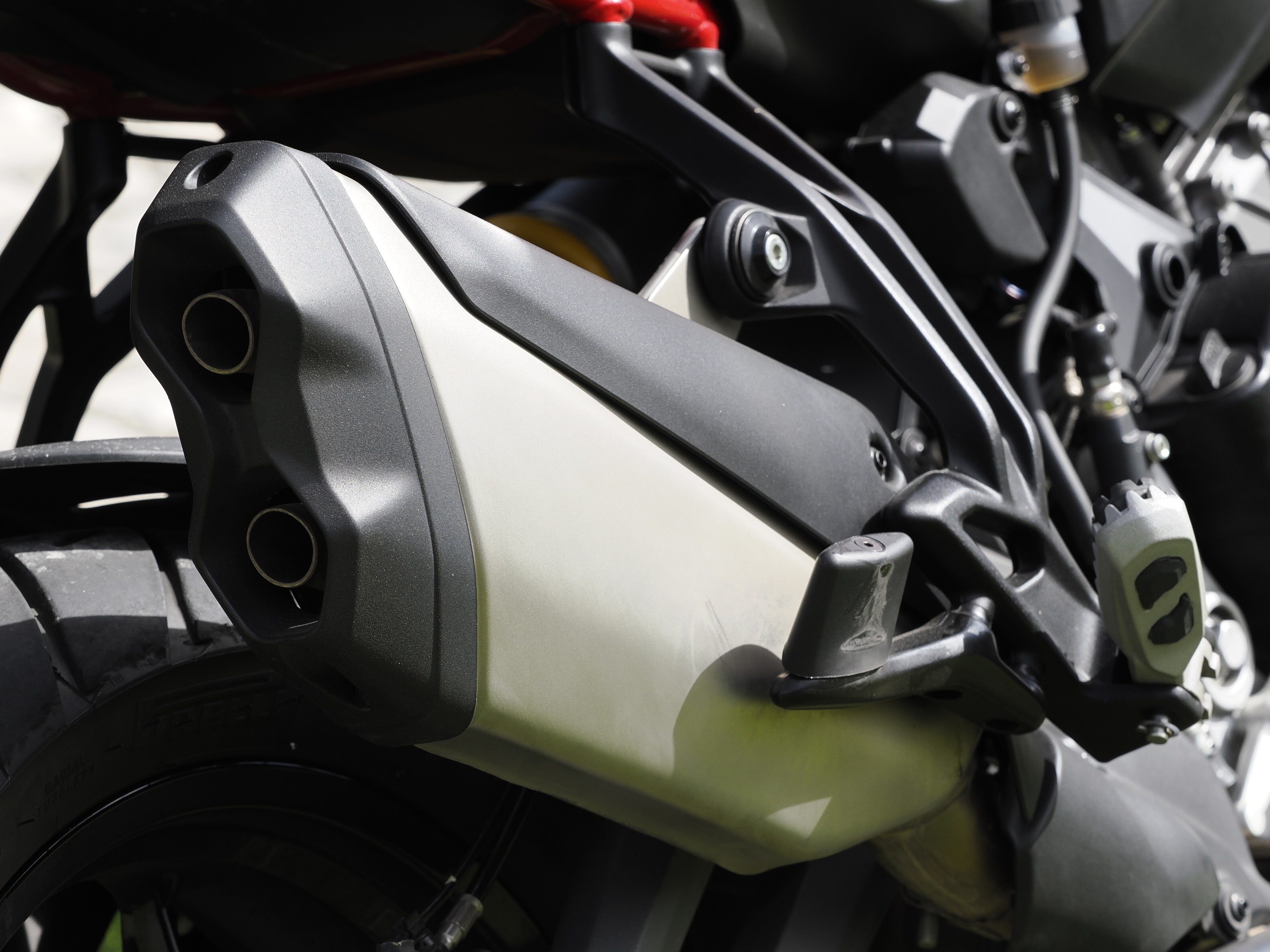
The panniers are fine, a reasonable size considering they lose space on the right side to accommodate the exhaust, but are dated, that’s all.
There’s no radar option, so no active cruise control, blind spot detection or rear crash warnings.
ACCESSORIES
The bike we tested was fitted with the Touring pack – panniers, centrestand and heated grips. Also available is the Urban pack (tank bag, top case) and the Enduro pack (bash plate etc.)
The different packs are a great way to help create the bike you want, although of course most of the accessories are available separately, too.
THE VERDICT
The Ducati Multistrada V2 S represents a smart compromise for riders who want versatility without the complexity and cost of the V4. It’s lighter, more manageable and easier to maintain, while still offering plenty of performance and comfort for serious touring. It’s not perfect, but it’s a highly capable machine that will handle everything from daily commutes to multi-day tours with ease.
SPECIFICATIONS
ENGINE
Type: 90° V2, 4-valve per cylinder, variable valve timing, liquid-cooled
Capacity: 890cc
Bore x stroke: 96.0mm x 61.5mm
Compression ratio: 13.1:1
Fuel system: EFI with 52mm throttle bodies, ride-by-wire
Exhaust: Stainless-steel muffler with single catalytic converter and lambda probes
PERFORMANCE
Claimed maximum power: 85kW (115hp) @ 10,750rpm
Claimed maximum torque: 92.1Nm @ 8250rpm
DRIVELINE
Transmission: 6-speed with Ducati Quick Shift (DQS) up/down 2.0
Primary drive: Straight-cut gears, ratio 1.84:1
Gear ratios: 1st 38/13, 2nd 35/17, 3rd 32/20, 4th 29/22, 5th 24/21, 6th 26/25
Clutch: Hydraulically controlled wet multiplate, slipper and self-servo
Final drive: Chain; 15T front sprocket, 40T rear sprocket
CHASSIS & RUNNING GEAR
Frame: Aluminium monocoque
Front suspension: 45mm fully adjustable USD fork with Ducati Skyhook Suspension, electronic compression & rebound damping, 170mm travel
Rear suspension: Fully adjustable monoshock with Ducati Skyhook Suspension, electronic adjustment, aluminium double-sided swingarm, 170mm travel
Front brakes: Twin 320mm semi-floating discs, radially mounted Brembo M4.32 Monobloc 4-piston calipers, radial master cylinder, Cornering ABS
Rear brake: 265mm disc, Brembo 2-piston floating caliper, Cornering ABS
Wheels: Light alloy cast 3.00 x 19in (front), 4.50 x 17in (rear)
Front tyre: Pirelli Scorpion Trail II, 120/70 ZR19
Rear tyre: Pirelli Scorpion Trail II, 170/60 ZR17
DIMENSIONS & CAPACITIES
Wheelbase: 1572.5mm
Rake: 24.3°
Trail: 105.5mm
Seat height: 830–850mm adjustable (high and low seats available plus low-suspension kit)
Fuel capacity: 19L
Dry weight: 202kg
ELECTRONICS, RIDER AIDS & CONVENIENCE FEATURES
Instrument display: 5-inch full-colour TFT display (800 x 480px)
Riding modes: Configurable Riding & Power Modes
Rider aids: Bosch Cornering ABS, Ducati Traction Control (DTC), Ducati Wheelie Control (DWC), Engine Brake Control (EBC), Ducati Brake Light (DBL) EVO
Standard equipment: Ducati Quick Shift (DQS) up/down 2.0, full LED headlights with DRL, auto-off indicators, Coming Home function, cruise control, USB port, Ducati Multimedia System (DMS)
Ready for: Anti-theft system, Tyre Pressure Monitoring System (TPMS), DMS “Turn by Turn” navigator, heated grips, lithium-ion battery, front fog lights
ETCETERA
Warranty: 24 months / unlimited km
Service interval: 15,000km / 24 months
Valve clearance check: 30,000km