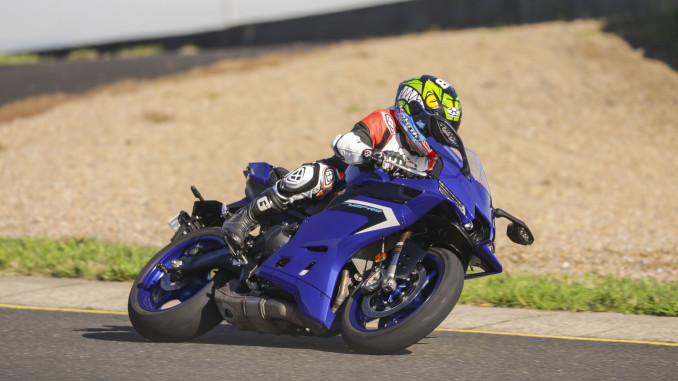
The Yamaha YZF-R9 sits somewhere between a road-going sportsbike and a bona fide track weapon. Earlier this year we rode it at Sydney Motorsport Park’s South Circuit to see just how well this middleweight triple balances real-world versatility with supersport pedigree.
The all-new Yamaha’s YZF-R9 slots neatly into the R-series family as a high-performance, middleweight supersport weapon aimed squarely at riders who want thrilling track capability without the full-on extremity of the track-only YZF-R6 or the big-bore YZF-R1. While it shares its torque-rich CP3 engine with the popular MT-09, this is no parts-bin special — the R9 boasts a new lightweight Deltabox aluminium frame, race-ready suspension, comprehensive electronics package and MotoGP-inspired aerodynamics.
Under the sharp new bodywork is the same 890cc inline triple as the MT-09, but with revised fuelling and gearing — two teeth have been taken off the rear sprocket, changing the final drive from 16/45 to 16/43 for a taller gearing setup and increased top-end speed. Peak output is a claimed 87kW (117hp) at 10,000rpm and 93Nm of torque at 7000rpm, and the engine delivers accessible performance from low in the rev range all the way to its 10,500rpm redline. It’s a truly flexible powerplant, ideal for road or track.

The chassis is all new. The Deltabox frame is said to be the lightest ever on a Yamaha supersport bike, and it comes matched to fully adjustable KYB suspension front and rear, with 120mm and 118mm of travel respectively. The chassis geometry delivers sharp steering with a 22.3° rake, 94mm trail and a tight 1420mm wheelbase.
Braking is handled by dual 320mm front discs gripped by Brembo Stylema calipers, backed by braided lines for optimum feel. There’s a single 220mm disc on the rear. The MotoGP influence continues with aerodynamic winglets claimed to provide downforce with minimal drag, contributing to what Yamaha says is its most aerodynamic production bike yet. The sleek bodywork features a hidden central headlight, DRLs either side and integrated turn signals in the mirrors.
Electronics are a huge part of the R9’s package. A six-axis IMU enables lean-sensitive traction control, ABS, slide control, lift control, engine brake management and brake control. The rider can cycle through four riding modes (Sport, Street, Rain and Custom), along with four dedicated track settings. There are nine levels of traction control, three levels each of slide and lift control, two engine braking and launch control settings, and rear ABS can be disabled. It’s a comprehensive suite and everything is customisable through the Yamaha Ride Control (YRC) system.
A full-colour five-inch TFT screen sits front and centre, offering four road themes and a dedicated track display. Riders can connect their phone via Yamaha’s Y-Connect app for music, call and message notifications, and Garmin StreetCross integration provides on-screen turn-by-turn navigation. Of course, none of these features are relevant for a track day, but in track mode, the Y-TRAC app enables virtual pit board messages from your crew. I can just imagine hurtling along the main straight and looking down to see a message on the dash saying “Pull your finger out!”. Standard cruise control and adjustable brake/clutch levers round out the premium cockpit.
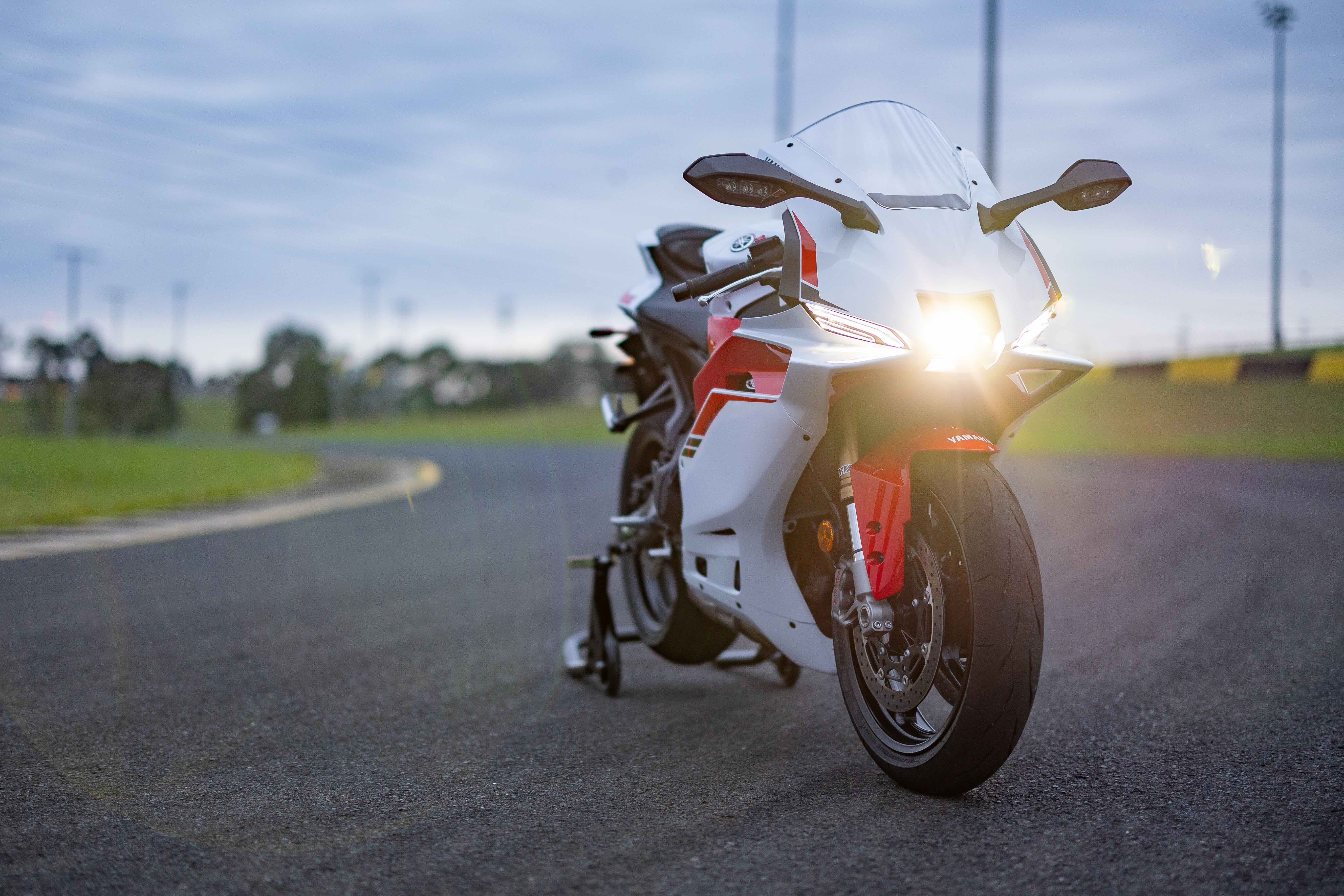
The R9 is positioned as a 50/50 road and track machine, designed to make supersport performance more accessible and enjoyable in both environments. Ride away pricing is competitive at $23,299 ride away and the YZF-R9 is available in Yamaha Team Blue, Matt Black or Intensity White Redline.

ON TRACK
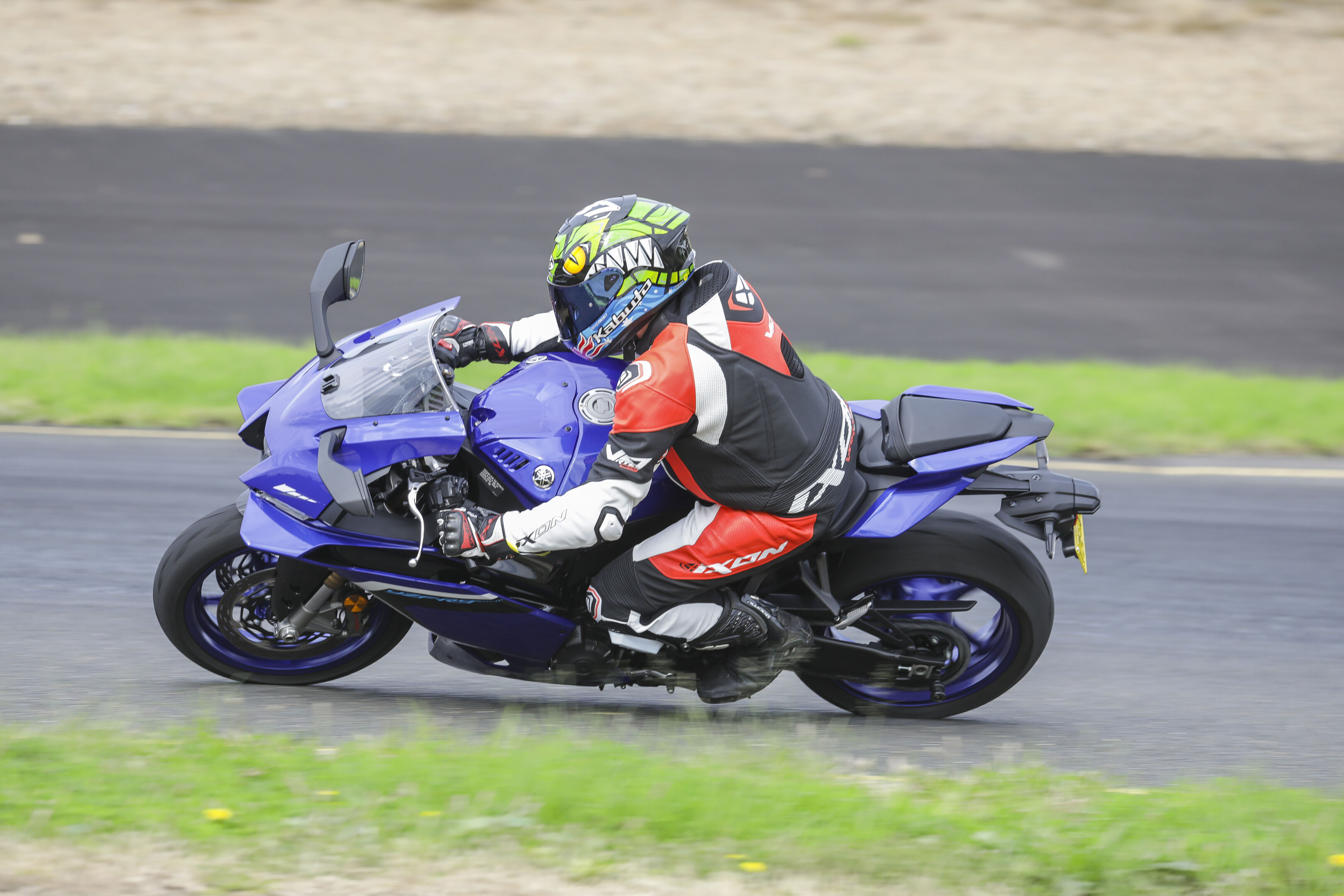
Sydney Motorsport Park’s tight South Circuit was the perfect proving ground for the R9’s handling, electronics and flexibility. With a wet weight of 195kg, the new Deltabox frame and compact geometry give the bike a nimble, flickable feel. Combined with near-perfect 50/50 weight distribution and the well-sorted KYB suspension, it responds quickly to rider input and inspires immediate confidence.
The riding position is sport-focused but not extreme. Compared to supersports of a decade ago, the clip-ons are slightly higher and wider, while the footpegs aren’t as high. This creates a roomier rider triangle with ample legroom and freedom to shift body position on the move. Despite the reasonably low 831mm seat height, the bike never feels cramped.
The CP3 engine is a gem. It’s worlds away from the peaky 600cc fours of old. With broad torque from low in the rev range and a muscular midrange, it’s far more forgiving and usable — especially on a tight track where constant shifting can become tiring. The quickshifter works best at full throttle or fully closed, suiting track use nicely.
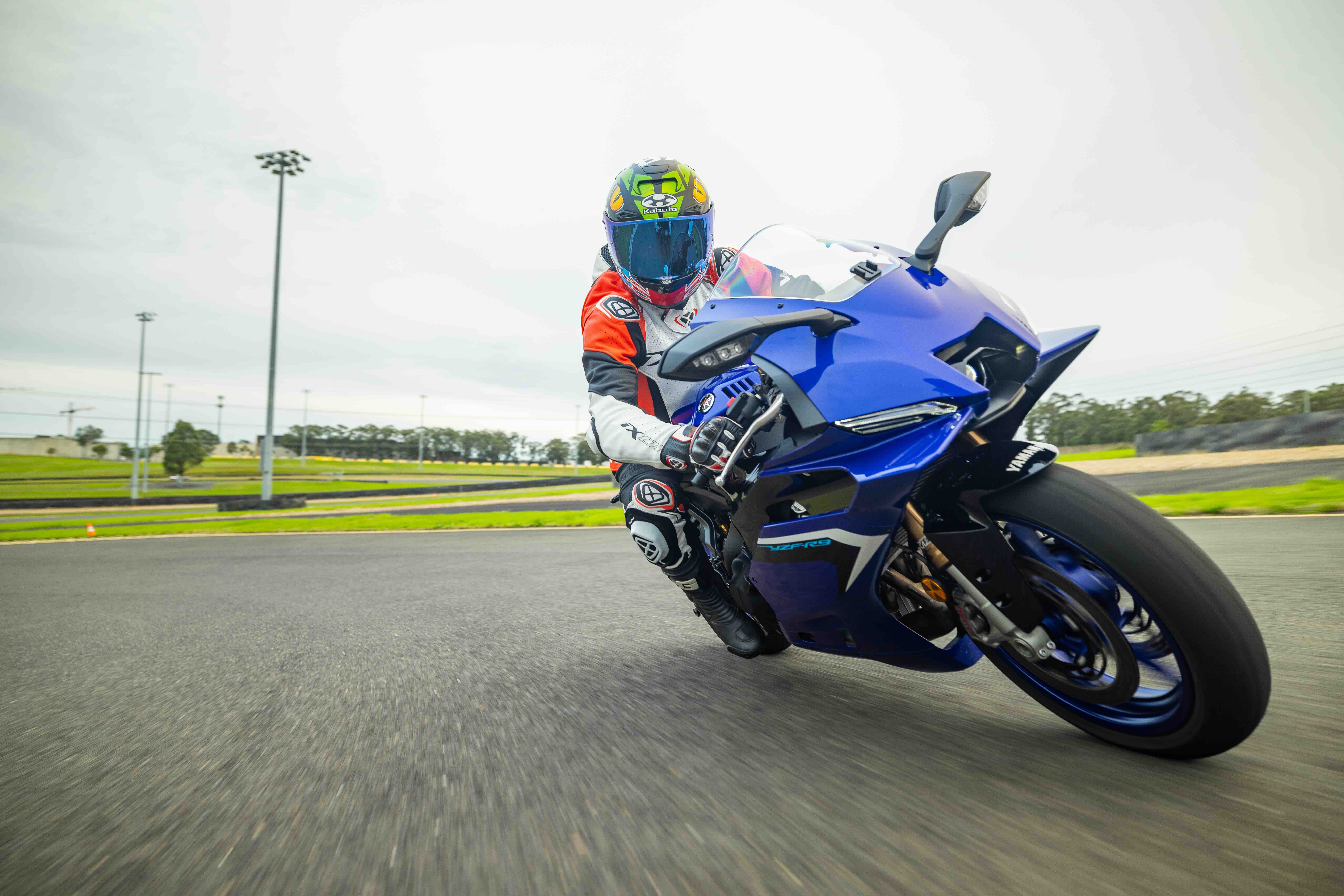
For the first few sessions, I mainly ran in second and third gears. Later in the day, I realised I could run nearly the whole lap in third, only dropping to second for the tight downhill left-hand hairpin. It’s a testament to how tractable and flexible the triple is — the strong midrange lets you ride the torque curve rather than chasing the redline. And when you do wind it out, the top end howls. One of the bikes at the launch was equipped with an optional Akrapovic exhaust system and while not excessively loud, it really emphasised the character of the engine.
The suspension felt well sorted out of the box. While there’s full adjustability available, I didn’t feel the need to touch it. The front end felt planted and secure even in the early sessions when track temperature was low. On the standard Bridgestone RS11s, grip and feedback were excellent throughout the day.
Brakes were powerful and easy to modulate. Some of the quicker riders at the launch mentioned they wanted a bit more bite, but at my pace the Stylema calipers delivered plenty of stopping power, with good lever feel. On the road, I expect them to feel even better.

The electronic suite works seamlessly in the background. Even when experimenting with traction and engine braking settings, the systems never felt intrusive; if the track was wet, I am sure they would be extremely beneficial, offering a safety net that I didn’t have a week earlier at the Creek when the track was damp and I was sliding around on a 30-year-old superbike. For newer riders, that safety net is reassuring. For experienced riders, it’s another tool in the arsenal.
The TFT dash is clear and well laid out. The different screen themes are a nice touch, and the dedicated track display is especially useful. Having turn-by-turn navigation via the Garmin StreetCross app and music/call integration makes it a genuinely practical road bike, too.
The YZF-R9 feels like a bridge between the street-friendly MT-09 and the track-focused R1. It brings a lot of R1-level tech and chassis capability to a very usable, rider-friendly package. That blend of agility, power and electronics gives it a split personality: attack mode on the track, and daily rideability on the road.
For our first taste, the R9 impressed on all fronts. We’ll be putting it through its paces on public roads in ARR Issue 187 to see how that 50/50 track/road promise holds up. But for now, Yamaha’s triple-powered supersport is every bit as sharp, refined and fun as we hoped it would be. ARR
PHOTOS: IKAPTURE
RIDER AIDS – SIX AXIS IMU
• Yamaha Ride Control (YRC) with preset and customisable settings — offers riders a choice of Sport, Street, Rain and Custom ride modes, along with four dedicated track settings.
• Four-level power delivery mode (PWR) — allows riders to select one of four engine maps to adjust throttle response and engine characteristics.
• Nine-level lean-sensitive Traction Control System (TCS) — adjusts the level of intervention by the TCS to optimise drive force.
• MotoGP-developed three-level Slide Control System (SCS) — works by detecting a slide at the rear tyre and adjusting engine output to minimise the slide.
• Three-level Lift Control System (LIF) — helps to manage front-wheel lift during acceleration and starts, preventing the front wheel from lifting uncontrollably.
• Lean-sensitive Brake Control System (BC) with ABS — provides progressive brake force intervention as lean increases.
• Two-level Engine Brake Management (EBM) — allows riders to choose between two settings for engine braking force when decelerating. Level 1 provides more engine braking, while Level 2 reduces it, offering riders control over how the engine contributes to slowing down.
• Back Slip Regulator (BSR) — helps to prevent the rear wheel from locking up during engine braking or aggressive downshifting by controlling the engine’s torque.
• Launch Control (LC) — allows riders to hold the throttle open while releasing the clutch for a controlled and powerful start.
• Rear ABS off function — allows a rider to disable the anti-lock braking system (ABS) on the rear wheel only.
• Yamaha Variable Speed Limiter (YVSL) — allows riders to set a maximum speed for their motorcycle.
SPECIFICATIONS
ENGINE
Type: Water-cooled three-cylinder four-stroke, four valves per cylinder
Capacity: 890cc
Bore x stroke: 78mm x 62.1mm
Compression ratio: 11.5:1
Engine management: Electronic fuel injection (TCI)
TRANSMISSION
Six-speed with quickshifter
Final drive: Chain
Clutch: Wet, multi-plate
PERFORMANCE
Claimed maximum power: 87kW (117hp) @ 10,000rpm
Claimed maximum torque: 93Nm @ 7000rpm
Top speed: 260km/h (estimated)
Fuel consumption: NA
CHASSIS AND RUNNING GEAR
Chassis: Aluminium Deltabox
Front suspension: 43mm KYB USD fork, fully adjustable, 120mm travel
Rear suspension: KYB monoshock, fully adjustable, 118mm travel
Front brakes: Dual 320mm discs, radially mounted Brembo Stylema calipers, cornering ABS
Rear brake: 220mm disc, single-piston caliper, switchable cornering ABS
Wheels: Lightweight 5-spoke forged aluminium
Front: 3.5 x 17in
Rear: 5.5 x 17in
Tyres: Bridgestone Battlax RS11,
120/70 ZR17 (f), 180/55 ZR17 (r)
DIMENSIONS & CAPACITIES
Rake: 22.6°
Trail: 94mm
Wheelbase: 1420mm
Seat height: 831mm
Length/width/height: 2070mm/706mm/1181mm
Ground clearance: 140mm
Kerb weight: 195kg (claimed)
Fuel capacity: 14L
ELECTRONICS, RIDER AIDS AND CONVENIENCE FEATURES
Ride modes: Sport, Street, Rain, plus two custom and four track modes, Lean-sensitive Traction Control with nine levels, Slide Control, Lift Control, Engine Brake Management (EBM), Brake Control, Back Slip Regulator (BSR), Launch Control (LCS), Cruise Control, TFT dash, Bluetooth connectivity, variable speed limiter
ETCETERA
Price: $23,299 ride away
Colours: Yamaha Team Blue, Matt Black and Intensity White Redline
Testbike supplied by: Yamaha Australia
Service intervals: 10,000km/12 months
Warranty: 2 years/unlimited km