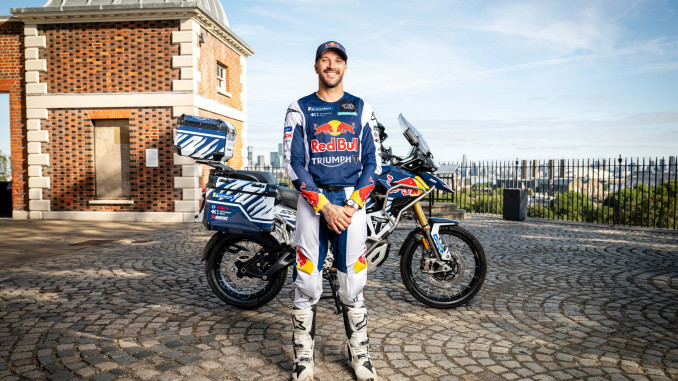
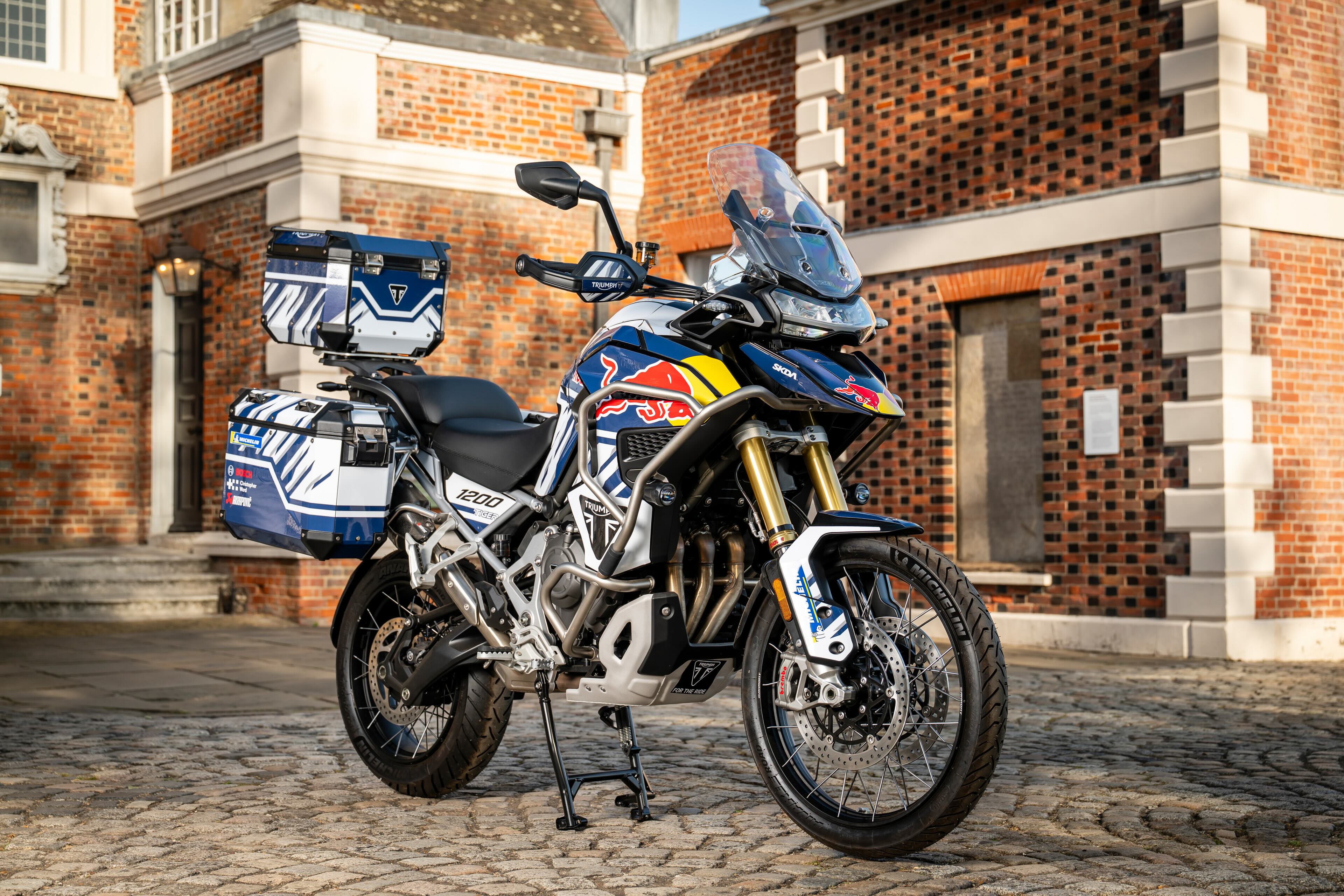
Two-time Dakar Rally winner Sam Sunderland has begun an attempt to set a new record for the fastest circumnavigation of the globe by motorcycle aboard a Triumph Tiger 1200 Rally Explorer.
Two-time Dakar Rally Champion Sam Sunderland has begun an extraordinary attempt to break the world record for the fastest circumnavigation of the globe by motorcycle, riding a Triumph Tiger 1200 Rally Explorer.
The Red Bull athlete departed London on 5 September and will cover more than 18,000 miles – around 29,000km – across five continents, averaging close to 1000 miles, or 1600km, per day.
Sunderland is aiming to beat the existing record of 19 days, 8 hours and 25 minutes of riding time, a benchmark that has stood for more than two decades.
The scale of the attempt means Sunderland expects to spend as much as 17 hours a day in the saddle, with fatigue, jet lag, changing weather and road conditions all likely to play a major role as the journey unfolds.
“One of the toughest parts of this challenge for me is definitely the miles that we have to cover,” Sunderland says. “I’m going to be riding for 17 hours a day, back-to-back, over many days. I feel like that accumulation’s going to build up and it’s definitely going to be tough.”
SIX-LEG GLOBAL ROUTE
Sunderland’s route has been divided into six riding legs, beginning in London before heading southeast to Istanbul.
From there he will tackle a Southeast Asian section running from Bangkok to Kuala Lumpur before crossing Australia from Perth to Sydney.
The Australian section will be followed by a ride through New Zealand, after which Sunderland will head to North America for the longest leg of the journey, travelling from Vancouver to Montreal.
The final stage will take him from Casablanca back to London to complete the circumnavigation.
Along the way, Sunderland will pass a number of famous landmarks, including the Bonneville Salt Flats, as well as tackling remote and demanding terrain through the Australian outback.
The challenge will expose both rider and motorcycle to rapidly changing climates, extreme temperatures, unfamiliar roads and widely varying terrain, while Sunderland will also have to manage international borders and multiple time zones.
The route involves up to six long-haul transfers, with the official record clock paused during ocean crossings.
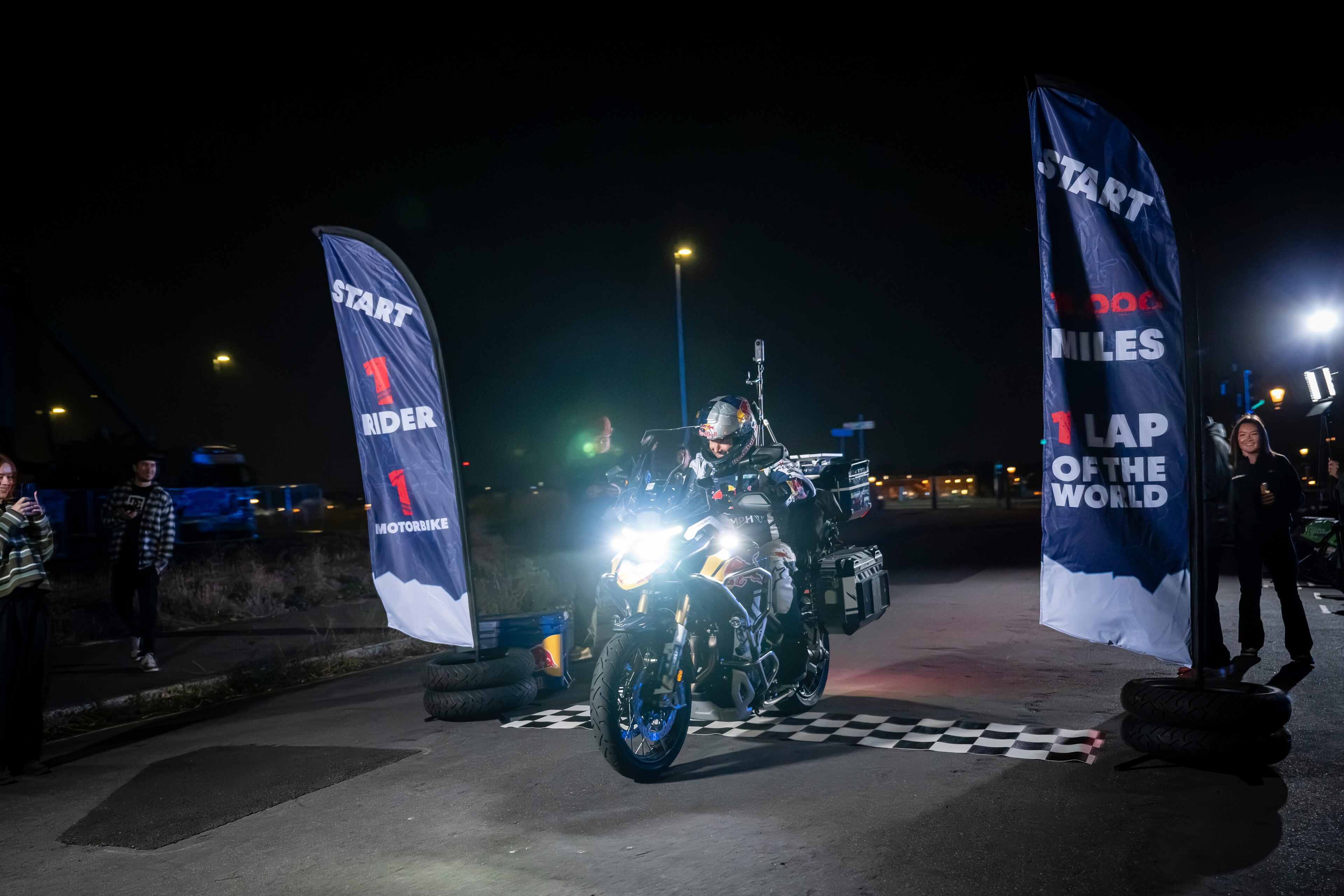
STRICT RECORD CONDITIONS
Under the rules of the attempt, Sunderland and the Tiger 1200 Rally Explorer must complete the entire riding route together.
The journey must be completed in a single direction, pass through two antipodal points and be completed on the same motorcycle.
That places as much emphasis on mechanical durability as rider endurance, with the Triumph required to withstand thousands of kilometres of near-continuous riding across vastly different environments.
As the attempt progresses, Sunderland expects the cumulative effects of sleep deprivation and jet lag to become increasingly significant, particularly on consecutive high-mileage days.
Triumph says the Tiger 1200 Rally Explorer was chosen specifically for the demands of the challenge.
Nick Bell, Chief Marketing Officer, Triumph Motorcycles added: “The scale of Sam’s Red Bull challenge is extraordinary. Covering more than 18,000 miles across five continents in less than 19 days will place huge demands on both rider and motorcycle, which makes the Tiger 1200 Rally Explorer the natural choice for this attempt, and Sam has what it takes to succeed.”
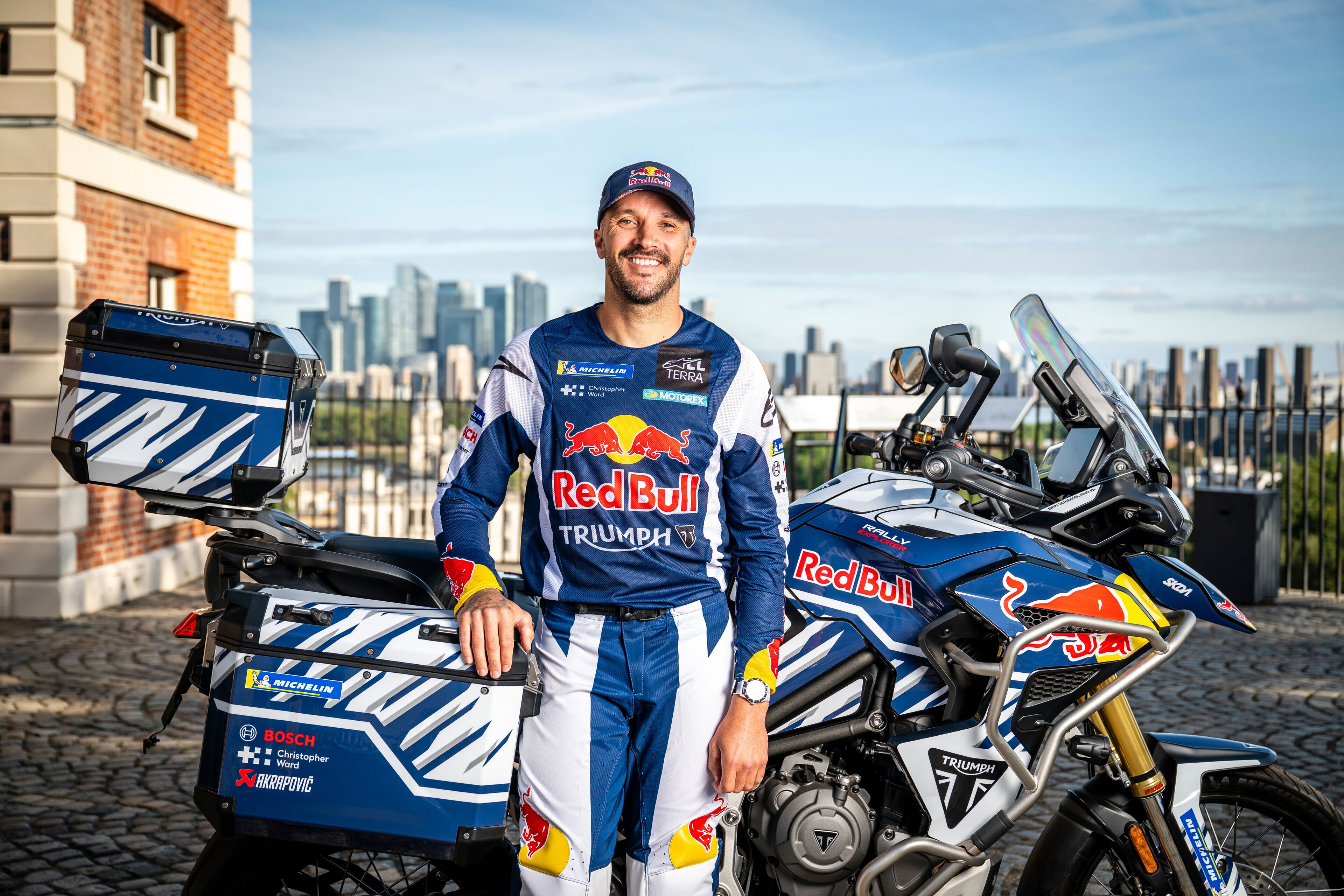
DAKAR PEDIGREE
Sunderland is one of the most accomplished rally-raid motorcycle racers of his generation, having twice won the Dakar Rally.
That background should prove invaluable during an attempt that will demand the same ability to manage pace, fatigue, concentration and changing terrain that is essential in long-distance rally competition.
But unlike Dakar, this challenge is built around relentless road mileage rather than timed special stages.
With close to 1600km to cover on an average riding day and some days potentially stretching to 17 hours in the saddle, the biggest battle may be maintaining concentration and consistency as the kilometres accumulate.
Sunderland is now on the road, with the target firmly set on completing the 18,000-plus-mile circumnavigation in less than 19 days, 8 hours and 25 minutes.